
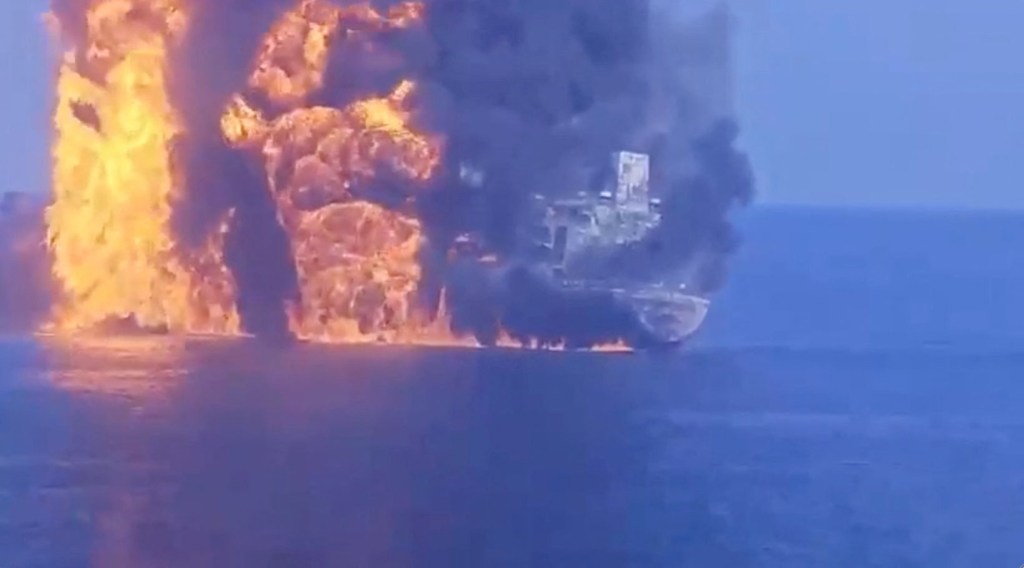
Iran is intensifying attacks in the Middle East to regain control over the Strait of Hormuz and challenge the US. Reports say nearly 8 million barrels of oil leave the strait daily with US naval protection. Iran has increased attacks on tankers, aiming to disrupt this flow.
The United Kingdom Maritime Trade Operations confirms at least six recent strikes. Iran claims even more, with a frequency unmatched since the conflict’s onset. A recent attack saw a tanker aflame in the Strait, signaling Tehran’s warning to ships against passage without its consent.
Tehran insists it will not allow vessels to challenge its dominance over this vital oil route. The regime targets key ships, as noted by Vortexa maritime firm. US bases in Bahrain and Kuwait have also been attacked, showing Iran’s intent to reshape the situation.
President Trump appears content with a cold war stance, leveraging economic pressure against Iran. However, Iran feels pressed to act. Hamidreza Azizi from the International Crisis Group highlights differing views on the risks of prolonged confrontation.
“As economic pressure mounts, Iran may become increasingly willing to take military risks to break the deadlock,” stated Iran expert Azizi.
Iran’s Supreme Leader, Mojtaba Khamenei, instructed officials to resolve the deadlock with the US. Lead negotiator Mohammad Bagher Ghalibaf emphasized this resolve in parliament, signaling readiness for negotiation or conflict.
Middle East expert Kristian Coates Ulrichsen from Rice University’s Baker Institute notes that Iran’s actions are a show of its rebuilt military capabilities. The strikes on Kuwait and Bahrain are warnings to US allies of their vulnerability.
The Iran-U.S. confrontation continues, with the recent attacks underscoring the complexities and ongoing tension in the region.