
Pope’s Vision for Addressing Contemporary Issues
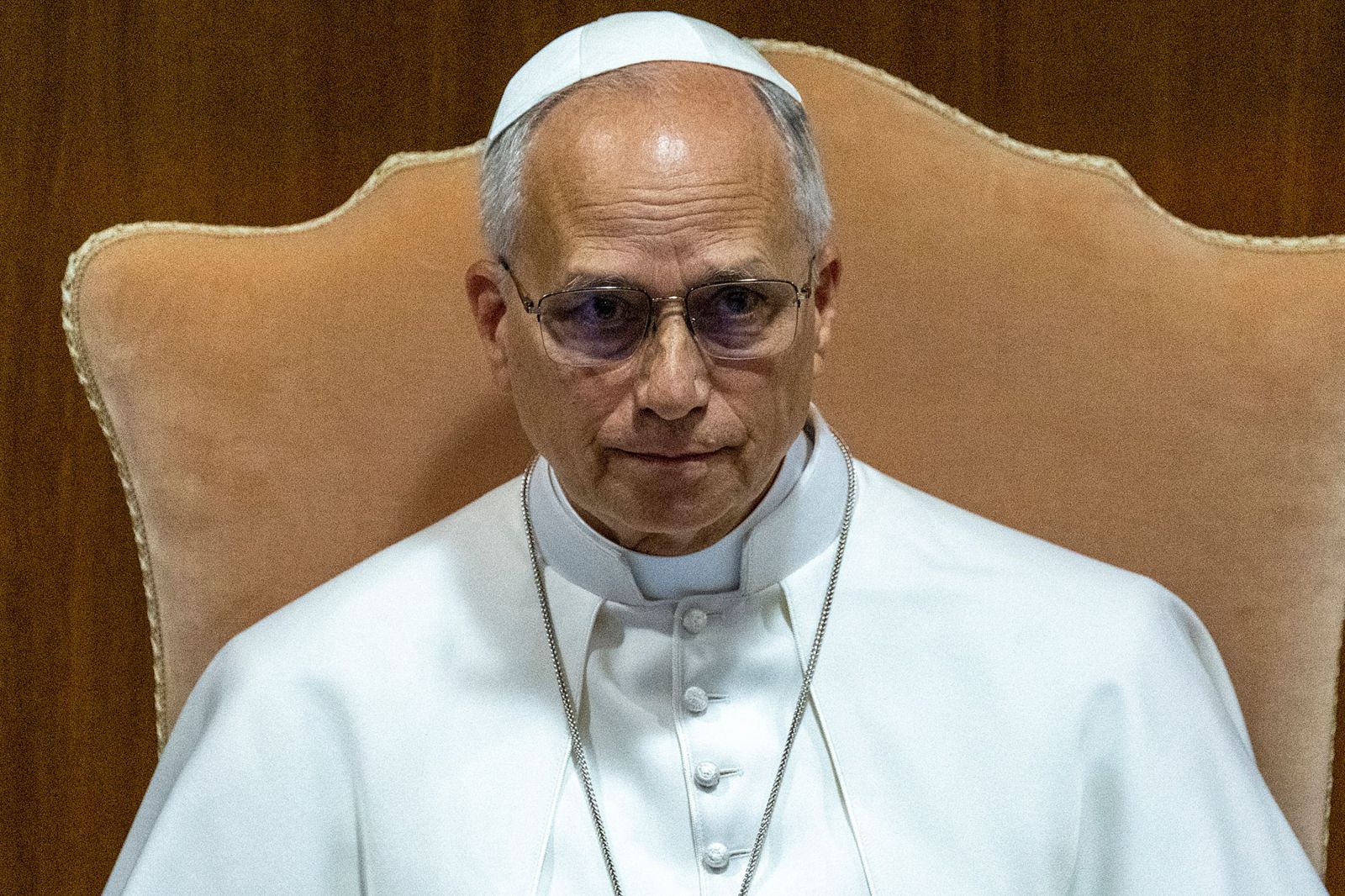
Pope Leo XIV has released his inaugural encyclical, outlining a comprehensive view on how the Catholic Church should tackle contemporary challenges, including artificial intelligence (AI), warfare, migration, and historical injustices. This 235-page document, titled Magnifica Humanitas: On Safeguarding the Human Person in the Time of Artificial Intelligence, highlights the Pope’s concerns regarding the rapid growth of AI. He calls on governments and companies to ensure that AI serves human interests instead of undermining them.
Encyclicals and Their Global Reach
Encyclicals rank among the highest forms of papal teaching in the Roman Catholic Church, typically addressed to bishops and the Church’s 1.4 billion followers. Recently, however, popes have expanded their audience to include a broader global community. For example, Pope Francis, Leo’s predecessor, dedicated his first encyclical to environmental protection. Similarly, Leo’s encyclical targets not only Catholics but also political leaders, technology firms, and society at large, cautioning that the digital revolution is reshaping human life in unforeseeable ways.
Focus on Artificial Intelligence
Central to the encyclical is a cautionary message about the increasing influence of AI and emerging technologies. Leo emphasizes that humanity is entering “a new situation” where AI, robotics, and digital systems become integral to daily life and decision-making. He acknowledges the historical benefits of technological advancement but warns of the substantial risks posed by modern technology if not aligned with the common good.
“We must ask God for the wisdom to interpret the great trends of our time, particularly technological advances,” the pope wrote. “Technology should not be considered, in itself, as a force antagonistic to humanity.”
Leo highlights new ethical concerns about human dignity, social justice, and AI’s long-term systemic impacts. Drawing on the biblical Tower of Babel, he points out the risk of creating systems focused on domination and uniformity instead of cooperation and human flourishing.
The encyclical advocates for diverse perspectives and community involvement in AI development. Leo urges governments to regulate AI development by private companies and establish robust legal frameworks with independent oversight. He emphasizes worker protection against displacement due to automation and calls for retraining programs and education enhancements to critically assess AI-produced content. Additionally, he advocates for safeguarding children from harmful online material amplified by AI.
Technology expert Chris Olah commended Leo’s call for informed and moral critique of AI development. “We need more of the world—religious communities, civil society, scholars, governments—to do what His Holiness has done here: to take this seriously, to look closely, and to push events in a better direction,” Olah said. “We need informed critics who will tell the labs when we are failing. We need moral voices that the incentives cannot bend.”
Reassessment of “Just War” Theory
The encyclical also scrutinizes modern warfare and AI’s expanding role in conflicts. Leo asserts that weapon technological advancements have detached warfare from human responsibility, cautioning against AI normalizing violence by making conflict seem remote and impersonal.
“Today, more than ever,” he wrote, “it is important to reaffirm that the ‘just war’ theory, which has all too often been used to justify any kind of war, is now outdated.”
Pope Leo stresses diplomacy, dialogue, and forgiveness as more effective conflict-resolution methods, highlighting violence’s inevitable repercussions for civilians. Although he does not specify conflicts, the encyclical follows a public disagreement with Vice President JD Vance regarding the U.S.-Israel war against Iran.
Furthermore, Leo raises concerns about autonomous weapon systems, arguing they diminish human control over warfare and enable violence easier. He cautions against delegating irreversible decisions to AI systems, insisting no algorithm can justify war morally. He warns that AI-driven warfare risks reducing victims to mere data, making violence seem inevitable.
Migrant Treatment as a “Litmus Test”
Leo’s encyclical also concentrates on migrants and refugees, viewing their treatment as society’s moral benchmark. “A litmus test for social justice today is the treatment of migrants, refugees and those forced to move due to poverty, violence, climate change and environmental disasters,” Leo wrote. “The way a society treats them reveals whether its sense of justice is driven by fear or by the spirit of fraternity.”
He advocates for safe migration pathways, humane treatment, and integration opportunities for migrants within host societies. Moreover, he calls for addressing forced migration’s root causes, such as economic inequality and climate change.
Leo insists that respecting migrant rights can turn migration into an opportunity for mutual enrichment among societies.
The Church’s Historical Legacy on Slavery
The encyclical also explores the Catholic Church’s historical legacy involving slavery and colonialism. Pope Leo acknowledges the Church’s delayed opposition to slavery and formally apologizes for its role in exploitation and oppression.
This constitutes a wound in Christian memory, one from which we cannot consider ourselves detached. It is impossible not to feel deep sorrow when contemplating the immense suffering and humiliation endured by so many in stark contrast to their immeasurable dignity as persons infinitely loved by the Lord. For this, in the name of the Church, I sincerely ask for pardon.
In the 1400s, Vatican decrees allowed Portugal and Spain to conquer lands in Africa and the Americas and enslave non-Christians. This contributed to the “Doctrine of Discovery,” justifying colonial expansion. The Vatican repudiated this doctrine in 2023.