
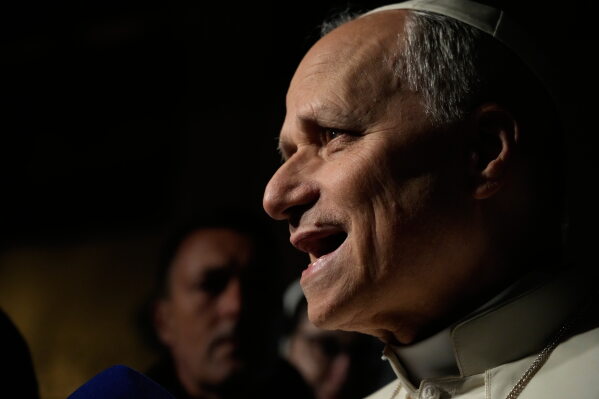
Spanish lawmakers warmly welcomed Pope Leo XIV with a standing ovation after his significant address to parliament. The pope focused on migrant rights and respect for international law. This historic event marked a new level of acceptance for the Catholic Church in Spain, a largely secular nation.
Historic Address
In his first address to the Spanish parliament, Pope Leo XIV emphasized the need for a ‘moral renewal’ in public life. He stressed the importance of respecting the inherent dignity of all individuals, including migrants, the unborn, and the most vulnerable. His statement, ‘The moral greatness of a nation is manifested above all in its capacity to accompany, protect, and love those lives that are most fragile,’ resonated with many.
Papal speeches to foreign legislatures are uncommon as they might imply recognition of a religious leader by lawmakers. Past examples include Pope Francis addressing the U.S. Congress in 2015 and Pope Benedict XVI speaking to the German Bundestag in 2011. The invitation to Leo indicates an increasing acceptance of the Church within political circles in Spain.
The Church’s Historical Context
The Catholic Church once held significant influence during Gen. Francisco Franco’s dictatorship. However, its control diminished post-democracy in the 1970s. Despite many Spaniards identifying as Catholic, religious observance has decreased, echoing trends in numerous previously Christian nations.
Leo received a seven-minute standing ovation from the lawmakers, accompanied by chants of ‘Viva el Papa!’ or ‘Long live the pope!’
Pope’s Wider Visit and Message of Peace
Leo’s visit to Spain, the first since Benedict’s in 2011, attracted large crowds, with approximately 1.5 million attending a Mass in downtown Madrid and 600,000 youths gathering for a prayer vigil.
Leo’s speech coincided with escalating tensions between Israel and Iran. He called for dialogue and highlighted the necessity of states resolving conflicts peacefully through international law. He criticized the increase in European defense budgets amidst threats from Russia and past U.S. administration statements.
Leo urged rigorous ethical oversight on AI-based automated weapon systems, stressing that life and death decisions should remain within human moral responsibility.
Support for Migrants
Spain’s government has been proactive in supporting immigration on economic and humanitarian grounds, launching legalization initiatives for unauthorized immigrants. Prime Minister Pedro Sánchez noted the economic benefits due to an aging workforce and low birth rates.
Leo encouraged international collaboration to curb migrant smuggling and improve conditions so people can remain in their homelands. He emphasized dignity and integration for those fleeing conflict or poverty and advocated for providing safe, legal pathways for migrants.
Historical References and Apologies
Leo referenced the School of Salamanca, a 16th-century Spanish intellectual movement that shaped international law and human rights concepts. He praised the theologians for recognizing moral limits on power.
He acknowledged the Church’s historical failings in the slave trade and colonial conquests, recalling his apology for the Church’s role in slavery facilitation.
Political Implications of the Visit
Leo’s visit came at a sensitive time for Sánchez amidst corruption scandals involving close associates. Spain faces growing political polarization, with the government struggling to pass legislation.
Addressing this, Leo cautioned against political pluralism turning adversarial. Despite traditionally aligning more with the conservative Popular Party, the Church under Pope Francis and Leo has found common ground with the progressive government on justice issues.
Rafael Ruiz Andrés, a sociology professor, notes the narrowing gap between the Vatican and progressive administrations.