
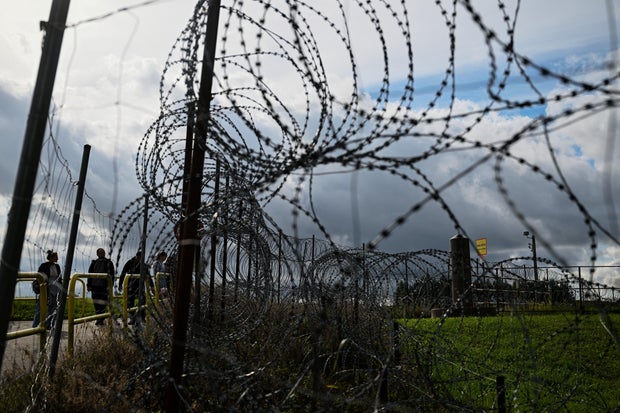
Poland has initiated a significant security operation along its border with Russia’s Kaliningrad, according to the national police chief. The Polish prime minister highlighted that this measure may have thwarted potential sabotage or provocations aimed at the NATO member.
In this effort, additional police and counterterrorism units, alongside troops from the elite military special forces unit GROM, have been mobilized. National Police Chief Marek Boroń stated that the operation would continue from Monday until at least November 8.
Warnings from Polish and allied intelligence agencies had indicated possible sabotage and provocations during the first half of November. These warnings focused on potential armed incursions along Poland’s border with Kaliningrad, raising security alerts in the northeast regions of Warmia-Masuria and Podlaskie.
A notable observation came from Prime Minister Donald Tusk, who reported suspicious activities, including the presence of individuals with flashlights near the border with Kaliningrad. He indicated that swift action by Polish security forces potentially averted an unspecified provocation.
We quickly mobilized necessary security forces on site, preventing any attempted provocations, if that was the intention,Tusk clarified. Intelligence had highlighted potential for provocations, such as armed intrusions into Polish territory.
A special command center at the Polish national police headquarters now coordinates the security operation. The initiative aims to safeguard the public, detect suspicious activities promptly, and avert attacks on essential infrastructure.
Kaliningrad, bordered by NATO members Poland and Lithuania and the Baltic Sea, holds considerable military and strategic importance. Russian intelligence agencies, like the FSB and GRU, are believed to maintain a presence there.
Bordering Kaliningrad to the east lies the Suwałki Corridor, a crucial land connection between the Baltic NATO states and the broader alliance. The area features a brief border shared by Poland and Lithuania, situated between Russian and Belarusian territories.
By Tuesday, no evidence of specific sabotage or attack plans from Kaliningrad was published. However, weeks of low-level incidents across Europe, primarily blamed on Russia, have heightened caution.
Earlier, Polish Prime Minister Tusk, during a joint press conference with Lithuania’s prime minister, discussed with NATO Supreme Allied Commander Alexus Grynkewich concerns about rising sabotage threats, including border crossing attacks.
MI5 Chief Sir Ken McCallum emphasized that Russia remains the top state threat to the U.K. and Europe. He noted Moscow’s persistent attempts at hybrid warfare, careful to remain below the NATO Article 5 threshold, which calls for collective defense.
This year, numerous incidents have been attributed to Russia across Europe. These include an August fire at a Polish factory producing military components, and a September arson attack targeting a Starlink satellite ground station. In Eastern Europe, Russian drones frequently entered NATO airspace amid the Ukraine conflict.
Recently, the UK Royal Navy intercepted a Russian spy ship near Scotland. Helicopters were dispatched to monitor the ship closely during a NATO exercise near the Outer Hebrides islands.