
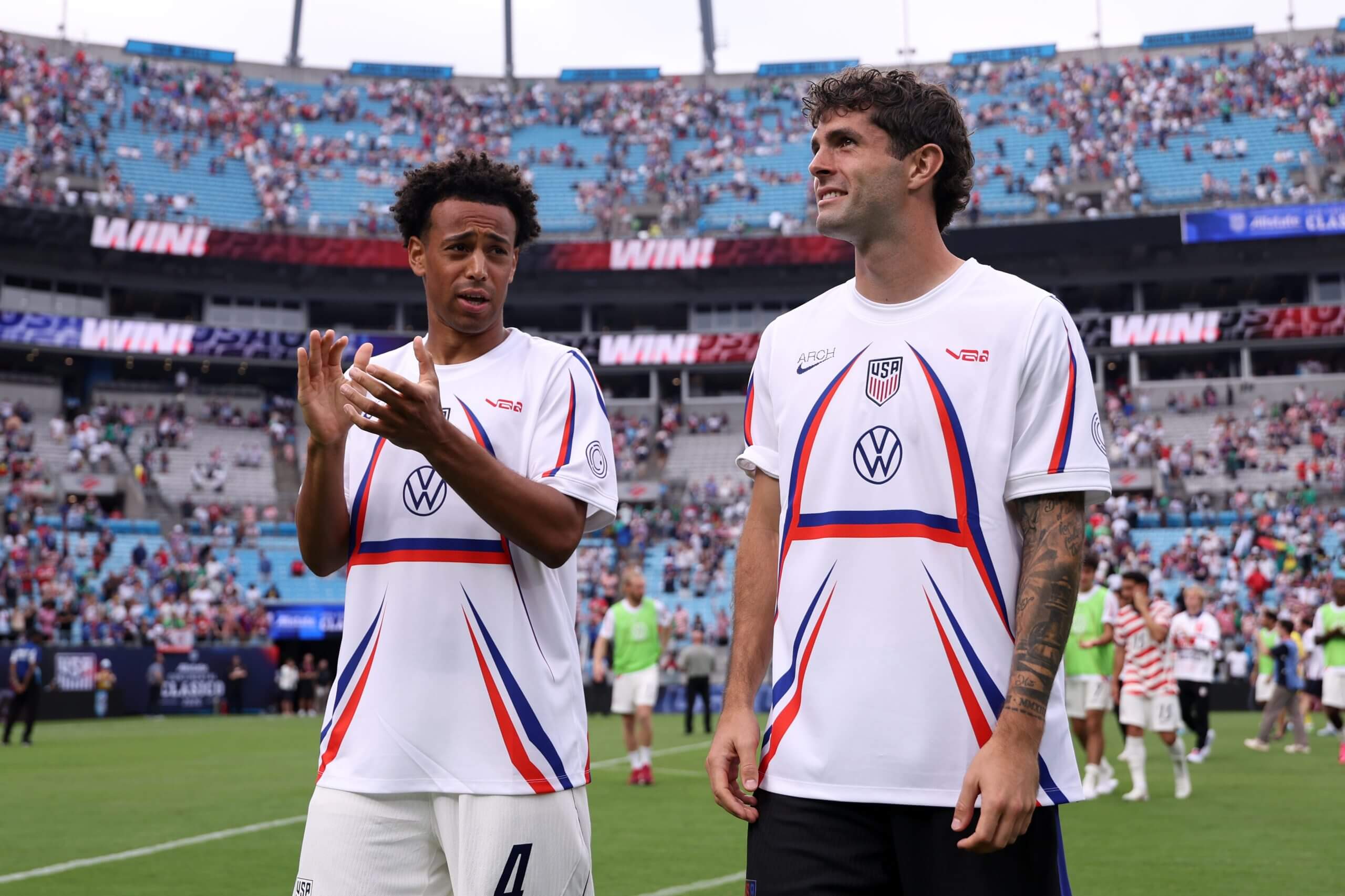
In Charlotte, North Carolina, the U.S. Men’s National Team under Mauricio Pochettino demonstrated its potential after months of speculation. Players had rotated in and out, showcasing varying levels of intensity and shifting formations, making it hard to predict their performance in future competitions. However, Sunday’s match gave a glimpse of what the team can achieve at the 2026 World Cup.
A Glimpse of Potential
The match against Senegal ended in a 3-2 victory for the U.S., displaying incisive runs, probing possession, and unpredictable movement. While not without errors, the game highlighted the team’s upside, revealing that the concerns over past performances may be dispelled by this renewed effort.
Key Players Shine
Christian Pulisic, after struggling over the past months in Milan, was back in form, scoring and assisting in the game. On the right flank, Sergiño Dest demonstrated effective interplay with Alex Freeman, whose dynamic movements and ability to position himself skillfully contributed to the team’s second goal.
Freeman’s technique to seamlessly shift between roles added a new dimension to the team’s play, keeping the Senagalese defense on their toes.
Midfield Adjustments
In the midfield, Gio Reyna played steadily but without significant impact. Sebastian Berhalter, although earning compliments from Pochettino, seemed outmatched. The coach envisioned a scenario where Weston McKennie instead helped dominate the midfield, as he did in the second half alongside Malik Tillman and Folarin Balogun.
This substitution highlighted the potential strength of the U.S. midfield when full team personnel are utilized effectively.
Defensive Challenges
Defensive frailties surfaced as the U.S. conceded two preventable goals. One was partially due to system flaws, as Berhalter’s positioning left the team vulnerable during transitions. Experienced defenders, such as Chris Richards, could mitigate these risks. The other goal resulted from errors by backup players Miles Robinson and Chris Brady, who are unlikely to feature prominently in the World Cup.
Building with Purpose
Tyler Adams and Christian Pulisic reflected on the game positively. According to Dest, the U.S. played dominantly, a sentiment echoed by Senegal’s coach, Pape Thiaw, who acknowledged the difficulties faced by his team.
Pochettino’s vision materialized on the field: dominating play through possession and pressing high up. His strategy, focusing on control and quick ball movement, was implemented as players like Tillman and McKennie adapted to new roles.
This match marked a turning point. After extensive discussions and planning, Pochettino witnessed his team’s potential come to life. The commitment and talent observed offered assurance that, although not yet certain, the team can make a significant impact at the World Cup and resonate with fans across America.