
Bob Brooks delivered a concise six-minute speech to union leaders and supporters in Bethlehem, Pennsylvania, on Monday. As the head of the state firefighters union and a Democratic contender for a critical House seat in the Lehigh Valley, Brooks emphasized his working-class roots, dating back to his first job as a paperboy at age ten. He criticized the system as being stacked against regular people and stressed the necessity of electing representatives like himself to Congress.
Meanwhile, Ryan Crosswell, a rival Democrat and former Marine and prosecutor, presented a contrasting message. Crosswell, who previously resigned from the Justice Department over a controversial corruption case, voiced his opposition to former President Donald Trump. He argued that the Trump administration disregarded the law and highlighted corruption as a key issue in the election.
These opposing viewpoints illustrate a broader debate within the Democratic Party. Key party figures, spanning the ideological spectrum from Senator Bernie Sanders to Pennsylvania Governor Josh Shapiro, have rallied behind Brooks. Their support reflects a strategic choice, with operatives believing Brooks connects better with voters on economic issues. Brooks’ working-class background plays a significant role in this alignment with prominent Democratic support.
However, Crosswell still fits the mold of a candidate traditionally sought by Democrats in swing districts. His military and legal experience, along with his anti-Trump stance, have helped generate significant fundraising, outpacing Brooks by substantial amounts. Crosswell argues that his track record of standing up to Trump speaks volumes about his dedication.
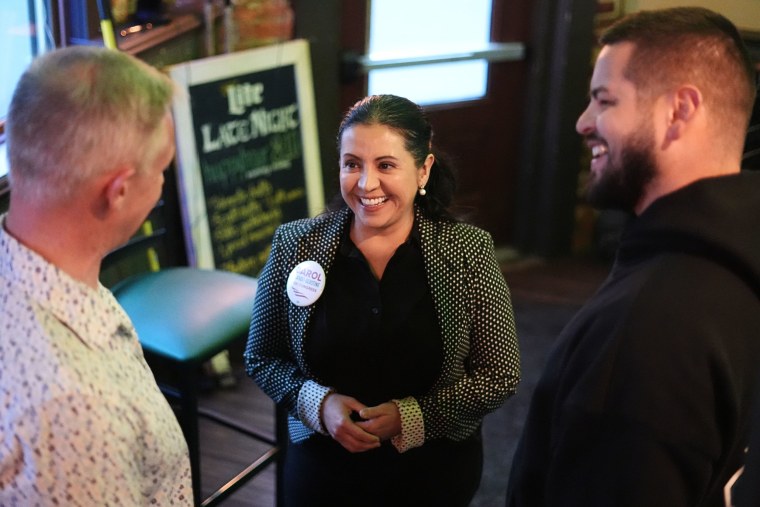
In a primary with varied background candidates, including former Northampton County Executive Lamont McClure and engineer Carol Obando-Derstine, the race promises to be competitive. These contenders aim to unseat Republican Representative Ryan Mackenzie in a district with a history of narrow electoral margins.
Brooks, who also runs a local business, believes his supporters recognize the need for change. He argues that the party’s elite image has alienated many working-class members and sees himself as a catalyst for inclusiveness. Despite endorsements from notable figures like Sanders and Buttigieg, Brooks faces tough competition. Rep. Susan Wild, former representative of the district, supports Obando-Derstine, while other Democratic leaders back different candidates.
Scrutiny of Brooks’ past controversial social media posts and financial disclosures have drawn attention. Nonetheless, his supporters view his candidacy as a demonstration of the party’s evolving inclusiveness. Critics within the party highlight the need to appeal to a broader demographic, including women and Latino voters, essential to winning the district.
Whether Brooks or another candidate emerges victorious, this race is a test of the Democratic Party’s strategy in swing districts. It examines whether a working-class populist or a converted Republican is more adept at widening the party’s appeal and addressing the concerns of voters beyond its traditional base.