
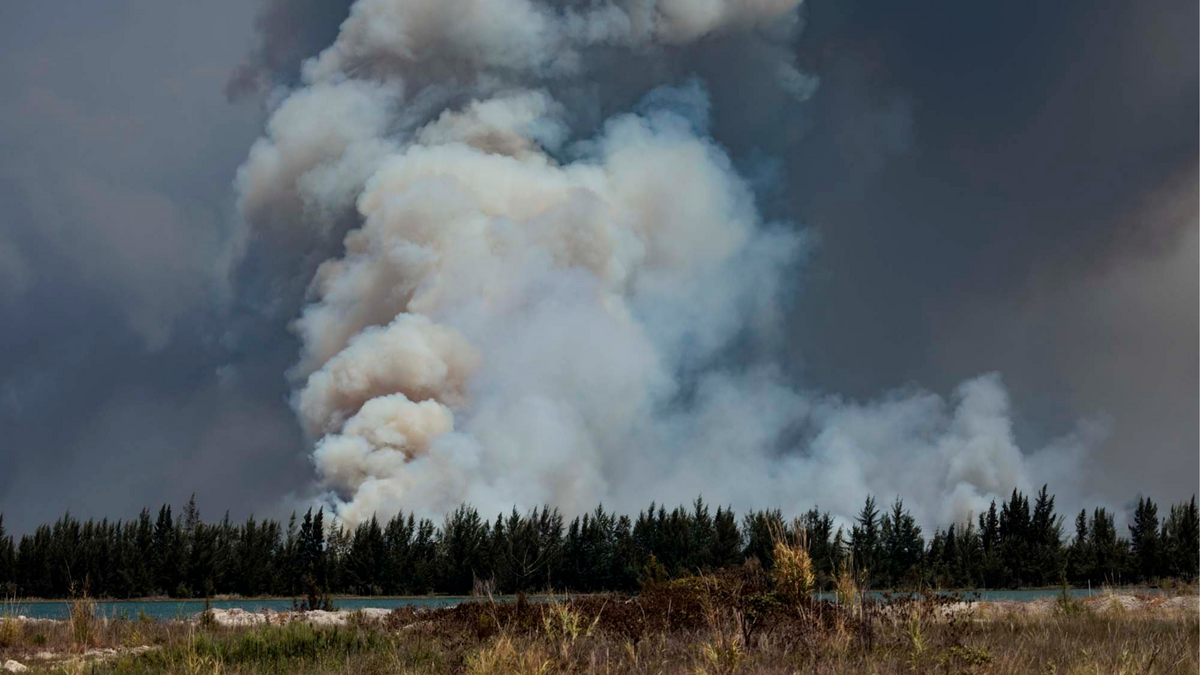
Smoke and flames continued to rise from a brush fire on Wednesday, June 17, 2026, in west Miami-Dade, near Doral. A photograph by Alie Skowronski captures the scene as firefighters work to control the situation.
The fires in West Miami-Dade have scorched almost 22,000 acres since the previous week. Although they were nearly contained by Monday, concerns about air quality persist across the county. Chris Fisher, a meteorologist from the National Weather Service in Miami, mentioned that while the fires appear to be contained, they are still burning within those containment lines.
Focusing on the Quarry Fire near Northwest 137th Avenue and 41st Street, it has burned through approximately 19,000 acres, reaching 97% containment by Sunday, according to data from the Florida Forest Service. The Wells Fire, located near Northwest 122nd Avenue and 58th Street, consumed about 2,750 acres and was 85% contained. Another fire, a 330-acre wildfire in the Everglades, was only 15% contained by Monday.
The Quarry and Wells fires began on June 14 due to a thunderstorm, leading to dozens of firefighters combating the flames and displacing hundreds of residents. Nearby communities experienced smoke, soot, and ash being carried by the wind.
Despite progress in managing the fires, an air quality alert remains effective in Miami-Dade County until 3 p.m. Tuesday. Chris Fisher explained that surface smoke might worsen overnight as thunderstorm winds calm down. There is a possibility of showers and storms on Tuesday, bringing patchy smoke across metropolitan Miami-Dade. Temperatures are expected to reach highs in the mid-90s, with lows in the upper-70s.
Given the conditions of air quality, heat, and humidity, Fisher emphasized the importance of taking precautions. People should limit outdoor activities during the evening and early morning. Staying indoors with windows closed is advised for those with sensitivities and individuals working outside overnight, as they are the most vulnerable.