
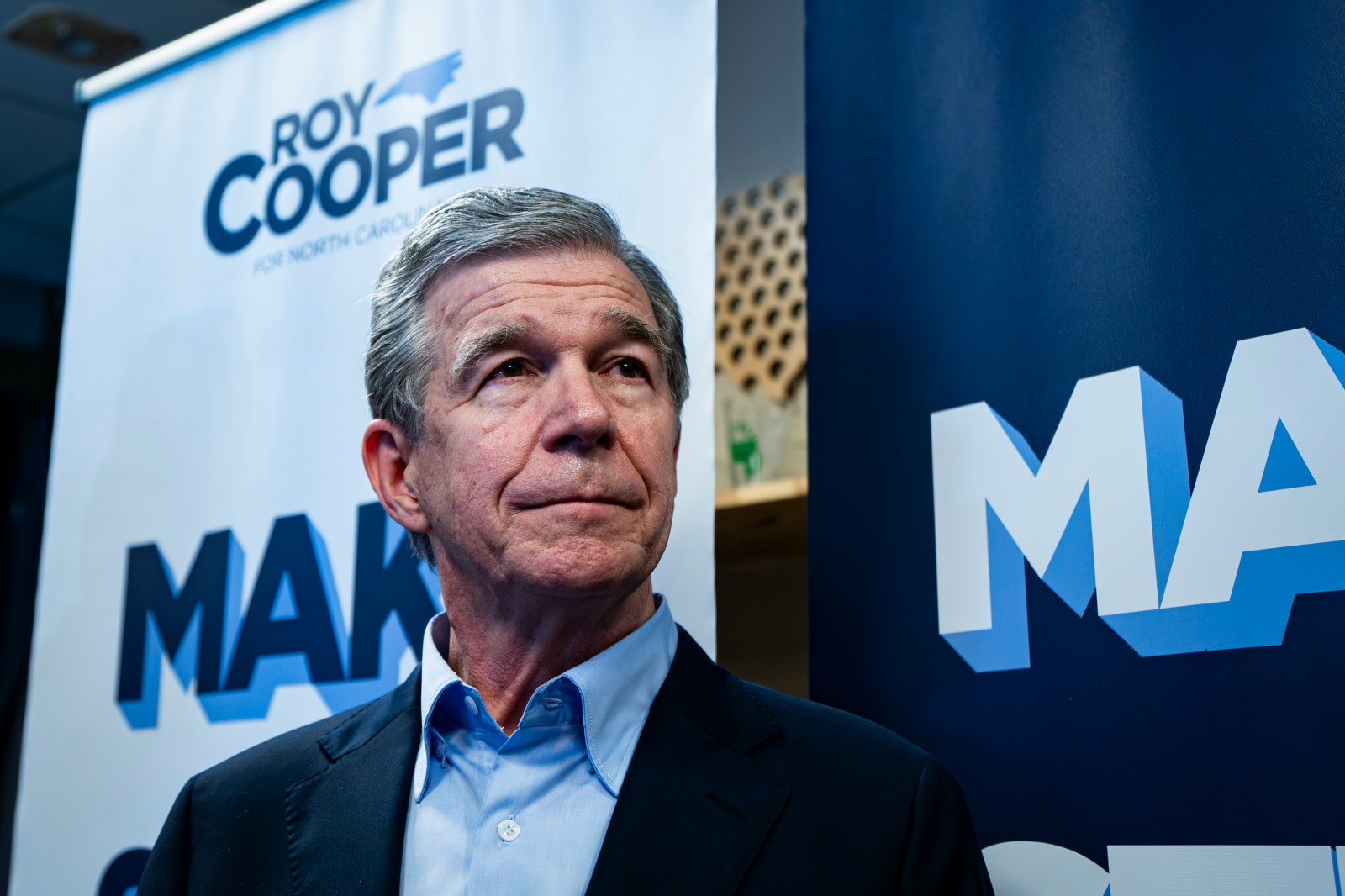
Cooper vs. Whatley: Polling Leads and Voter Sentiment
In the run-up to the 2026 midterm elections, former Governor Roy Cooper, a Democrat, holds a substantial lead over Michael Whatley, the ex-Republican National Committee Chair. The latest polling data, released by Catawba College, indicates Cooper is ahead by 14 points, garnering support from 48% of surveyed North Carolinians, compared to Whatley’s 34%. Notably, 15% of respondents remain undecided.
Michael Bitzer of Catawba College attributes Cooper’s advantage to independent voters who support him more than two-to-one. This political climate seems to reflect a classic mid-term scenario, where voter sentiment operates as a referendum on the sitting president’s performance.
The survey polled 1,000 individuals between June 1 and June 10, with a margin of error of ±3.83 percentage points.
Comparative Polls: Consistent Leads for Cooper
Cooper’s strong position is reiterated in other polls. A Harper Polling/Carolina Journal survey gives him an 11-point edge, with 49.8% of respondents backing him. Whatley trails with 38.7%. This sample involved 600 likely voters, collected on May 10-11, with a margin of error of ±4 points.
Meanwhile, a High Point University/YouGov poll from late March to early April found Cooper leading by 8 points. In their survey, 50% of participants indicated support for Cooper, against 42% for Whatley. This study involved 703 people and had a margin of error of ±4.3 points.
In contrast, a Quantus Insights poll suggests a tighter race, with 49% favoring Cooper and 44% backing Whatley. The poll involved 987 voters on March 31 and April 1 and noted a margin of error of ±3.5 points.
Prediction Markets and Market Sentiments
Besides polls, prediction markets show confidence in Cooper’s potential success. He holds an 85% chance of winning according to Kalshi and 86% according to Polymarket. Prediction markets, which allow the trading of contracts tied to political outcomes, reflect current trader sentiment but do not guarantee election results.
Democrats Eye North Carolina as a Key State
The Democratic Party views North Carolina as a crucial battleground in the Senate. The state offers a potential path to a Senate majority, with Democrats aiming to flip the seat from retiring Republican Senator Thom Tillis. Historically, Democrats have performed well in gubernatorial races yet struggled in Senate elections, not winning since 2008 when Kay Hagan succeeded.
Recent elections reveal varied results, with Democrats unable to secure federal wins despite gains in state races. The pattern holds in the current gubernatorial landscape, where Democrats maintain a stronghold, as demonstrated by Josh Stein’s victory after succeeding Cooper.
The Broader Senate Race Context
Nationally, Democrats face challenges across several states. The Republican majority in the Senate stands at 53-47. To regain control, Democrats must secure four additional seats. Besides North Carolina, Maine represents another prime target. Conversely, seats in Georgia and Michigan see Democrats defending in areas where Trump found success.
The overall strategy involves potential openings in traditionally conservative states like Alaska, Iowa, Ohio, and Texas, where Democrats see opportunities despite challenging terrains.
Forecasts from experts like Cook Political Report and Sabato’s Crystal Ball project the North Carolina race as favorable to Democrats, although they maintain it’s still competitive.