
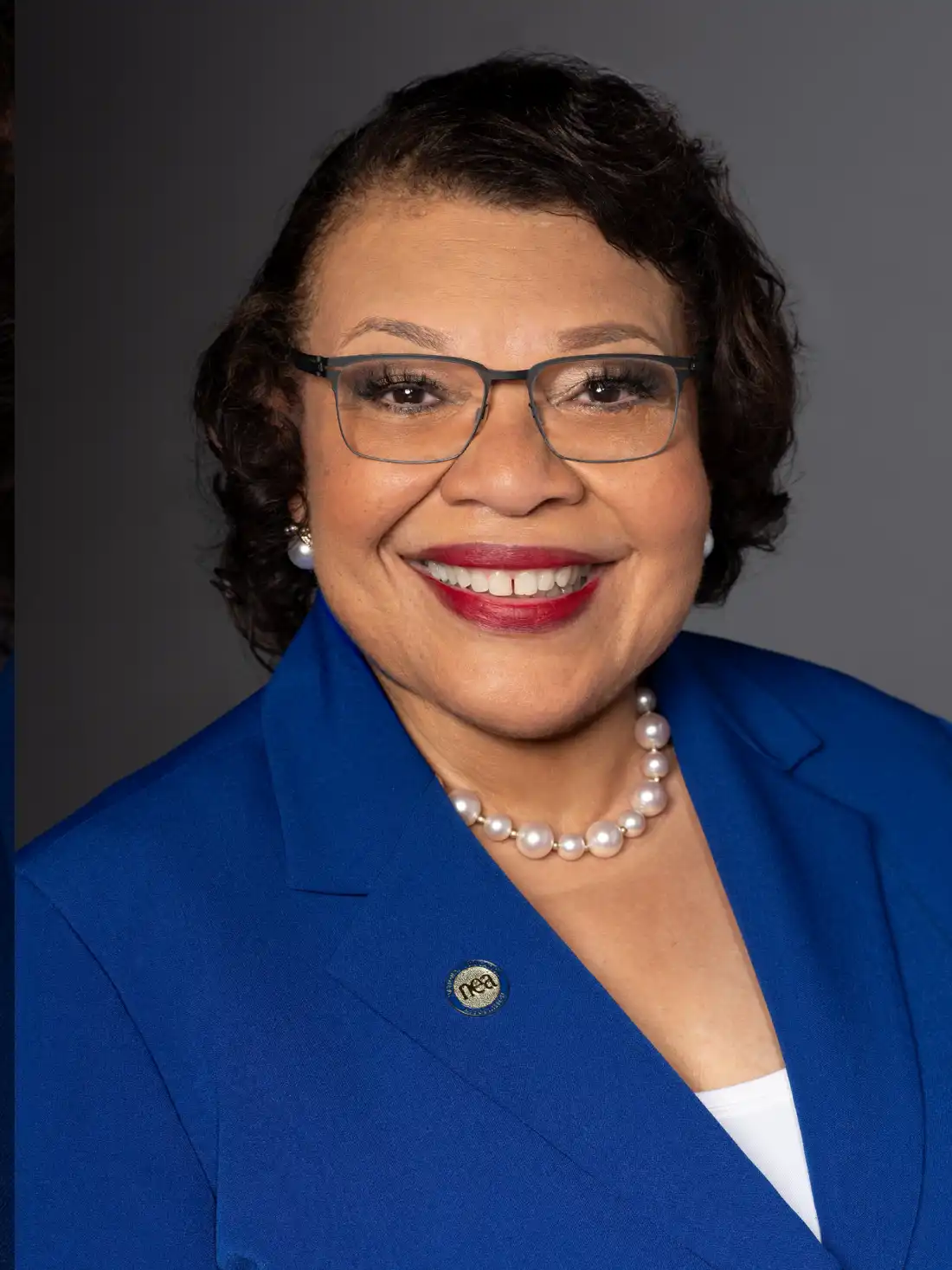
Princess Moss, a longtime music teacher, was elected as president of the National Education Association (NEA), the largest labor union in the United States, during the summer. She assumed leadership in September.
The current public education scene faces challenges like budget pressures due to inflation, and a looming education tax credit set to allocate federal tax resources to private schools starting January. Simultaneously, the Trump administration is reducing the Department of Education’s influence. Recognizing the urgency, Moss steps up as the figurehead of the NEA, which represents 3 million educators and public employees nationwide.
Public education is under attack. Our students are under attack. The very foundation of this democracy is public education…that is under attack.
Her strategic approach for NEA, termed “resistance to renaissance,” incorporates elements of prior leadership by emphasizing professional autonomy and community organizing. However, Moss intends to redirect the union’s alignment away from any political party to establish its own political authority. She asserts confidence in this approach, drawing on previous successes.
Moss’s roots trace back to Spotsylvania County, Virginia, where she was inspired by educators despite personal challenges. Her second-grade teacher notably encouraged her even after she misspelled the word refrigerator, fostering Moss’s ambition for a teaching career.
After over two decades teaching music at an elementary level and advancing in union roles, Moss prepared herself for leading NEA amidst a politically charged environment with her three-year term.
The Virginia experience taught her that issue-focused discussions can uncover supportive allies irrespective of political alignment. At that time, Virginia’s political scenario combined a Democratic governor with a Republican-controlled assembly. Moss advocated for partnerships across political divides, enhancing public education.
As midterms approached, Moss conveyed to NEA members the importance of concentrating on student needs rather than party politics.
Michael Petrilli, from the Fordham Institute, questions the feasibility of Moss’s nonpartisan goal for NEA.
Look, that would be a huge departure for the NEA. They have been stalwart supporters of the Democratic Party and vice versa.
Historically, NEA endorsed Democratic candidates such as Joe Biden in 2020 and issued support for Vice President Kamala Harris in 2024. Despite skepticism about union roles in limiting educational advancements, Petrilli is curious about NEA’s future influence on education policy, particularly given potential Democratic successes in upcoming elections.
Moss remains committed to forming a diverse coalition advocating for public schools, willing to collaborate with anyone prioritizing education above political leaning.
The bottom line is that we will work with those who want to put public education first, no matter what the political party, no matter what your inclination.
Edited by Nirvi Shah. Audio story produced by Lauren Migaki.