
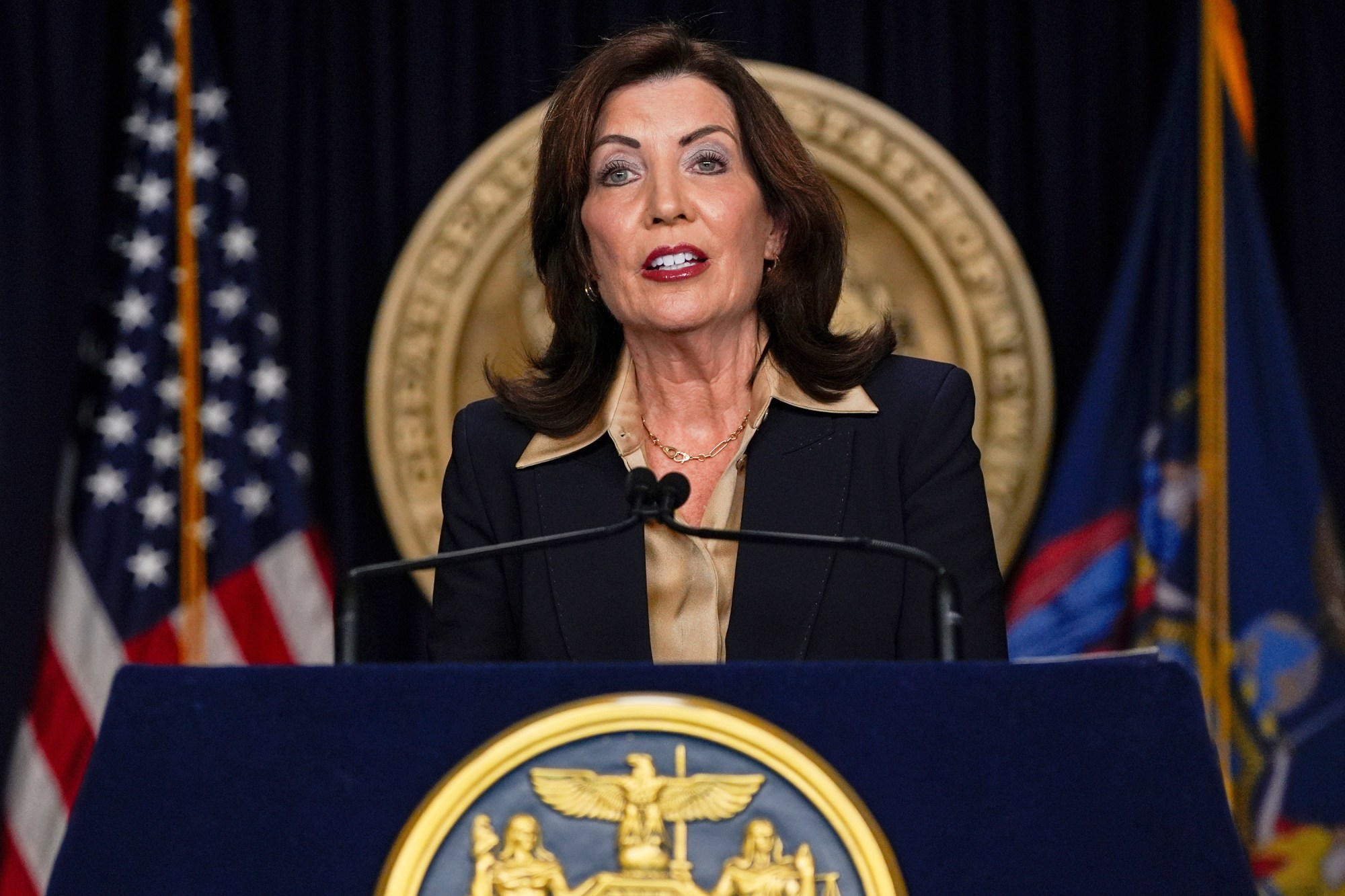
A new law in New York mandates that advertisements using artificial intelligence-generated people must clearly label the use of a “synthetic performer.” This regulation, signed by Governor Kathy Hochul in December, is now active. Her office considers it a pioneering law aimed at increasing transparency as AI-generated performers appear in various media forms, including social platforms and digital advertising.
Under this law, a synthetic performer is classified as “digitally-created media that appear as a real person.” The law encompasses ads across all media. Governor Hochul, a Democrat, stated that New York is establishing rules to manage AI’s influence effectively. The law’s requirement for a “simple, honest disclosure” protects consumers, respects creative professionals, and maintains New York’s leadership in responsible innovation.
Non-compliance with this disclosure stipulation will incur penalties: $1,000 for the first violation and $5,000 for subsequent violations. However, certain exemptions exist within this law for advertisements related to movies, television shows, streaming content, video games, and other complete works featuring synthetic performers. The law does not apply to audio ads or those utilizing AI solely for language translation.
During the legislative process, several advertising bodies, including the American Association of Advertising Agencies, vocally opposed the bill. The organization, also known as the 4As, argued that the law introduces compliance uncertainty, placing an undue burden on advertisers and potentially stifling innovation. The New York State Broadcasters Association expressed relief over certain exceptions added through amendments, though concerns about the broad definition of a synthetic performer persist. The association’s president, David Donovan, confirmed that local broadcast stations are prepared to adhere to the law’s requirements.
The law enjoys robust support from the actors’ union SAG-AFTRA, which recently agreed on a new contract reinforcing safeguards against synthetic performers. This law is part of a broader trend across various U.S. states aiming to enhance job security for humans and curb AI-related privacy and safety risks. Current state laws address issues like deepfakes, the collection of personal data, and demand increased transparency from businesses.
Shortly after New York’s legislative move, President Donald Trump issued an executive order discouraging states from regulating AI, fearing that diverse regulations could restrain AI companies’ growth and allow global competitors to close the technological gap. Critics of this order argue it permits tech firms to operate without sufficient oversight.