
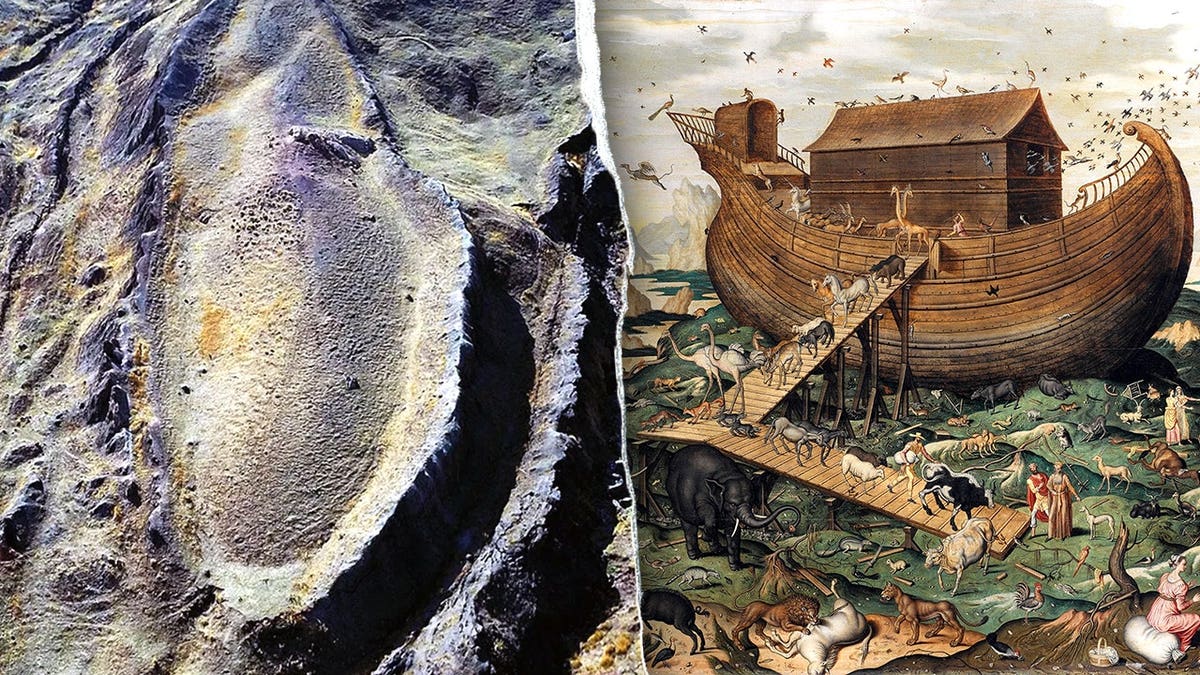
Recent soil data from the Durupinar site in Turkey may support claims of Noah’s Ark remains, according to researcher Andrew Jones of Noah’s Ark Scans. Appearing on “Fox & Friends,” Jones expressed confidence in the site’s potential for containing the biblical vessel.
The Durupinar formation, located in eastern Turkey, has sparked debate since its identification in the 1950s. Some geologists assert it’s a naturally occurring structure, while others believe it supports the Ark theory. A 1996 paper in the Journal of Geoscience Education argued it was merely a natural rock formation.
Researchers suggest new soil analysis shows chemical differences consistent with decayed organic material.
Jones noted that the new findings are compelling for a man-made origin. Inside samples show three times more organic matter than those outside, implying a concentration of decayed carbon-based material like wood or animal matter.
Authors Lorence Gene Collins and David Franklin Fasold previously labeled Noah’s Ark claims as “bogus,” describing the site as natural rock. However, the latest soil analysis reveals chemical differences hinting at decayed organic material beneath the surface. Soil samples collected in 2024 showed 38% more potassium and an eight-fold difference in pH levels within the boat shape.
Jones remarked that the notable pH change indicates a distinct chemical history from the surrounding soil. This suggests a closed system where organic materials decayed, altering the site’s chemistry.
The findings will likely intensify the debate about the Durupinar site’s origins. According to Jones, the data suggests an internal complexity that’s hard to ascribe to natural processes.
Further testing, including core drilling and 3-D mapping, is being requested from Turkish scientists.
“We really believe that this layout … would suggest it’s a man-made object and not just a natural formation,” Jones stated. He referenced scan data revealing subsurface features that may align with descriptions in biblical texts.
Jones shared that research indicates the existence of tunnels beneath the formation, suggesting a structured layout, bolstering the hypothesis of a man-made origin. He highlighted earlier analyses from 2019 that identified anomalies through 3-D ground penetrating radar scans.