
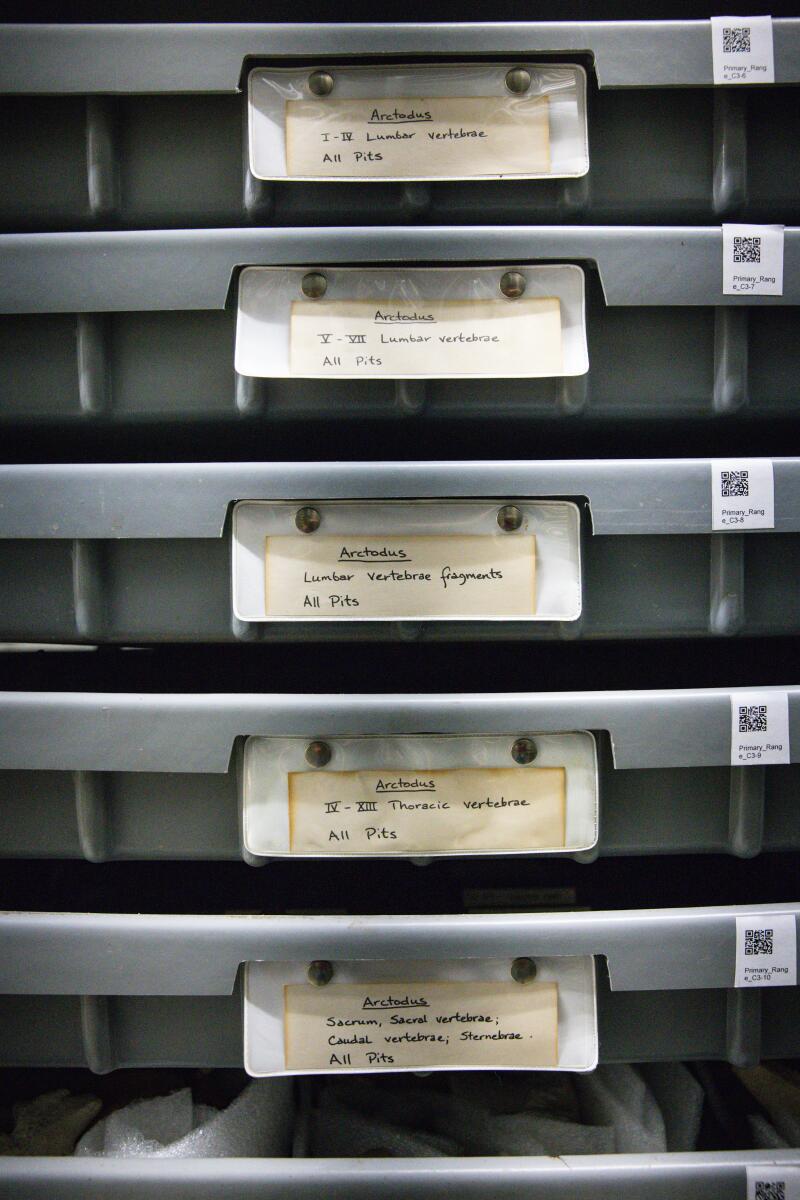
The La Brea Tar Pits are currently packed with crates labeled meticulously with notes such as “bison skulls” or “camel hip.” Each fossil, including dire wolf ribs and ancient vertebrae, needs careful packing in custom foam shells. This task precedes a massive renovation set to close the museum on July 6 and reopen in summer 2028.
The revamped Hancock Park museum will anchor the Samuel Oschin Global Center for Ice Age Research. This facility aims to enhance understanding of the era’s history uniquely preserved here.
New structures will largely adhere to the existing building’s outline. They will showcase the museum’s collection while contextualizing its significance in relation to current ecosystem changes.
Fossil exhibits include a restored Columbian mammoth inside the Fossil Lab.
Packaging the 3.5 million fossils for temporary relocation is a daunting task likened to a difficult house move because of the quantity and fragility. Relocating the museum far is impractical as the tar pits are naturally settled from about 60,000 years ago when crude petroleum emerged.
The tar trapped species over 49,000 years, from pollen to mammoths, creating an extensive record of life in ancient Los Angeles. Regan Dunn, a paleobotanist, highlighted the unparalleled nature of these deposits.
Studies by Dunn and curator Emily Lindsey link biodiversity collapse during the Ice Age with human activity and associated fires. The museum’s narrative underscores the relevance of extinction and ecological resilience.
Current exhibits fall short, according to staff. Misrepresentations linger, such as the notion that the pits operated like quicksand, swallowing animals whole, while in reality, a mere tar layer immobilized them.
Past exhibits feature minimal coverage on crucial Ice Age components like bugs and plants, with outdated displays from the 1980s. An optical illusion of a saber-toothed cat inaccurately represents the animal’s anatomy.
Community feedback influenced renovation plans, ensuring iconic features like grassy slopes and tar pull exhibits stay. The exterior mammoth sculptures will also remain with scientific alterations.
Inside, the redesign will better utilize space for exhibits, research, and educational activities. The courtyard will show vegetation more relevant to the Pleistocene period.
Returning displays include current and new Ice Age skeletons like a ground sloth and “Zed,” a nearly complete Columbian mammoth. Zed will be showcased in a combat pose, indicating how he most likely died.
A dedicated team manages the meticulous packing for relocation during renovation. On-site, volunteers maneuver carts laden with categorized fossils.
The Fish Bowl, a popular lab viewable to visitors, features volunteers cleaning fossils while interacting with observers. Although it will continue throughout the renovation, a temporary mobile program will engage around 34,000 schoolchildren yearly visiting on field excursions. The new design will enhance the laboratory experience.
Volunteer preparators note the unusual aspect of continuing their work without onlookers, highlighting the community interaction they enjoy.