
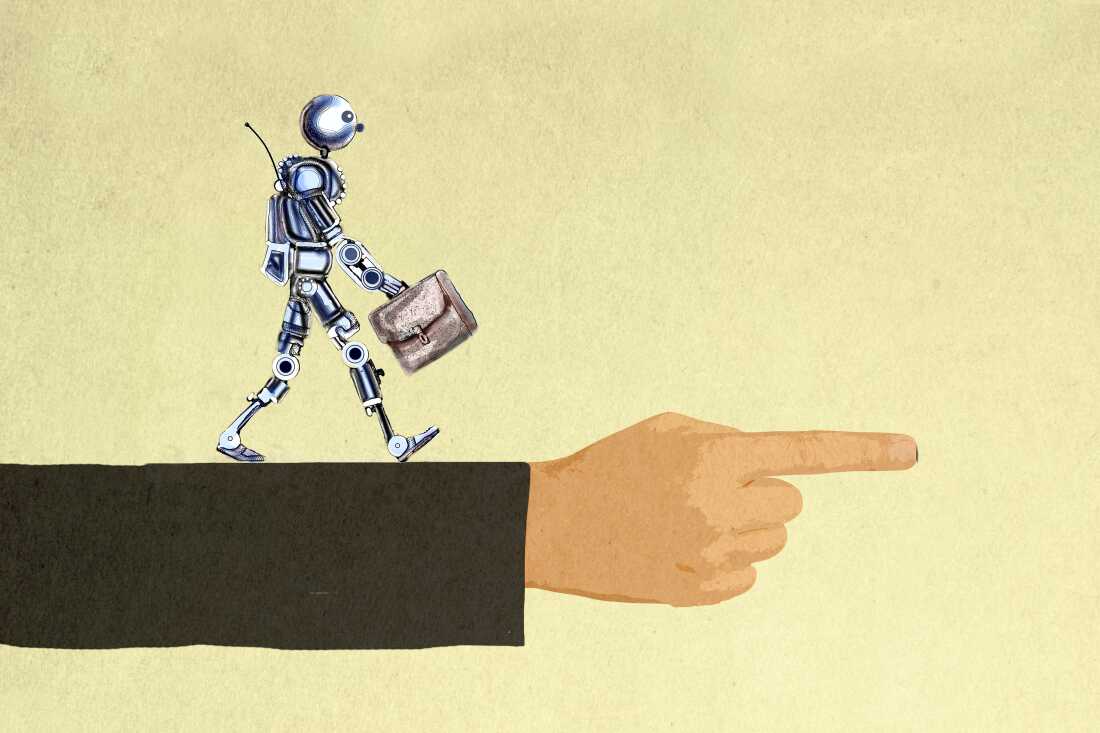
Irene Chang, a 21-year-old engineering graduate from Georgia Tech, chose her major to solve problems and secure a stable career. Despite her efforts, finding a job remains challenging. Over the past year, she applied for around 450 entry-level data analyst roles, attending 19 interviews without receiving any job offers.
Similarly, Jacqueline Kline, 25, earned a master’s in communications from Florida State University. Despite networking, internships, and proactive job applications, she hasn’t landed a position after applying to over 500 entry-level jobs since last December. Both Chang and Kline suspect AI’s influence in their job search difficulties.
AI’s Role in the Job Market
According to the Federal Reserve Bank of New York, the unemployment rate for recent graduates (ages 22 to 27 with a new degree) was 5.7% in June, surpassing the rate for all workers at 4.1%. Many graduates attribute their employment struggles to AI. A survey by ZipRecruiter showed 47% believe AI impacted hiring in their sectors across 2023.
Insights from Economists
Erik Brynjolfsson, a Stanford economist, believes AI affects entry-level roles. His analysis indicates a 16% decline in employment for early-career workers (ages 22 to 25) in AI-exposed jobs, such as software development and marketing, since late 2022. In contrast, older workers in these fields and those in non-automatable positions, like healthcare or construction, experienced stability or growth.
Young workers feel the job crunch because economic contractions often lead to junior role cuts, says Brynjolfsson. AI’s reliance on codified knowledge overlaps with entry-level skills. However, AI lacks the wisdom of on-the-job experience, shielding senior workers.
Harvard economist David Deming sees another factor at play: remote work. He argues the decline in junior hiring began six months before ChatGPT’s release. His analysis suggests remote work, not AI, explains younger grads’ unemployment rise. Companies find training entry-level workers remotely more challenging and prefer hiring experienced individuals.
Anders Humlum, an economist at the University of Chicago, notes that if AI were replacing entry-level jobs, AI-reliant companies would hire fewer employees. However, a study by Ramp and Revelio Labs reveals a 12% growth in entry-level hires at firms heavily investing in AI in the two years post-adoption.
Future Prospects
The economists agree a significant employment shift looms, potentially bigger than the Industrial Revolution, according to an open letter they signed. While concerned about possible job displacement, they’re optimistic about AI’s potential benefits. Brynjolfsson views the era as an exciting time with unprecedented possibilities. Humlum advises patience, warning against premature conclusions. Deming believes AI will ultimately aid more than harm workers.
His advice to graduates like Kline and Chang: “Hang in there.”