
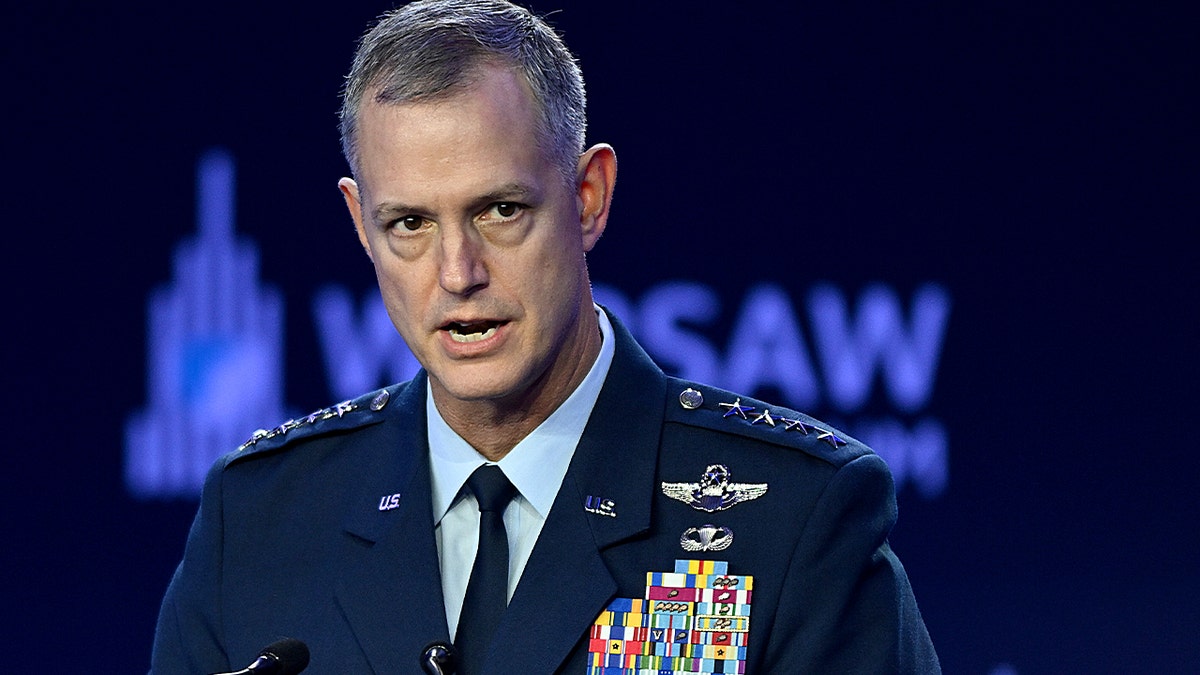
NATO’s military commander emphasized the alliance’s readiness to counter threats to its territory. U.S. Air Force Gen. Alexus Grynkewich, speaking in Poland at the Warsaw Security Forum, warned that NATO would destroy any support for attacks on its members. He highlighted the alliance’s capacity to incapacitate enemy systems if any offensive from Russia occurs.
General Grynkewich outlined a strategy centered on “blocking, blunting, and breaking” adversary forces. While NATO is fundamentally defensive, it remains prepared to respond forcefully to any assault. He stressed that any attack on the 32-member alliance would be resisted decisively, rendering hostile objectives unattainable.
His comments followed increased tensions between Russia and Western nations. These tensions arose from drone incursions and suspected sabotage operations tied to Moscow. European countries have become more vigilant in the face of these hybrid warfare tactics.
In 2025, Russian drones breached Polish airspace during a large-scale attack on Ukraine, prompting Poland and allies to act defensively. NATO responded with Operation Eastern Sentry, aimed at bolstering defenses on the eastern front. Meanwhile, Romania and Estonia reported similar violations by Russian forces.
Moscow’s offensive actions against Ukrainian energy infrastructure persist, despite diplomatic efforts for peace. Russian-U.S. agreements led to increased diesel supplies, lifting some sanctions. However, Russia’s nuclear threats continue to loom, especially regarding NATO’s stance on Kaliningrad, a heavily militarized area.
Russia’s warnings highlighted the risk of armed conflict if NATO attempts to isolate Kaliningrad. Moscow threatened the use of nuclear weapons, which NATO’s Secretary-General Mark Rutte dismissed while emphasizing the alliance’s defensive intentions.
Despite not naming Russia directly, Gen. Grynkewich’s address focused on the threat Russia poses as noted in NATO’s 2022 Strategic Concept. He assured that NATO is implementing a strategy through exercises, readiness, and new capabilities.
General Grynkewich also addressed concerns about U.S. commitment despite President Trump’s demands for increased defense spending from European allies. He referenced the 2025 NATO summit’s discussions where allies pledged to bolster their defense budgets.
He reassured that NATO’s unified strategy is well-established, aiming to safeguard its populace from any possible threats, including addressing hybrid attacks if requested by individual NATO nations.