
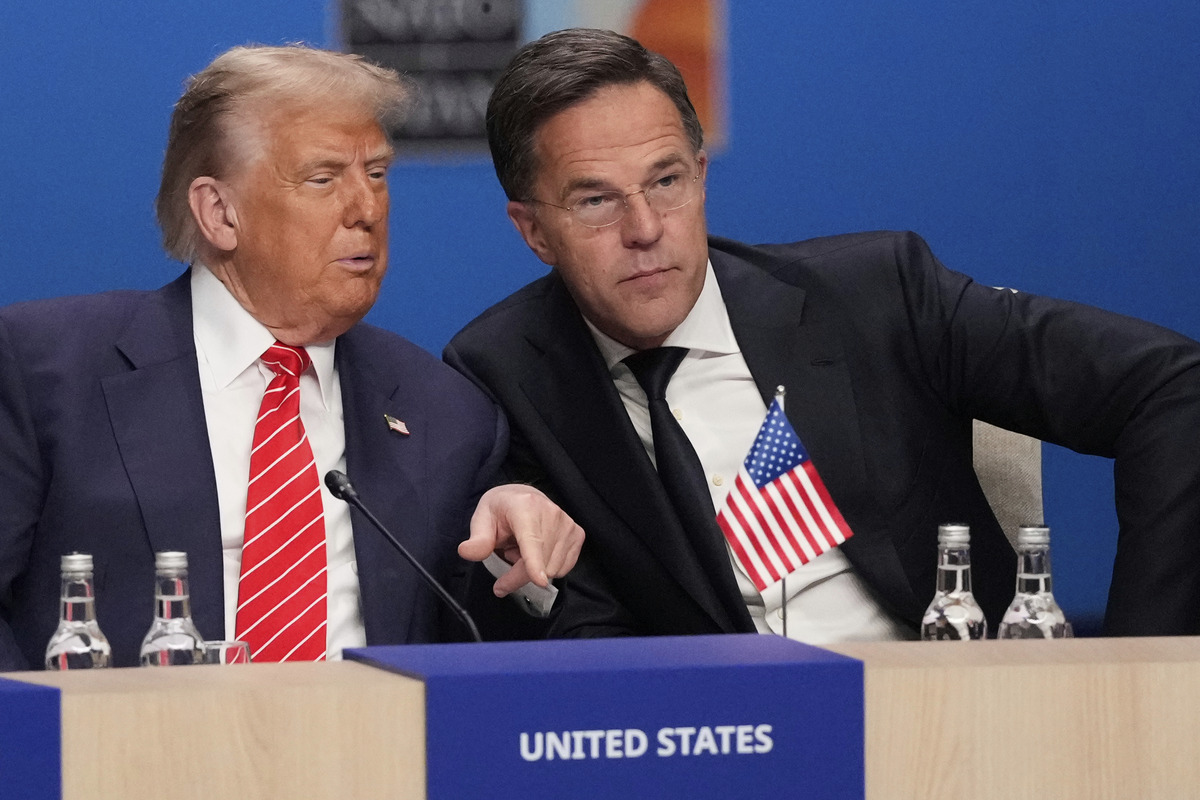
NATO Secretary General Mark Rutte recently visited the Oval Office with two charts and a clear agenda. He aimed to impress U.S. President Donald Trump and top officials, such as Defense Secretary Pete Hegseth, by highlighting a significant increase in defense spending by Europe and Canada. Rutte indicated that these regions would increase their defense budgets by nearly 20% in 2025 compared to 2024, attributing this boost to Trump’s influence, which he called the “Trump Trillion.” According to Rutte, Europe and Canada had invested an additional $1.2 trillion in defense since Trump took office.
This visit was strategically timed, taking place two weeks before NATO’s largest annual meeting with the intention of maintaining unity despite the persistent criticism from the U.S. regarding Europe’s defense spending. NATO’s official communiqué described Rutte’s visit as preparation for the Ankara Summit.
The Ankara Summit is expected to be another intense transatlantic engagement while NATO members committed to significantly increasing defense spending last year. They aim to prevent the U.S. from withdrawing from a Europe that is perceived as dependent on American military support. However, the U.S. has yet to specify the extent of its potential military withdrawal from Europe. Discussions may center around the number of U.S. troops that might be repositioned and the timing of these moves. European officials are skeptical about receiving definitive answers from the American delegation. They anticipate talks regarding Europe’s defense industry’s capacity to meet the growing demand for military equipment and considerations about Ukraine’s future.
NATO does not anticipate any new defense spending commitments beyond the benchmarks established last year in The Hague. Officials expect some announcements of defense contracts but acknowledge potential friction between nations that have met NATO’s new spending targets and those lagging behind. The summit presents a test for NATO’s continued viability.
As NATO approaches its 80th anniversary, over 30 member countries rely on it for protection from threats, particularly from Russia. They may have to endure further criticism and pointed remarks as the event unfolds.
“Europe is annoyed” by the undiplomatic tone adopted by the U.S. administration, a European diplomatic source told Newsweek.
2026 has been challenging for NATO, marked by diplomatic crises and uncertainty about the U.S.’s role in the alliance in the coming years. Trump’s recent social media post characterized the U.S. relationship with NATO as “one-sided,” expressing disappointment in the lack of reciprocity.
The U.S. has historically contributed substantial resources to NATO, providing high-cost capabilities that have allowed smaller European countries to reduce their defense spending. European militaries have depended on U.S. troops stationed in Europe since the end of the Cold War.
While NATO members committed last year to allocate 5% of their GDP to defense by 2035, Trump’s unflattering portrayal of supposed allies is a point of contention. European nations supported the U.S. in Afghanistan post-9/11, with over 1,000 non-U.S. NATO soldiers losing their lives in the conflict.
Earlier this year, Washington’s threats to forcibly acquire Greenland from Denmark fueled irritation among European countries. Such actions contradict NATO’s principles, as the alliance serves to protect members from external threats.
Defense Secretary Pete Hegseth expressed frustration over European countries’ refusal to provide their bases for U.S. operations targeting Iran, a decision cited as justification for America’s withdrawal from the continent.
Amid rising tensions, Hegseth announced a review of U.S. troop deployments in Europe. He labeled this process “NATO 3.0.” However, he intended to announce a more significant shift, proposing troop withdrawal, which faced internal vetoes from officials, including Secretary of State Marco Rubio.
Although U.S. withdrawal plans remain unsettled, NATO’s top commander, General Alexus Grynkewich, assured that European allies are compensating for reduced U.S. engagement, leveraging alternative capabilities as needed.
The unpredictable Trump leaves NATO officials bracing for criticism rather than expecting a summit collapse or U.S. withdrawal. European nations anticipate Trump’s grievances regarding NATO’s non-involvement in Iran, insufficient defense spending, and leadership. Countries resisting drastic spending increases may be targeted, including Spain and potentially the U.K.
The U.K.’s Defense Investment Plan has faced criticism for not sufficiently preparing against potential threats, such as Russia. Defense Secretary John Healey resigned in protest of the proposed spending strategy.