
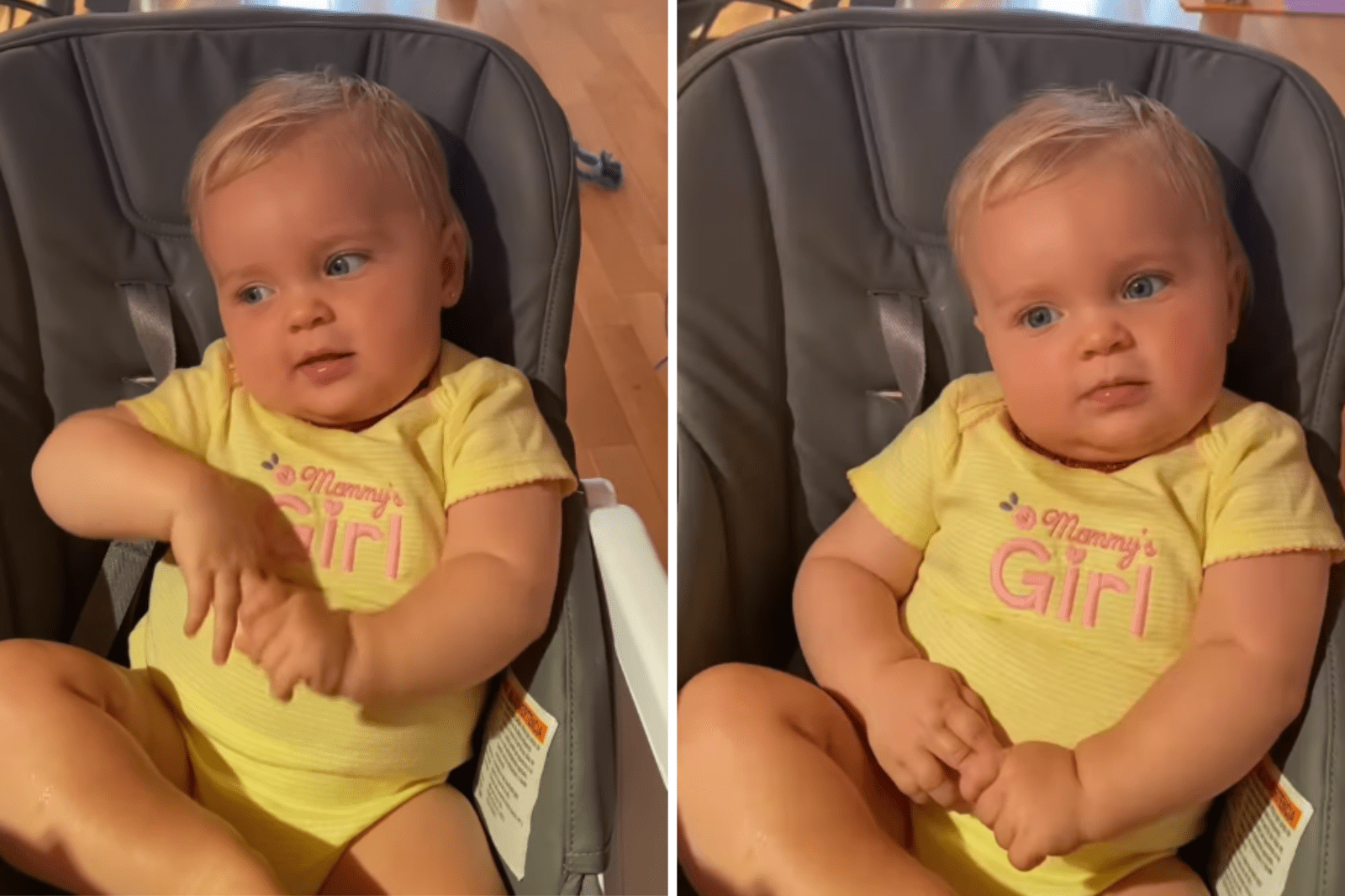
Laura Johnson, a mother from Chicago, faced heartbreak when her daughter Mila was diagnosed with a rare genetic disorder, despite repeated assurances that Mila was developing normally. When Mila was about 5 months old, Laura began to suspect something was amiss. Mila wasn’t sitting up or using her hands as expected and seemed to lag behind in her development. Laura expressed her concerns, stating, “As her mom, I knew in my heart something was wrong.”
Family, friends, and even doctors assured Laura that children develop at their own pace, suggesting Mila would eventually catch up. As a mother to two other children, Mason, 8, and Maddox, 4, Laura found these reassurances frustrating. Despite moments of self-doubt, her intuition remained strong. “A mother’s instinct is powerful, and mine was right,” she said.
Looking back, Laura recognized that the warning signs were clearer than they appeared. Mila would sometimes lose skills she had previously mastered, such as rolling over. By 10 months, Mila stopped holding her bottle and interacting with her surroundings. She also lost head control, which remained a challenge for years.
At about one year old, Mila began experiencing infantile spasms. Hospital admission and an EEG revealed continuous brain seizures. Genetic testing diagnosed Mila with STXBP1, a rare neurological disorder. This condition causes developmental delays, intellectual disability, movement, and communication difficulties, feeding problems, and seizures. About one in 26,000 to 30,000 births are affected by the disorder.
The STXBP1 gene is crucial for nerve cell communication. Epilepsy, manifesting often as infantile spasms, affects 85 to 90 percent of those with STXBP1. While there’s no cure, symptom management includes antiseizure medications and physical, occupational, speech, and feeding therapies tailored to each child’s needs.
Laura described the diagnosis as heartbreaking yet clarifying, providing much-needed answers. Despite challenges, Mila continues to progress. Through social media (@milas_crew), Laura celebrates every milestone as a triumph of therapy and determination. She advises other parents to trust their instincts and persist when seeking answers.
Laura encouraged parents, saying, “If you feel something isn’t right, keep asking questions and don’t be afraid to seek second or third opinions.” She emphasized the importance of seeing beyond a child’s diagnosis, asserting, “A child with a disability can still live a beautiful, joyful, meaningful life. Mila continues to prove every day that her diagnosis does not define her.”