
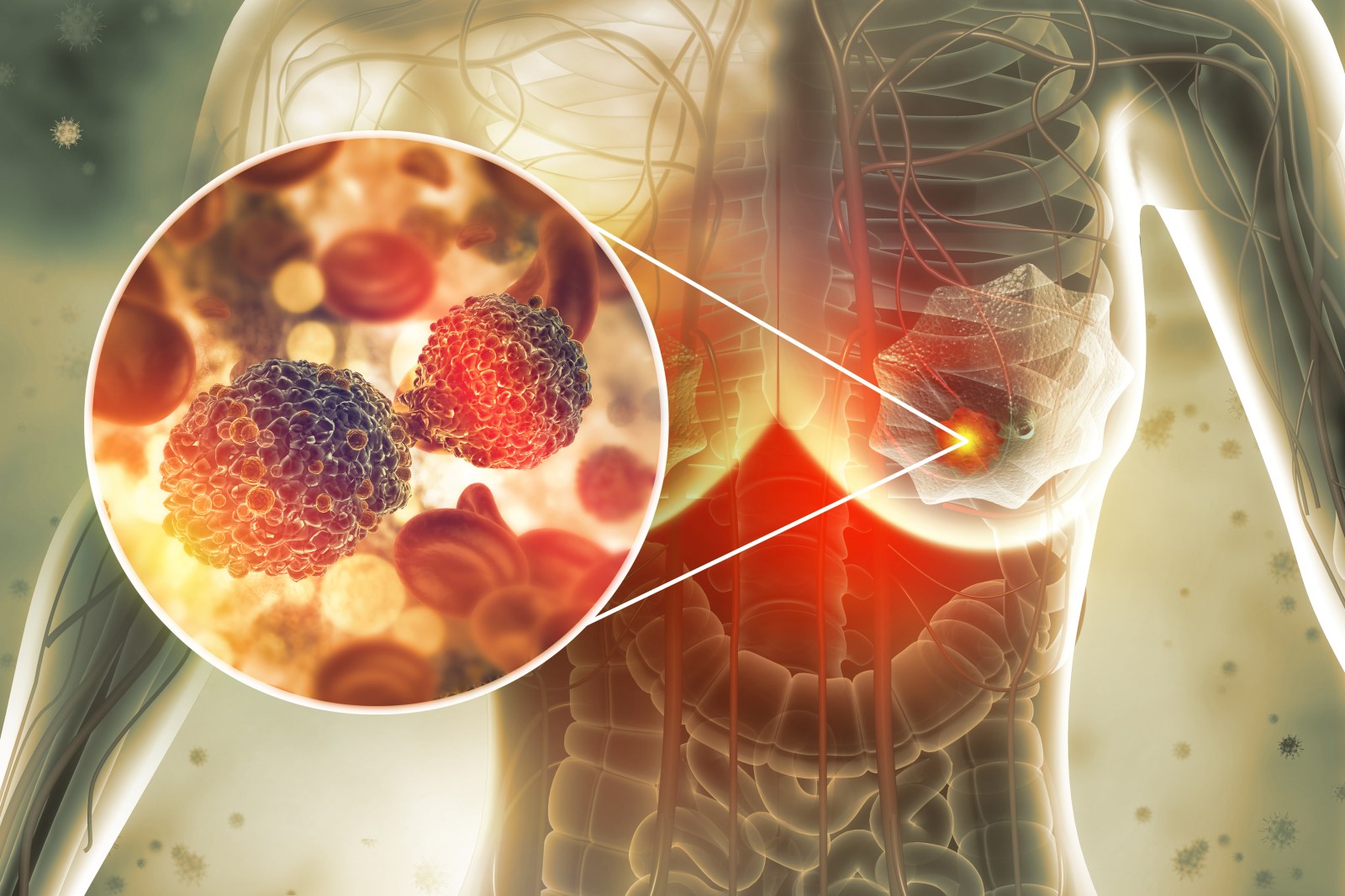
Researchers may have identified the process by which dense breast tissue leads to cancer. They aim to intervene before tumors develop. Breast cancer often emerges in dense tissue, and women with this condition are usually called back for additional screening after a mammogram. The Mayo Clinic states that dense breast tissue complicates cancer detection as it presents as solid white on mammogram images, and it also heightens the risk of breast cancer.
University of California, San Francisco researchers suggest they have found a mechanism explaining why dense tissue slightly increases breast cancer risk. Dense tissue is not only stiffer but also attracts immune cells to the breast, encouraging them to emit DNA-mutating chemicals, says a Medical Xpress release. These chemicals damage surrounding cells’ DNA, increasing cancer risk.
For decades, medical professionals recognized the connection between dense tissue and cancer risk to identify existing cancer. The new study paves the way for preventive measures. Mary-Kate Hayward, the study’s first author, mentioned in Newsweek, “We’ve long known that dense breast tissue raises cancer risk, but not why. Our study shows that the physical stiffness of dense tissue changes the behavior of immune cells called macrophages, causing them to release reactive chemicals that damage nearby cells’ DNA. This mechanism may help explain how dense tissue drives cancer development.”
How the Study Unfolded
Published in Cancer Cell, the study examined breast tumor samples, measuring tumor stiffness and capturing microscopic images of protein collagen that contributes to tissue stiffness. Analysis revealed stiffer tumor areas contained more collagen, scarring, macrophages, and DNA mutations. These areas also exhibited elevated STAT3, a signaling pathway that fosters cancer, possibly linking stiffness with increased macrophage presence.
Researchers grew tumors in different gels and used mouse cancer models, discovering that stiff environments activated STAT3 in breast cells, which dispatched signals attracting macrophages. They suspect these macrophages aid cancer growth. Macrophages on stiff gels emitted reactive oxygen species (ROS), characteristic of cancer. Though short-lived, questioning their reach, researchers found that ROS oxidized fats in macrophages, converting them into DNA-damaging agents that traveled to nearby cells.
Hayward shared with Medical Xpress, “What was striking was that the macrophages were producing chemicals that could travel to nearby cells and damage their DNA. We tend to think of chemicals in the environment as DNA-damaging and cancer-causing. Yet we found macrophages could also produce DNA-damaging chemicals right within the tissue.” Further experiments confirmed that dense, stiff breast tissue contains more macrophages, aldehydes, DNA damage, and advanced disease.
The researchers plan to investigate drugs preventing aldehyde formation in macrophages. Hayward stated to Newsweek, “The exciting part is that this gives us something to target. If we can block these damaging chemicals, we might be able to get ahead of cancer in high-risk tissue before a tumor even has the chance to form.”