
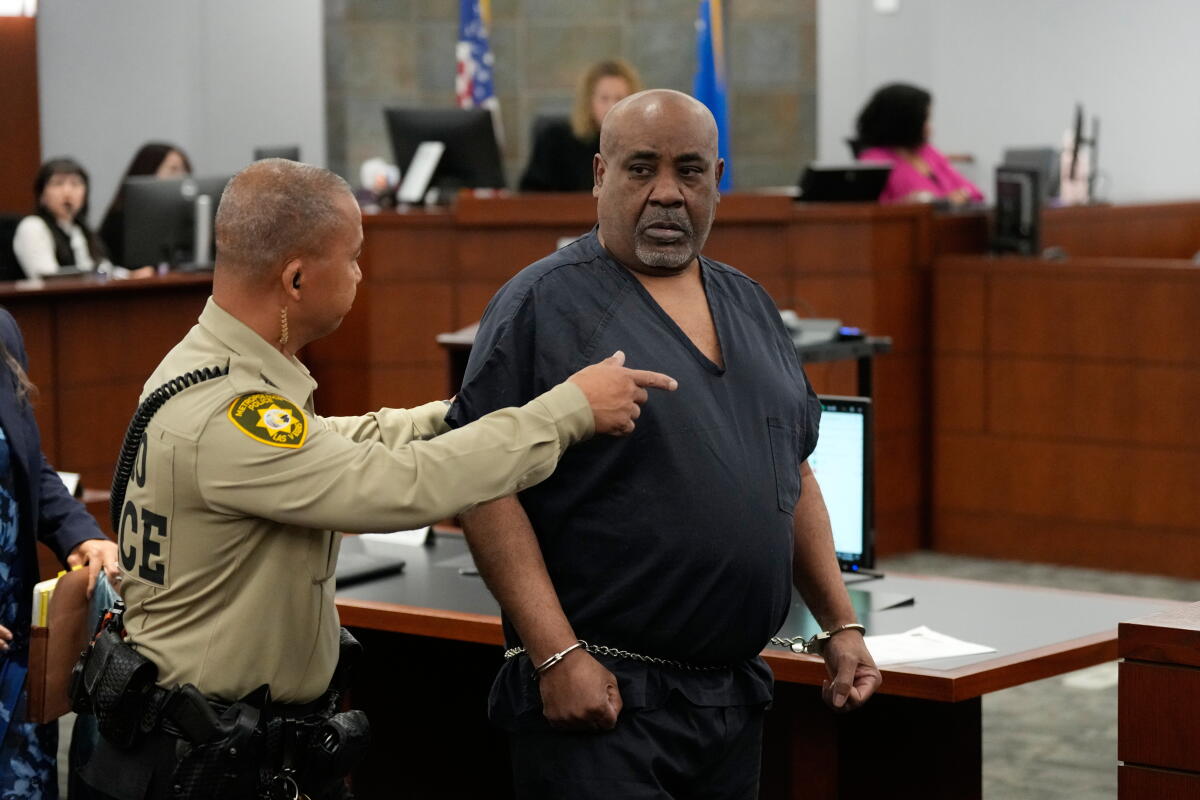
Duane “Keffe D” Davis has been sentenced to 40 years to life in prison for orchestrating the murder of rapper Tupac Shakur. Clark County District Court Judge Carli Lynn Kierny delivered the sentence, emphasizing the lasting impact of the crime, especially given Shakur’s fame. The judge stated, “You don’t get to take a man from his family … and just walk away from it, especially Tupac Shakur. The world never forgot about him and his death, and neither did Las Vegas.”
The jury found Davis, 63, guilty of murder and using a deadly weapon, sentencing him to two consecutive terms totaling 40 years to life. Evidence presented during the two-week trial showed that Davis, a leader within his gang, orchestrated Shakur’s killing by providing a .40-caliber handgun to fellow gang members as they drove past the Las Vegas Strip. Key evidence included Davis’s interviews with authorities, a documentary, and his own 2019 memoir detailing the crime.
Davis planned to appeal, stating this intention before the sentencing. Photographs showed Davis at the sentencing in Las Vegas, following his conviction. Shakur’s murder happened amid tensions in the rap industry, marked by rivalries between Death Row Records, led by Marion “Suge” Knight, and Bad Boy Records, run by Sean “Diddy” Combs. Shakur’s death stirred conspiracy theories and caused reflection within the music world, sparking a violent 10-day gang conflict in Compton.
Sekyiwa Shakur, Tupac’s sister, spoke about the personal devastation caused by her brother’s death. He had supported a large family and losing him left her with severe emotional distress, including depression and PTSD. Sekyiwa asserted, “When you take a life like that, you deserve every minute, every minute of the maximum amount of punishment.”
Davis profited from detailing the murder in his memoir, prosecutor Marc DiGiacomo argued, stating Davis deserved the harshest sentence.
The trial revealed that Shakur’s death resulted from a revenge plot. Shakur, Knight, and members of the Mob Piru gang, affiliated with Death Row Records, had earlier assaulted Davis’s nephew, Orlando Anderson. The assault was recorded on security footage shortly after a Mike Tyson fight that attracted celebrities to the venue. Davis retaliated by providing a gun that was used to shoot Shakur and Knight in a car on the Las Vegas Strip, leading to Shakur’s death six days later at age 25.
Testimony from police investigators, journalists, and Davis’s narration in his memoir highlighted the evidence against him. However, defense lawyer Anthony Michael Sanft argued that the evidence was weak, calling it merely hearsay and lacking physical proof tying Davis to the crime scene.
A break in Shakur’s case emerged during an investigation into the 1997 murder of Christopher “Biggie Smalls” Wallace. Los Angeles police detective Daryn Dupree revealed that Davis had referred to knowing about the Wallace shooting and indicated, “We did the other one.” This admission shifted investigative focus back to the Shakur murder.
Prosecutors played a recording during the trial where Davis described the events that night, noting others present in the Cadillac alongside him. According to Davis, they noticed Shakur and Knight due to some women calling out to Shakur. His remarks included, “Tupac gave himself away; otherwise, they would have got away.”
The state argued that Davis’s memoir waived his rights under a previous proffer agreement that protected him after his interviews with law enforcement. As a result, his past statements were used against him in court. His attorney claimed the memoir was an attempt to sell books, asserting that Davis exaggerated his involvement in the killing.