
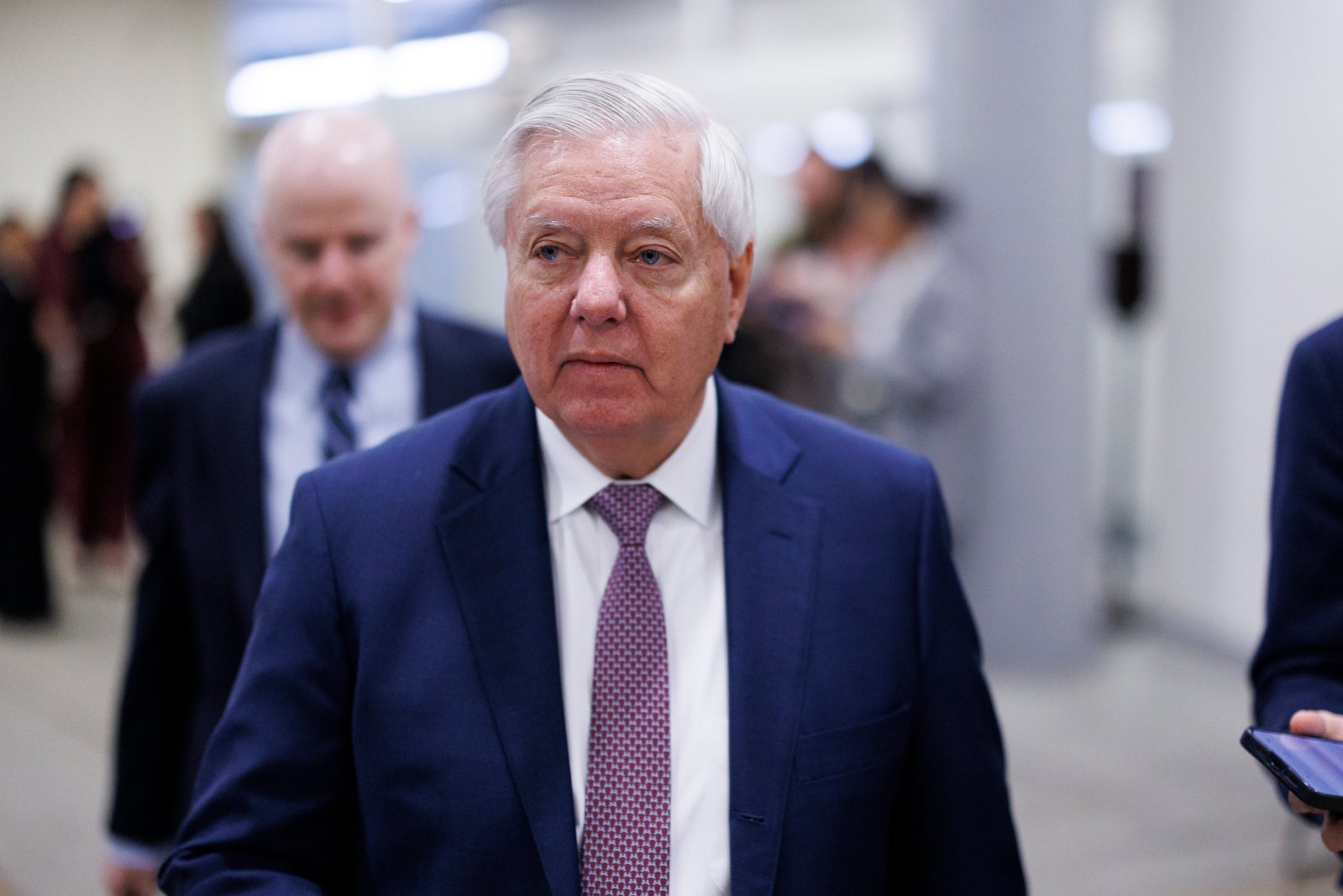
The passing of Lindsey Graham, the late U.S. senator from South Carolina, has sparked considerable discussion in China. His death on Saturday, due to a sudden illness, has drawn attention to the influence he wielded within the Republican Party’s more aggressive foreign policy faction. China’s Xinhua News Agency has noted the significant interest in the upcoming contest for his open seat.
Graham advocated for a strong global presence by the U.S., aiming to counter the growing influence of adversaries like China and Russia. He openly criticized China’s military ties with Russia and accused Beijing of being responsible for the COVID-19 outbreak. Furthermore, he frequently warned against the Chinese Communist Party’s influence on U.S. national and state politics.
In his frequent trips across the Pacific, Graham was an outspoken supporter of Taiwan and criticized China’s economic practices. These positions aligned with former President Donald Trump’s trade wars, despite differing views on America’s global role. Ren Yi, a prominent Chinese commentator under the pen name Chairman Rabbit, contrasted Trump’s support for a multipolar world order with Graham’s stance on maintaining American hegemony.
Ren Yi described Graham’s death as a representation of the decline of the American unipolar order. On Weibo, a Chinese microblogging platform, Graham was often called a “triple hawk” for his hardline stances on Russia, Iran, and China. He supported Trump’s actions in the Iran conflict and backed both Israel and Ukraine. Recently, he made a final appearance in Kyiv, advocating for China to leverage its influence to end Russia’s extended military campaign.
Chinese state broadcaster CCTV named Graham “the GOP’s hawk” in the Senate, noting his co-sponsorship of legislation aiming to economically penalize China and other nations buying sanctioned Russian resources. Many Chinese internet users criticized Graham posthumously, reflecting his unpopularity among the Chinese public.
Graham’s strong support for Taiwan often attracted censure from Chinese state media, particularly for linking security aid to Taiwan and Kyiv with American trade relations. During a 2022 visit to Taipei, he urged the purchase of Boeing jets. This action reflected his belief that economic ties could fortify U.S. support for Taiwan in Congress and among the public.
He sponsored bills for Taiwan’s aid, treating it as a major non-NATO ally to hasten arms sales. Following a summit in Beijing between Trump and Chinese leader Xi Jinping, Graham asserted the importance of maintaining Taiwan’s status quo.
Taiwanese President Lai Ching-te expressed deep sorrow over Graham’s death, and former leader Tsai Ing-wen acknowledged him as a steadfast supporter of Taiwan’s democracy. On the Truth Social platform, Trump announced that flags would be lowered to half-mast in Graham’s honor.
Graham, who led the Senate Budget Committee, was not sanctioned by China during his career. His passing leaves a void in a specific segment of American foreign policy advocacy.