
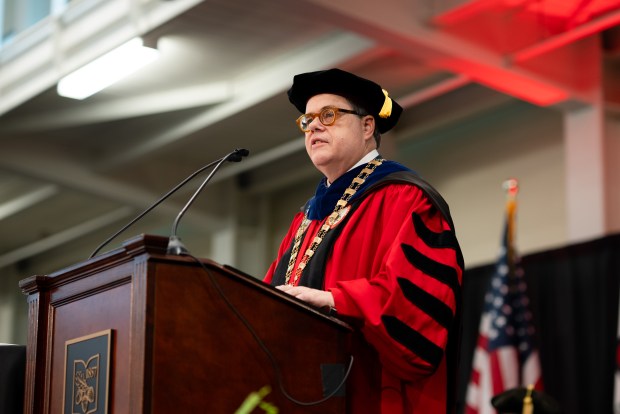
Lake Forest College has seen a noticeable increase in its campus population this fall, as it hosts the largest incoming class in its 169-year history. The student body totals 1,794, including 423 first-year students and 116 transfer students from other institutions. Last fall, there were 394 freshmen and 89 transfers; in 2024, there were 422 freshmen and 92 transfers.
College President Michael J. Sosulski remarked, “The Secret is Out.” He highlighted the growing application numbers and improved acceptance rates. Key factors driving this positive trend include the college’s proximity to Lake Michigan and Chicago, its affordability, and favorable post-graduate outcomes. Sosulski stated, “Within six months, 97% of our graduates find career-type jobs or enroll in graduate school.” Lake Forest College boasts a four-year graduation rate of 70%, and a median alumni salary of $51,324 six years post-graduation, according to U.S. News & World Report.
Sosulski emphasized the personal attention students receive, “We know our students by name, allowing us to write personalized letters of recommendation that speak to each individual’s strengths and ambitions.” The Princeton Review acknowledged this personalized attention by ranking Lake Forest College 14th in career services and placing it on their “best value colleges” list.
The college actively recruits transfer students, notably from the College of Lake County and the College of DuPage. Sosulski noted their efforts to remove credit transfer barriers, making Lake Forest College one of the most transfer-friendly liberal arts schools in the nation. Sosulski stated, “Transfer students are welcomed here, and they thrive.”
Lake Forest College’s diverse student body includes 45% from out of state, with representation from 44 states and international students from 119 countries. Sosulski celebrates this diversity, mentioning the vibrancy it brings to classroom discussions. The college’s location and its athletics programs contribute to its appeal, as demonstrated when the Foresters football team played a game in Chandler, Arizona.
The college competes in Division III sports, prioritizing academic interests while maintaining athletic competitiveness. Division III allows the genuine use of the term ‘student-athlete,’ according to Sosulski. Success extends to soccer, with the women’s team boasting an undefeated conference record over the past three years.
Economics, business, and finance remain popular majors. New offerings in neuroscience and artificial intelligence attract students interested in fields less common at liberal arts colleges. The health professions program also draws interest, providing pathways in healthcare administration, nursing, public health, and affiliations with Rosalind Franklin University Medical School.
Other significant enrollment drivers include the “In the Loop” summer internship program and a low faculty-to-student ratio of 13-to-1. Sosulski assured students that anonymity is not an option; each student is known by name.
Sosulski refrained from predicting continuous record-breaking enrollment but anticipates continued growth in applications. “Despite the pandemic, our enrollment trend remains positive. The secret’s out about our affordable elite education experience.”