
Ukrainian Forces Regain Strategic Initiative
In the midst of the ongoing conflict, Ukraine’s forces have made significant strides against Russian efforts to capture the Donetsk region. Analysts suggest that Ukraine has regained strategic and operational initiative for the first time in two years. This shift in momentum occurs as Russian President Vladimir Putin receives exaggerated reports from his generals, reinforcing his false perception that he is prevailing in the war. During discussions with Trump administration officials Steve Witkoff and Jared Kushner, Putin continues to adhere to his ambitious war goals.
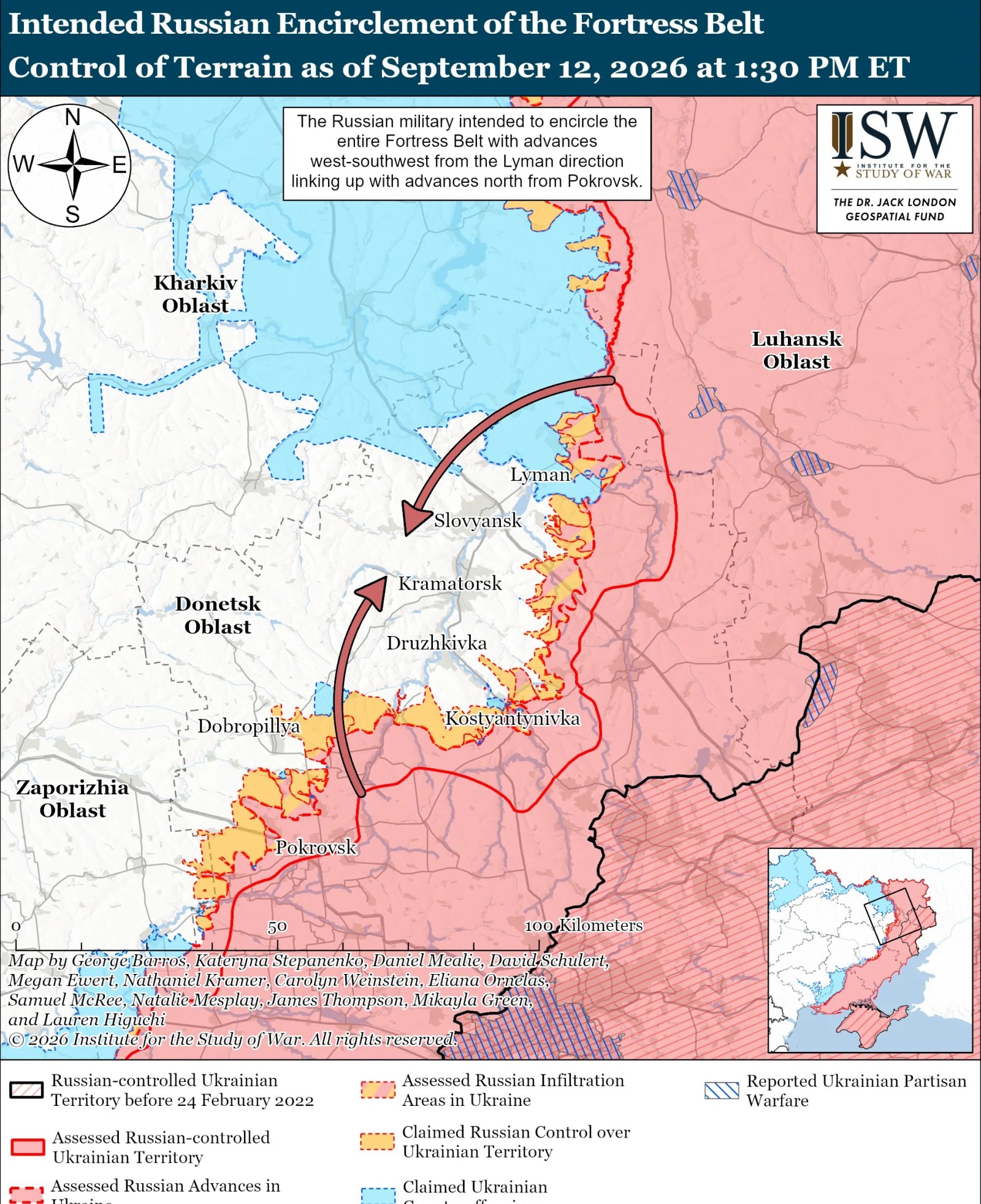
Over the past six months, Ukraine has effectively reduced Russia’s territorial gains to zero. Successful counteroffensives have been carried out in key sectors such as Kupiansk, Oleksandrivka, and Lyman. According to the Institute for the Study of War (ISW), Ukraine has managed to thwart Russian advances into the Dnipropetrovsk region and regain lost ground near Kupiansk. Ukraine also destroyed a Russian salient that posed a threat to Slovyansk and the Donetsk Oblast Fortress Belt. The fortress belt, a network of fortified cities and defensive positions, remains central to Ukraine’s defense against Russian capture of the eastern Donbas region.
Ukrainian Successes Acknowledge by Bloggers
Pro-Russian military bloggers have acknowledged Ukrainian gains. They noted that Ukrainian forces successfully cut the Russian spear north of Lyman and forced Russian troops to retreat to the Zherebets River during September. The ISW’s maps confirm these successes.
Open-source intelligence indicates that Ukraine’s 3rd Army Corps liberated over 77 square miles of territory. Military analyst Giorgi Revishvili highlights that these achievements may relieve pressure on the Fortress Belt from the northeast. He emphasizes the importance of careful planning, precision, and tactical ingenuity in maneuver warfare despite increasing battlefield transparency.
Limited Russian Gains and Upcoming Challenges
While Ukraine has seen multiple successes, the ISW points out that Russian forces have achieved limited gains near Kostyantynivka, Slovyansk, and Kramatorsk, though they are struggling to maintain momentum.
Revishvili notes the upcoming challenges for Ukraine, particularly with changing weather conditions that might hinder drone effectiveness. The loss of foliage will reduce natural concealment, making some Ukrainian positions more vulnerable to Russian reconnaissance.
Russia is likely focusing efforts on areas like Dobropillia, Kostiantynivka, and Druzhkivka, using infiltration tactics. Success in establishing footholds in these areas would give Russian forces greater operational space.
Airspace and Personnel Concerns
Ukraine faces significant airspace protection challenges as Russia increasingly employs jet-powered drones alongside missiles, targeting civilian infrastructure and strategic locations.
Amid ongoing Russian troop losses, speculation arises about Putin’s potential mobilization efforts. While the Kremlin denies plans for a draft, Ukraine warns of pressure on Putin to address Moscow’s casualty rates. The ISW suggests any mobilization will likely be gradual, given the limited training and integration capabilities.