
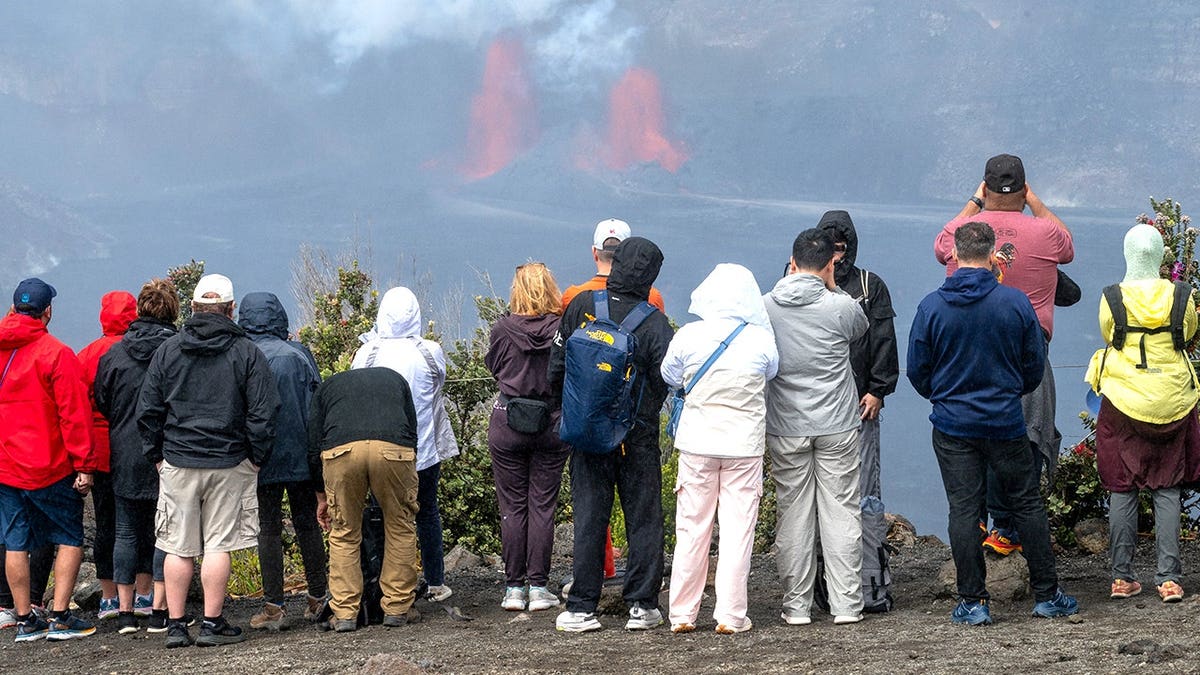
Officials are keeping a close watch on increased volcanic activity at Hawaii’s popular Kīlauea volcano, which has resulted in a series of trail closures due to earthquake activity and rockfall risks. The U.S. Geological Survey (USGS) recently issued a notice addressing the renewed volcanic action at two vents, which follows recent summit activity.
The National Park Service (NPS) announced that part of the Halemaʻumaʻu Trail and a section of the Byron Ledge Trail are temporarily closed as a precaution. These closures affect 1.3 miles of trails and are in response to escalated seismic activity, including over 200 shallow earthquakes recorded beneath the summit in the past week. A notable event was a magnitude-3.4 earthquake on September 30, which triggered rockfalls along the caldera’s north wall.
As of Thursday, Kīlauea was designated with an ORANGE aviation color code, the second-highest level on the USGS scale. This classification indicates intense volcanic activity with possible eruptions that may pose limited risks to aviation. Scientists have noted the development of new cracks on the caldera floor as a result of an intrusion between September 30 and October 1.
While it remains uncertain if or when Kīlauea’s 55th episode of lava fountaining will occur, officials have highlighted several potential hazards. These include dangerous gas emissions and small, glassy volcanic fragments that can irritate skin and eyes. Residents and sightseers are advised to limit exposure to these fragments, especially in windy conditions, and to avoid closed areas and fragile cliff edges that might collapse unpredictably.
One of the world’s most consistently active volcanoes, Kīlauea has witnessed numerous eruptions since 1952. The volcano experienced near-constant activity along its East Rift Zone from 1983 until a significant event in 2018. Since December 2024, intermittent eruptions have been observed in the Halema’uma’u crater.
Tourism figures peaked during Kīlauea’s eruptive phases, drawing many visitors eager to witness the volcanic phenomena. In 2025, Hawaiʻi Volcanoes National Park documented over 1.8 million recreational visits. The surge in visitors highlights both the intense interest in volcanic activity and the need for continued safety measures.