
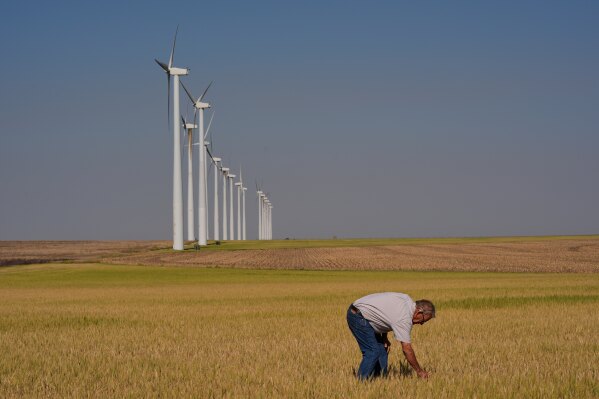
In Montezuma, Kansas, Orville Williams faces a challenging year as a wheat farmer on his 2,600-acre farm. While he has managed successful wheat crops since his teenage years, this season presents unique difficulties.
The Plains region, including Kansas, has suffered from record-setting drought and hotter-than-average temperatures this year. These conditions have exacerbated the spread of wheat streak mosaic and barley yellow dwarf viruses, harming crop potential. Additionally, rising costs for fertilizer, diesel fuel, and tariffs add financial strain on farmers. Williams comments, “All in all, it’s not going to be a good year.”
The U.S. Department of Agriculture forecasts a drastic decrease in wheat production, the smallest since 1972, with only 1.56 billion bushels expected, down 21% from 2025. Kansas, a leading wheat producer, sees 58% of its current wheat crop rated “poor” or “very poor.” Agronomist Romulo Lollato of Kansas State University highlights the tough conditions growers face, which affect consumer prices.
Many farmers, like Williams, have resorted to filing for crop insurance or deliberating other crop options to navigate uncertainties. Last year, Williams harvested close to 100 bushels per acre on irrigated land. This year, he may only achieve 30 to 40 bushels, while dryland yields might fall to 10 to 15 bushels per acre.
Climate change, influenced by fossil fuel use, has made farming various crops increasingly challenging, including wheat. Farmers report severe weather extremes, such as unusual winter heat, late freezes, and rain shortages. The U.S. has lost ground in the global wheat market to Russia and the EU, and decreasing national wheat acreage adds to the challenges faced by farmers.
Brad Rippey, a USDA meteorologist, notes the downward trend for wheat in the Great Plains due to multiple factors, including harsh weather over recent decades. Despite being the nation’s third-largest field crop, wheat farming is under increasing pressure.
Unfavorable conditions have accelerated wheat growth, leading to poor harvests. By early May, 86% of Kansas’ wheat fields produced seed heads, compared to a typical 61% in prior years. Farmers abandoned about 32% of this year’s wheat crop, reaching 22 million acres harvested. Such high abandonment rates haven’t been seen outside the 2022-2023 cycle.
Mike Nickelson, a Kansas farmer, emphasizes, “Rain makes grain.” Predicted El Nino conditions suggest continued challenges, with warmer summer temperatures expected. Farmers endure rising fuel prices and surging costs for essential resources such as seeds and fertilizers.
Vance Ehmke, a farmer near Healy, Kansas, examines fields devastated by the wheat streak mosaic virus and notes the complex challenges of current farming conditions. Relief remains limited even with crop insurance and government aid.
Ben Palen, a fifth-generation farmer and consultant, describes this period as one of the most challenging times for farmers. The current environmental and economic conditions strain the resources and abilities of those working the land, illustrating the severe impact of climate change and market fluctuations on agriculture.