
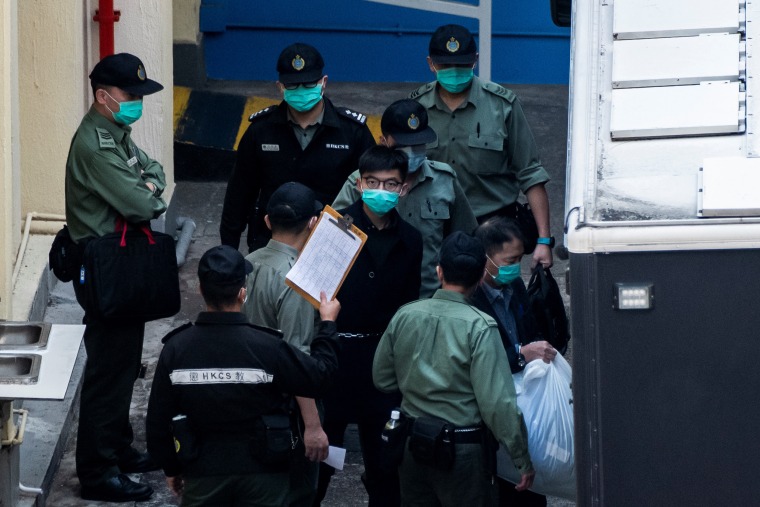
Hong Kong — Joshua Wong, a prominent figure in Hong Kong’s pro-democracy movement, pleaded guilty to charges of conspiracy to collude with foreign forces, a violation under the national security law imposed by Beijing. This law, enacted in 2020, aims to suppress the activism that marked the city the previous year.
Wong’s legal troubles began with his role in the pro-democracy movement, where he emerged as a vocal leader. This was his second prosecution under the strict security law, reflecting the government’s efforts to silence dissident voices.
“His case demonstrates the authorities’ intent to suppress activism in Hong Kong,” critics argue.
Wong is currently serving a prison sentence of four years and eight months related to another national security case involving political primaries. His new charges might extend his incarceration significantly. The penalty for the current offense ranges from a three-year prison term to life, highlighting the grave consequences associated with such charges.
The prosecution accused Wong, along with Nathan Law and others, of soliciting foreign intervention against China and Hong Kong. From July to November 2020, Wong was involved in activities aimed at lobbying foreign entities for sanctions. Prosecutors presented evidence of Wong’s social media activity supporting these efforts.
Wong’s collaboration with Law extended beyond Hong Kong, seeking support for sanctions and other measures against Chinese authorities. After the security law was enforced, Law advocated for Hong Kong’s independence internationally, while Wong amplified these calls within the city.
The prosecution highlighted Wong’s role in influencing foreign companies, resulting in changes in their business conduct towards Chinese officials.
During his court visit, supporters encouraged Wong to stay strong. Amid his imprisonment, he engaged in reading, studying, learning guitar, and exercising, showcasing his resilience.
Wong first captured public attention in 2012 as a teenager opposing national education reforms. His activism grew in the 2014 Occupy Movement, significantly impacting his public image.
In 2016, Wong co-founded Demosisto, a political party, with other young leaders, such as Nathan Law. Their focus was on advancing Hong Kong’s democratic agenda.
The leaderless protests in 2019 saw Wong actively seeking international support, particularly from the U.S., inviting Beijing’s criticism for foreign involvement.
Demosisto disbanded following the imposition of the national security law, a move intended to stabilize the city, according to authorities. This legal change led to the detention of key figures like media tycoon Jimmy Lai and caused activists to flee abroad.
Hong Kong’s authorities have placed bounties on several activists, including Nathan Law, urging public cooperation for their capture.