
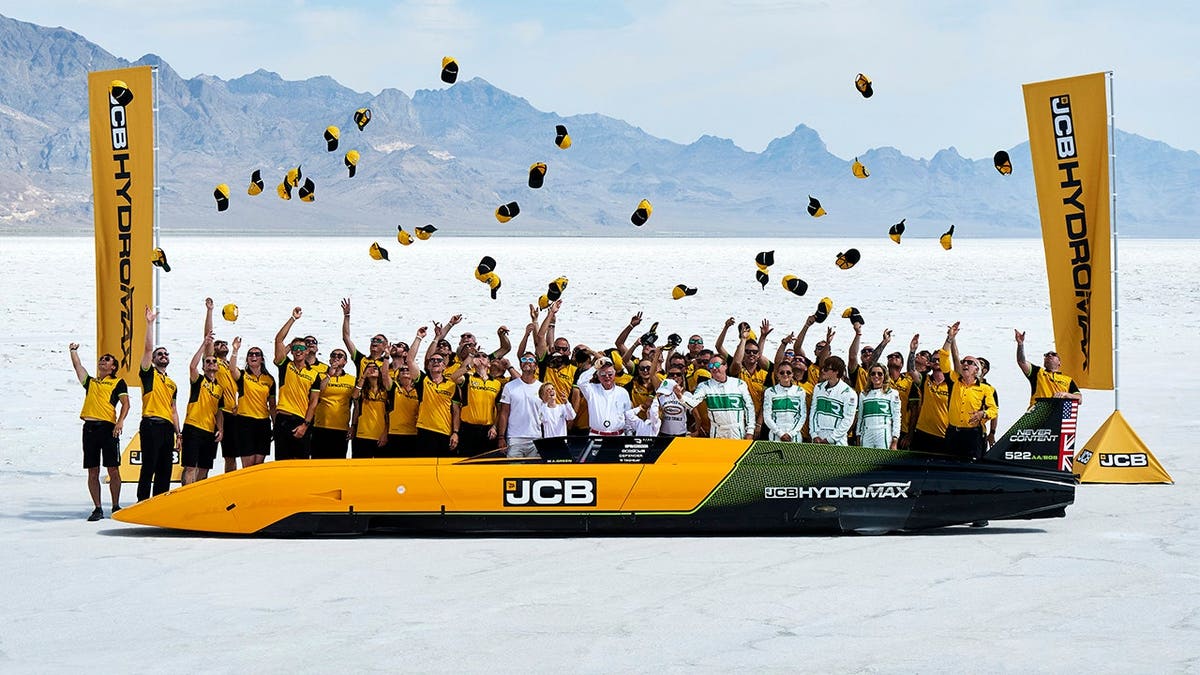
JCB Hydromax has taken speed to a new level with its hydrogen-powered car. This incredible vehicle achieved a significant milestone on the Bonneville Salt Flats, where it recorded an average speed of 406.320 mph. The car’s twin engines powered it to 400.623 mph on the first attempt and then reached 412.135 mph on the second, setting a new world record for hydrogen-powered internal combustion cars.
Breaking New Ground
JCB’s achievement is noteworthy, as it surpasses the previous record of 185.5 mph held by the BMW H2R in 2004. This groundbreaking feat awaits official confirmation from the Fédération Internationale de l’Automobile (FIA).
Speed and Innovation
The design and preparation process took JCB slightly over a year, a rapid timeline in the world of speed records. Their team developed and tested the car extensively in the UK before heading to the Salt Flats.
“This is the first of a new breed,” driver Wing Commander Andy Green remarked, emphasizing the engineering marvel the JCB team created in such a short time frame.
Green also highlighted that creating a car with such levels of speed typically requires multiple attempts over several years. JCB accomplished it in mere days.
Challenges in Design
Developing the hydrogen engines involved overcoming several challenges. At Bonneville, the team dealt with high altitudes and temperatures up to 105 degrees. These conditions required keeping the engine cool, so the car carried about 400 pounds of ice and water.
Hydrogen engines are sensitive to heat. If hot air enters, the hydrogen could ignite prematurely. The team needed to maintain precise conditions to ensure performance and safety.
Precision Engineering
The record attempts emphasized safety, especially in deceleration. The unique parachute system designed for the car helped slow down the 5,500-pound machine, ensuring controlled stops.
After a successful first run, the team replaced the tires to handle higher speeds in subsequent testing. The record-breaking times allowed them to push the vehicle, reaching an average of 406 mph.
The Future of Motorsport
Green, a seasoned driver with a history of breaking speed records, praises the new technologies emerging in motorsport. He sees hydrogen power as a promising direction, offering genuine zero-carbon technology.
His background in the Royal Air Force as a jet fighter pilot complements his experience as a high-speed driver, helping him appreciate and understand the blending of advanced engineering and performance driving.
This record isn’t just a milestone; it ushers in an era where new power sources like hydrogen contribute significantly to motorsport’s evolution.