
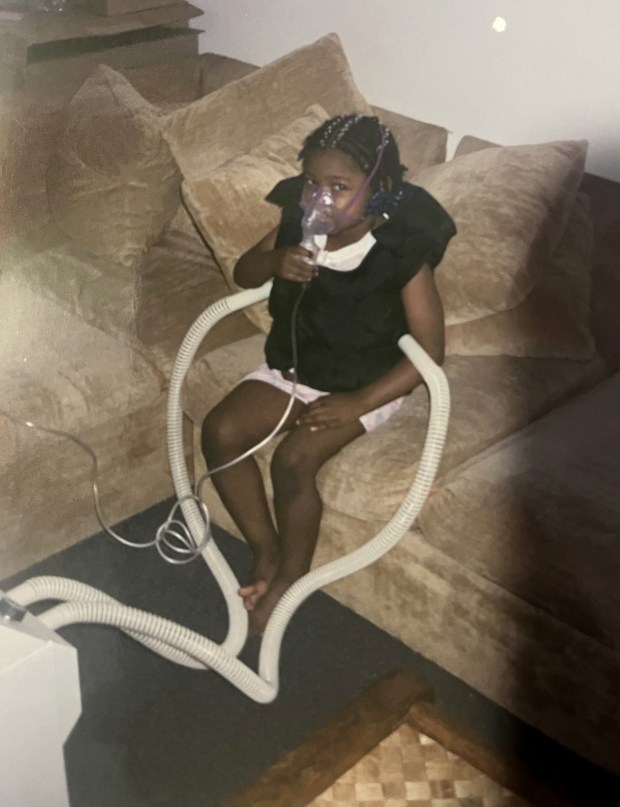
Jasmine Jones faced shocking news when doctors proposed replacing four of her organs simultaneously. At 28, she had endured much due to cystic fibrosis, a genetic disorder affecting the lungs and other organs. Living on Chicago’s South Side, overwhelmed with the situation, she felt mostly numb. ‘I was still on autopilot,’ Jones recalled. Only the imminent surgery brought a sense of reality, mixed with calmness and gratitude.
In January, doctors at University of Chicago Medicine completed a rare quadruple organ transplant on Jones. They replaced her right lung, left lung, kidney, and liver from a single deceased donor over 36 hours. It was Illinois’ first known procedure of this type and one of just six nationwide, as per UChicago Medicine and the United Network for Organ Sharing. ‘This continues to push the boundaries of transplantation,’ said Dr. Rolf Barth, a co-director of UChicago Medicine Transplant Institute.
Now, five months post-surgery, Jones is back home and feels ‘pretty good.’ She initially spent six weeks in the hospital following the transplants, then moved to Shirley Ryan AbilityLab for further rehabilitation. It was only a month ago that she realized the rarity of her transplants, exclaiming, ‘Oh my God.’ Her mother, grateful for not knowing this earlier, echoed her relief.
‘It all happened so fast’
Jones, a lifelong Chicagoan, was diagnosed with cystic fibrosis at 5 months. The disease causes thick, sticky mucus which clogs the lungs and digestive system, hindering breathing, nutrient absorption, and increasing infections. Her childhood health was generally manageable with her mother’s help. However, about a decade ago, her condition worsened with cystic fibrosis-related diabetes, pain, and liver issues. She became wheelchair-bound, had to leave Columbia College Chicago, and struggled with declining health.
Her symptoms were once controlled by medication, allowing her to work as an assistant preschool teacher. Yet, a year ago, frequent lung infections and fatigue reemerged. Bedridden, she struggled daily to be active. One day, her mother found her unconscious, prompting her doctor to suggest a liver transplant. Though hesitant, Jones soon accepted the need due to constant hospital visits. ‘I’m tired of not living life to the fullest,’ she said.
Her worsening kidneys, lungs, and the ineffectivity of CFTR modulators, commonly aiding cystic fibrosis patients, necessitated more. Dr. Pablo Sanchez of UChicago Medicine commented, ‘Her lungs were so damaged… a quadruple organ transplant was the best option.’ The extensive procedure and swift developments seemed surreal to Jones.
A match
By December, doctors advised hospital admission for the surgery, yet Jones sought time for a family tradition. She joined her family in a Christmas pajama photo, motivated by her grandmother’s age and her fear of dying during surgery. ‘I wanted one last memory,’ she admitted. Soon after, feeling worse, she was hospitalized.
A week later, Jones matched with a deceased organ donor. Typically, organ wait times vary, but her urgencies prioritized her. Preparing for surgery, she requested hospital chaplain support for her mother, Patricia Smith. Smith, usually stoic, needed reassurance. ‘A chaplain was my lifeline,’ she recounted.
A team effort
A team of 40 professionals, including doctors, nurses, and anesthetists, executed the transplants. Dr. Sanchez began with her lungs, ensuring sterilization before inserting the new ones. Jones was connected to machines sustaining her life during the operation.
Next was her liver. While performing the lung transplant, doctors preserved the liver and kidney using machines maintaining viability outside the body. These technologies, Sanchez noted, are critical in pushing transplantation boundaries.
After the liver transplant, Jones rested in intensive care before receiving a new kidney. Following the surgeries, she spent two weeks in ICU and more time in the hospital. Familiarity with her care team made the process less daunting for her.
A ‘new journey’
By March, Jones returned home, initially anxious without constant medical supervision. Her new organs won’t be affected by cystic fibrosis, but doctors continue to monitor her pancreas. Immunosuppressants will be lifelong necessities.
Despite post-surgical challenges, Jones cherished being with her family and pets, who lifted her spirits. Her doctors celebrate her miraculous recovery. ‘She’s resumed normal life,’ remarked Sanchez. Dr. Barth credited medical progress for allowing such transplants and the donor’s generosity for Jones’ success.
Grateful for a second chance, Jones plans to embrace life fully, considering work and hobbies. ‘I’m excited for this new journey,’ she shared.