
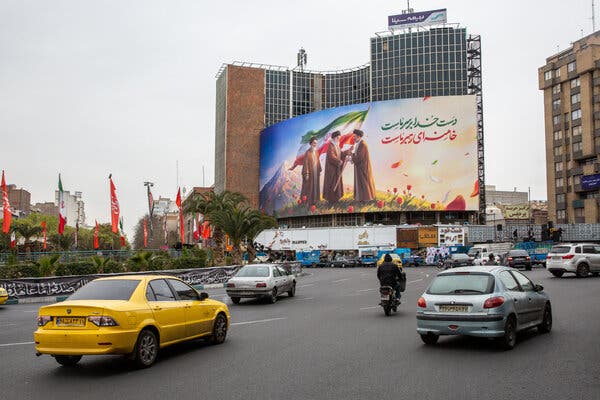
Decision-making in Iran is closely tied to a group of men linked to the Islamic Revolutionary Guards Corps (IRGC). When Ayatollah Ali Khamenei, Iran’s supreme leader for 37 years, was killed by Israel on February 28, he was replaced by his son, Mojtaba. The elder Khamenei, at age 86, had held considerable influence that his son found challenging to emulate immediately. Although senior officials in Iran assert that Mojtaba, now 56, manages crucial affairs, experts point out that decision-making reaches beyond a single individual.
A small, elite group dominated by current or former senior commanders of the IRGC plays a significant role. These individuals, often described as a cohesive ‘band of brothers’, gained prominence and experience during the Iran-Iraq conflict that started in 1980. The IRGC, founded in 1979 to support the new revolution and its leader, promoted many of these commanders to the rank of generals while they were in their 20s or 30s. This experience, combined with Western support for Iraq during the war, reinforced their view that Iran must chart its own course irrespective of the consequences.
After the conflict, these commanders took control of intelligence and security services. Many are believed to have a personal connection with Mojtaba Khamenei due to his long tenure directing his father’s office. Within Iran, these figures are considered among the most stringent hard-liners. They are not only proponents of the Islamic revolution but also strong advocates for the severe tactics employed by Iran’s main government repression agencies.