
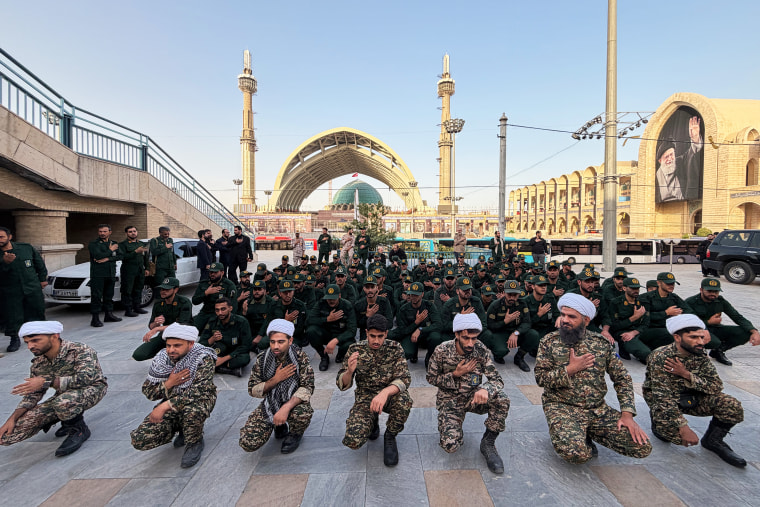
On July 3, 2026, Iran will lay to rest its former Supreme Leader, Ayatollah Ali Khamenei. The funeral, already underway, extends over multiple days and combines religious rites with political displays. Khamenei’s death in a U.S.-Israeli attack on Tehran in February created a ripple across the Islamic Republic, affecting nearly every aspect of a nation he dominated for almost forty years.
This is the second time Iran buries a supreme leader. The first instance was in 1989 with Ayatollah Ruhollah Khomeini, the Republic’s founder. That ceremony attracted millions to Tehran. Tehran Mayor Alireza Zakani estimates up to 20 million people might attend Khamenei’s funeral events in the capital, reports the Young Journalists Club, linked to state television.
Members of the Revolutionary Guard and various clerics are seen mourning at the Imam Khomeini Mosalla Grand Mosque. The funeral represents a moment for defenders of Khamenei’s legacy to project strength, notes Sina Azodi from George Washington University. “They will portray it as a show of the Islamic Republic’s resilience and the people’s loyalty,” she explains.
Viewing and prayers for Khamenei’s coffin take place over the weekend at the Grand Mosalla, a major mosque in central Tehran. The funeral procession will proceed through Tehran on Monday, with events also planned in Qom and in Iraq. These locations are key Shiite sites, underscoring Iran’s regional significance.
Khamenei’s interment will occur in his birthplace, Mashhad, alongside a major Shiite shrine. Muslim tradition calls for swift funerals, as was the case with Khomeini. However, Khamenei’s burial was delayed due to unusual circumstances, including a fragile peace agreement with the U.S. The funeral date was set only recently, soon after a U.S.-Iran memorandum signaling an end to hostilities.
Multiple senior officials died alongside Khamenei in the U.S.-Israeli strikes that initiated a month-long conflict, leaving Iran politically unstable. Khamenei’s son, Mojtaba, assumed leadership in March but remains unseen publicly, raising questions about his health. It remains uncertain if he will attend his father’s funeral.
Khamenei’s image continues to influence Tehran, depicted in murals with nationalistic themes and criticism of U.S.-Israeli actions. Iranian state channels refer to the late leader as a martyr, having enabled the IRGC to become Iran’s foremost power.
Ali Alfoneh from the Arab Gulf States Institute notes the promotion of IRGC hardliners following the war, illustrating their dominance in resource allocation and national decisions. A notable figure is Mohammad Bagher Ghalibaf, parliament speaker and primary negotiator with the U.S. Ghalibaf has publicly criticized former President Donald Trump and emphasized Iran’s refusal to be silent to oppression.
Khamenei’s funeral also serves as a platform for the IRGC to affirm its resilience to both Trump’s machinations and domestic opposition. Large expected crowds contrast with prior large-scale protests that challenged the regime, which were suppressed violently, leading to substantial casualties. The ongoing economic strife exacerbated by war adds tension as Iran and the U.S. discuss a long-term peace.
Ensuring security is a priority. The chaotic 1989 process for Khomeini had disastrous moments, with fatalities from the crowd’s frenzy. In addition, militant groups frequently target funerals, including a fatal 2024 ISIS assault on a ceremony for Gen. Qassem Soleimani’s death anniversary.
The primary test for Iran’s leadership arises post-funeral, experts suggest. Ali Vaez from the International Crisis Group remarks that while Khamenei shielded the Republic externally, he weakened its long-term legitimacy internally. With leadership transitions, war aftermath, and past uprisings, the Islamic Republic enters a highly uncertain phase.