
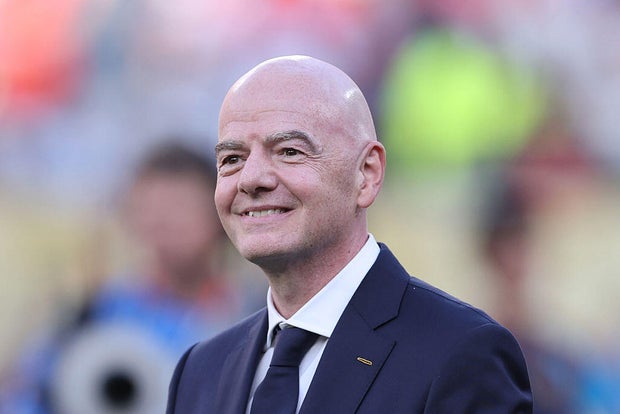
Gianni Infantino’s attempt to sell World Cup profits to private investors faced significant opposition, marking a turbulent period in global soccer politics. UEFA, led by President Aleksander Čeferin, took a firm stance against Infantino’s proposal, indicating potential challenges to his long-standing presidency. “No option should be off the table,” UEFA stated, highlighting the loss of confidence among UEFA and other soccer entities in FIFA’s leadership.
Infantino’s proposal involved forming a $20 billion corporation to manage the World Cup, partnering with private investors. This idea sparked widespread criticism following its announcement. UEFA’s forceful statement came shortly after FIFA retracted its private equity plan, driven by backlash from multiple soccer confederations. UEFA emphasized accountability for those behind secret, quick-decision schemes deemed detrimental to the sport.
The dismantling of Infantino’s plan came after UEFA’s member nations agreed to boycott the World Cup and other FIFA events. Likewise, CONCACAF and the Asian Football Confederation opposed the initiative, reflecting a strong united front. Internally, FIFA faced turmoil as senior adviser Carlos Cordeiro, part of the White House Task Force for the World Cup, resigned, urging transparency among FIFA leaders.
Further dissent arose when Kevin Lamour, FIFA’s chief operating officer, expressed that staff were misled by Infantino’s clandestine maneuvering. Lamour, closely associated with Infantino at both FIFA and UEFA, called for judicious decisions from soccer’s political leaders.
Infantino’s plan aimed to spin off FIFA’s commercial operations, including World Cups, into a $20 billion subsidiary with 20% investment by private parties, featuring an anchor investor in a company founded by Joshua Kushner.
This week marks the third time Infantino’s proposals have created upheaval within the sport. His past initiatives, including a $25 billion deal with Japan’s SoftBank and biennial World Cups, stirred controversy and were eventually abandoned by FIFA. Despite previous controversies, Infantino has remained in office, winning reelections in 2019 and 2023 without opposition.
The upcoming presidential election deadline on November 18 promises a critical juncture for Infantino, as continents rally support or opposition. His spinoff venture appeared as an attempt to secure a prominent role beyond his current term. Competing in the election requires 106 votes for a majority, potentially altering the landscape of FIFA’s leadership.