
What is the Gen Z ‘Cockroach’ Movement?
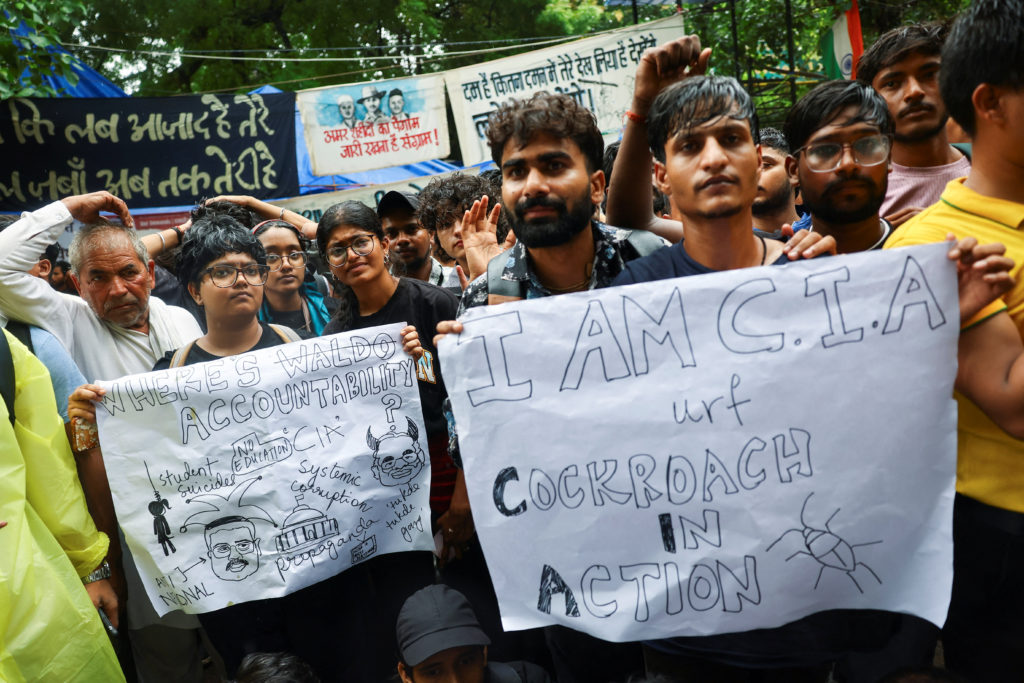
The ‘Cockroach’ movement emerged from an insult. During a court hearing, India’s chief justice described unemployed young people as “cockroaches.” Students, taking on this label, began to organize. Abhijeet Dipke, a graduate student at Boston University, posted a message on X suggesting unity among “cockroaches.” This sparked the creation of the “Cockroach Janata Party” (CJP), a satirical play on the ruling BJP. The CJP’s Instagram page quickly gained over 25 million followers, surpassing the BJP.
What Are Protesters Asking For?
The insult came shortly after India’s Ministry of Education annulled results of an entrance exam for undergraduate medical programs due to leaked questions. Two million students had worked hard and spent money on this challenging test, and the voiding of the results led to outrage. Entrance exams in India are a crucial path to educational and social advancement. Allegations of corruption and leaks have disillusioned many students and have been linked to student suicides. Protesters demand the resignation of India’s education minister, harsher penalties for those involved in leaks, and compensation for voided exam fees. Their broader agenda includes demands for more women in parliament, a freer press, and accountability within the electoral system.
Responses from Police and Politicians
This week, police clashed with CJP protesters marching towards India’s Parliament. Reports indicate that law enforcement used tear gas, batons, and even pellet guns on unarmed students. Instead of quelling the movement, these actions seem to have strengthened it. Sona Bisht, a 20-year-old student, asserted that they aim to safeguard their future and will continue until their demands are met.
As CJP supporters use social media to document arrests and ridicule the government with memes, widespread support has grown. People are sending meals and supplies to protesters through delivery apps. Opposition leaders, including Rahul Gandhi, support the demonstrations and criticize the government for neglecting youth concerns.
Government and Media Reaction
Some government supporters and media outlets label the protesters as anarchists influenced by foreign entities. Santa Clara University Professor Rohit Chopra notes frustration with this narrative. Criticizing the government is equated with anti-nationalism, sparking resentment among critics.
Prime Minister Modi recently addressed the exam controversy with promises of fast-track judicial measures, but he did not dismiss the education minister. This response falls short of the protesters’ demands.
Why Are These Protests Different?
Historically, India has seen significant protests, but this movement feels distinct. The protests now challenge not just policies but also Prime Minister Modi himself. Chopra emphasizes that the protestors attribute brutality directly to Modi’s leadership. Regardless of the immediate outcomes, such as potential reforms or resignations, Modi’s image has been undeniably affected.