
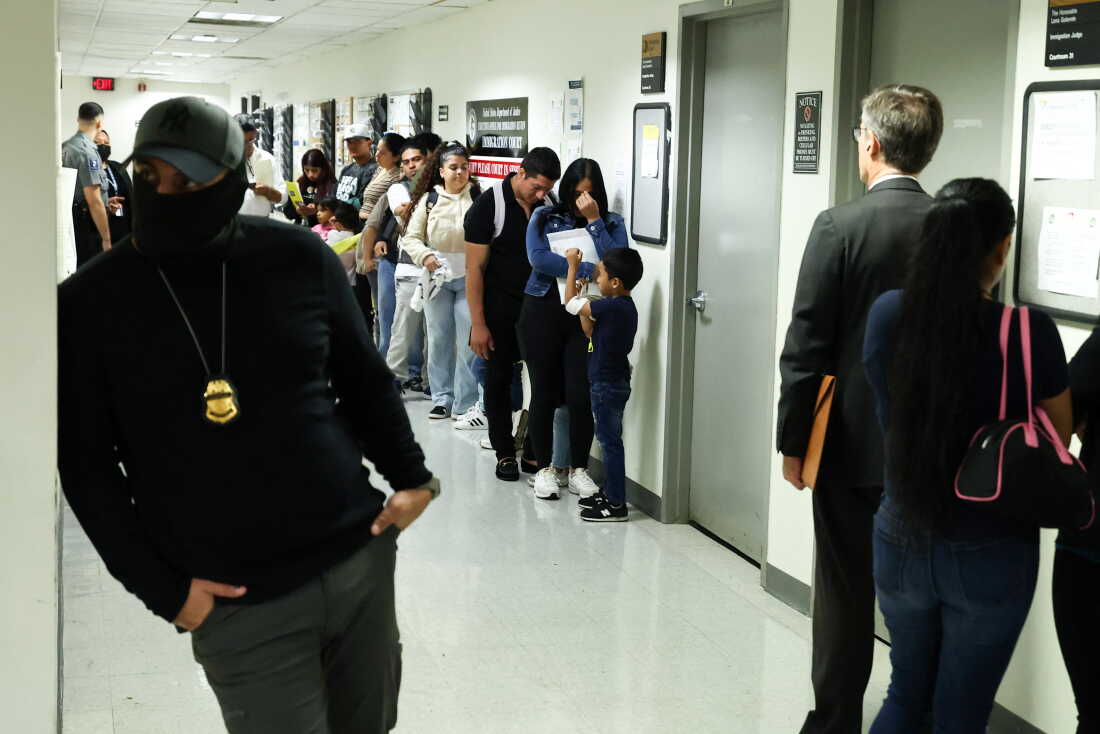
Immigrants have been receiving last-minute notices about in-person court hearings at previously undisclosed locations, according to immigration attorneys and NPR reports. These changes are seen as part of Trump’s administration strategy to expedite deportations by limiting immigrants’ due process.
Sudden Changes and Their Impacts
Immigrants with hearings set at Hyattsville, Baltimore, and Sterling courts have been redirected to new locations in Washington, D.C., and Falls Church, Virginia. Neither place is equipped for in-person hearings; this has raised questions about the legitimacy of these moves. In some instances, the notices were so delayed that affected individuals were not informed at all, according to NPR.
Kel White, from the American Immigration Lawyers Association, experienced a case where an unprecedented in-person hearing happened with a remote judge and prosecutor. White criticized these last-minute changes, deeming them a violation of Department of Justice regulations, which state a ten-day notice is required.
Impact on Unrepresented Immigrants
The tactics appear to target immigrants lacking legal representation. It places them at risk of in-absentia removal orders if they inadvertently miss a court date. Most immigrants managing their cases do so without a lawyer, heightening the risk.
Executive Office for Immigration Review (EOIR) Involvement
The Trump administration aims to reduce a backlog of 3.5 million immigration cases, noting that courts are an obstacle to rapid deportation. According to the EOIR, scheduling adjustments are necessary as they add new judges. However, they haven’t clarified the reasons for these sudden location changes.
Furthermore, the lack of clear announcements regarding new or converted court facilities fosters confusion. EOIR’s involvement has raised concerns as many hearings moved to unusual locations without previous public notice.
Confusion Among Immigrants and Attorneys
Instances of clients needing to travel across state lines highlight the disarray. Some were unaware of their new hearing locations, while others received notices only days in advance. A reliance on apps like MigraConnect has helped some avoid unintended consequences.
James Reyes, an immigration attorney, found a client’s hearing moved with only eight days’ notice. This reflects a broader pattern of sudden rescheduling and confusion.
Strategies for Rapid Decisions
Beyond location changes, the administration uses other strategies to rush decisions. ‘Mega master calendar’ hearings allow hundreds of cases to be processed at once, leading to increased in-absentia removal orders and a decline in asylum approvals. Lack of legal representation is a significant factor in these outcomes, with the percentage of unrepresented immigrants facing removal in Baltimore increasing substantially over recent months.