
Thousands of abandoned oil and gas wells are scattered across southern Illinois, remnants from when the state ranked among the top oil producers in the nation. These wells can be found in farm fields, forests, and near waterways. Many are termed “orphans” by the state, as their owners are deceased, unidentified, or their companies have gone bankrupt due to the volatile nature of the global oil industry.
Unplugged wells pose environmental hazards. They leak toxic chemicals deep underground, risking groundwater contamination, and release methane, a greenhouse gas. Brine, an underground fluid saltier than seawater, can spill onto farmlands, damaging crops and causing soil degradation that may take years to restore.
The Chicago Tribune investigates how Illinois regulators have failed to manage the problem of abandoned wells. The investigation uncovers how operators evade their legal obligations, leaving taxpayers responsible for millions in cleanup costs and exposing communities to various environmental risks.
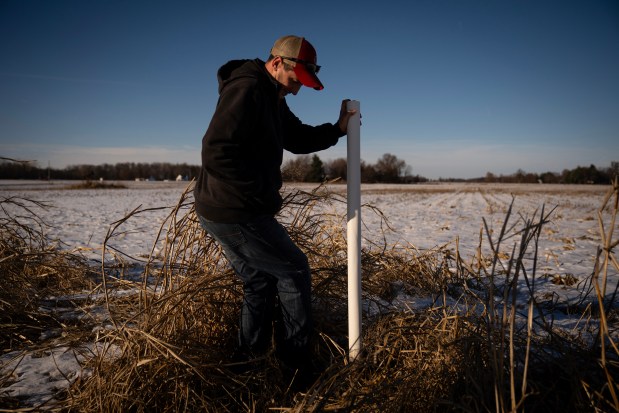
Jon Rosborough examines an abandoned oil well in Crawford County on Dec. 15, 2025, drilled in 1916 on his family farm. (E. Jason Wambsgans/Chicago Tribune)
While oil companies should mitigate environmental and public health risks by plugging defunct wells, about 4,000 remain unplugged in Illinois. The Illinois Department of Natural Resources is tasked with closing these wells, yet records reviewed by the Tribune reveal significant lapses. Interviews with farmers, industry representatives, scientists, and advocates highlight how the state has mismanaged millions in fees meant to prevent such orphan wells.
The Tribune’s four-month investigation exposes how Fireball Production Inc. evaded its duty to plug non-producing wells, leading to 603 wells abandoned. This irresponsible action costs Illinois approximately $24 million in cleanup expenses. The company’s brief entry into the Illinois oil scene has burdened the state significantly, according to unreleased public records and interviews.
An abandoned well near Casey, documented on Feb. 11, 2026, appears to be a Fireball well. (E. Jason Wambsgans/Chicago Tribune)
Efforts to hold oil operators accountable for abandoned wells can stretch over decades. Duncan Oil Co. has operated nearly 200 wells in central and southern Illinois. The company has been embroiled in a legal battle with the state for over 20 years due to its failure to address leaking or unproductive wells. The Illinois Department of Natural Resources and the attorney general’s office sued Duncan Oil, resulting in a settlement that halted the transfer of wells from Duncan to Dix Oil Co. These companies share an address and leadership in downstate Salem.
Abandoned equipment on James Myers’ farm in Assumption, observed on May 22, 2026. (E. Jason Wambsgans/Chicago Tribune)
The Department cites this ongoing legal case as a success in preventing abandoned wells from becoming state responsibilities. Still, Illinois faces significant challenges in managing these environmental and public health hazards.