
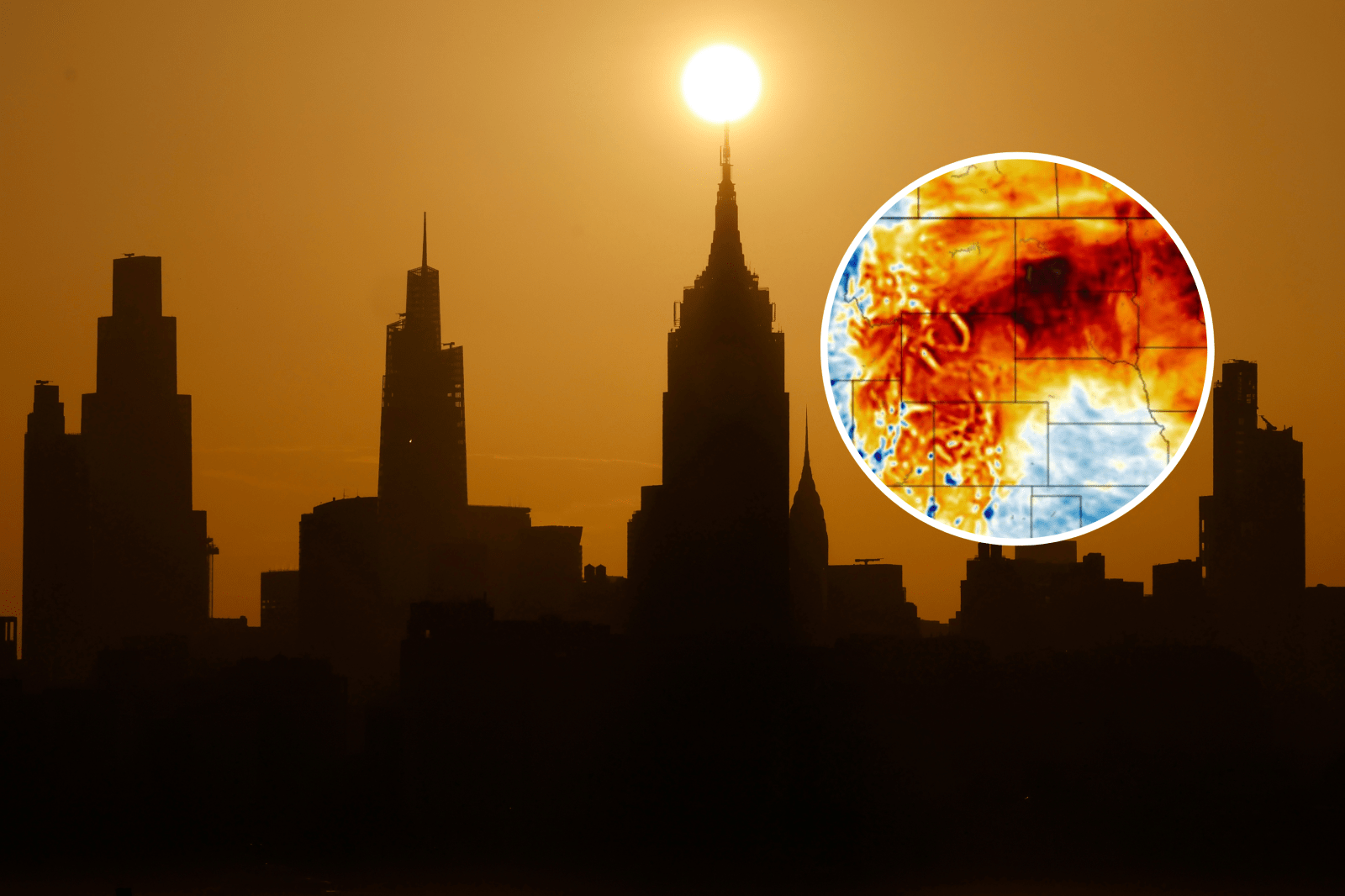
Millions of Americans are confronting dangerous heat and humidity as a widespread heat dome extends from the Plains to the Northeast. Authorities are issuing warnings for people to stay indoors and take measures against potentially life-threatening conditions.
Heat Alerts and Warnings
A powerful heat dome is currently intensifying across large regions of the U.S. this week. This weather phenomenon is bringing triple-digit temperatures and high humidity levels from the Rockies and Plains to the East Coast. Experts caution that the combination of extreme heat, oppressive humidity, and warm nights could increase the likelihood of heat-related illnesses, strain power grids, and worsen drought conditions in certain regions.
Residents in parts of the Midwest, Northeast, Mid-Atlantic, Southwest, and California are under extreme heat warnings. Some locations are predicted to experience heat index values exceeding 105 degrees.
The Dangers of the Heat Dome
Another wave of intense summer heat is affecting the United States. This comes shortly after a severe heat dome impacted much of the country during the Fourth of July period. While this current event is forecasted to be less intense or prolonged, meteorologists emphasize that it still poses significant health risks for millions.
Heat domes occur when strong high pressure traps hot air close to the ground. This system is also expected to reduce rainfall across parts of the central U.S., potentially expanding drought conditions and creating additional challenges for agriculture.
Key Heat Facts
- Conditions could feel as hot as 105 to 115 degrees in parts of the Plains and Great Lakes due to the combination of extreme heat and humidity, according to AccuWeather.
- The hottest conditions in the central U.S. are expected on Tuesday before shifting eastward.
- New York City could reach the upper 90s on Wednesday, which is approximately 10 to 15 degrees above average.
- Philadelphia is forecast to hit 100 degrees, with the temperature feeling closer to 105 degrees due to humidity.
- Extreme heat warnings have been issued across numerous states, including parts of California, Arizona, New Jersey, Pennsylvania, Delaware, Minnesota, North Dakota, Montana, and Wyoming.
- Desert areas in the Southwest could encounter temperatures between 113 to 116 degrees.
- Warm overnight temperatures are likely, adding to cumulative heat stress.
- Severe thunderstorms may develop around the northern edge of the heat dome later this week.
Regional Effects
The heat dome stretches from the central United States toward the East Coast, pushing temperatures and humidity into dangerous levels. Conditions could feel as hot as 105 to 115 degrees across parts of the Plains and Great Lakes early this week. “The worst of the heat dome will focus across this region before it shifts eastward,” noted AccuWeather meteorologist Breanna Grill.
Tuesday is expected to bring the peak heat across much of the central U.S. before gradually moving eastward. By Wednesday, oppressive conditions should extend into the Midwest, Mid-Atlantic, and Northeast. Major cities are forecast to feel the full impact, with New York City potentially approaching record highs in the upper 90s and Philadelphia likely to reach 100 degrees.
‘Steam-Cooker’ Conditions
Humidity plays a significant role in perceived temperatures. AccuWeather forecasting intern Noah Bodner describes the conditions in the East as a “steam-cooker,” reflecting what residents experience with high dew points and increased humidity.
Across parts of Minnesota, Iowa, Missouri, and the Ohio Valley, temperatures could feel well above 100 degrees. High air moisture makes it harder for the body to cool itself through sweating, raising the risk of heat exhaustion and heat stroke.
Many areas are also expecting unusually warm nights, with temperatures remaining in the 70s after sunset. Limited nighttime cooling increases cumulative heat stress, placing vulnerable individuals at greater risk.
Warnings Across the Country
A surge of extreme heat warnings covers large portions of the country. In Southern California, warnings cover parts of Los Angeles, Orange, Riverside, and San Diego counties. Here, temperatures are predicted to climb into the upper 90s and low 100s. Desert locations could see highs of 113 to 115 degrees.
Parts of Arizona and southeastern California are expected to endure temperatures between 106 and 116 degrees. Heat index values might reach 107 degrees in regions of New Jersey, Pennsylvania, and Delaware on Wednesday.
The National Weather Service stresses that heat-related illnesses increase significantly during extreme heat events, particularly when overnight temperatures stay elevated. Warnings are also in effect for parts of Minnesota, North Dakota, Montana, Wyoming, Michigan, and Utah. Forecasters indicate that warm nights will provide limited recovery from daytime heat.
How to Stay Safe
Meteorologists advise staying indoors during the hottest part of the day whenever possible. “Residents who can, should remain indoors during peak heating hours early this week. If you must be outside, take breaks, stay in shaded areas, wear light-colored clothing, and stay hydrated,” advised AccuWeather meteorologist Brandon Buckingham.
Respective National Weather Service offices urge individuals to consume plenty of fluids, remain in air-conditioned spaces, and avoid strenuous activity during peak afternoon heat. Officials emphasize that children and pets should never remain unattended in vehicles, as temperatures inside a car can become lethal within minutes.
Checking on older relatives, neighbors, and community members without reliable air conditioning is recommended. These vulnerable populations are at higher risk during intense heat events.
Storm Threat After the Heat
While the primary concern remains extreme heat, the weather pattern might also lead to severe storms across parts of the Northeast later this week. AccuWeather predicts thunderstorms could develop from the Great Lakes to New England as the heat dome weakens. Risks include damaging winds, hail, torrential rain, and isolated tornadoes.
New England faces a heightened threat Tuesday into Tuesday night. “Storms moving into northern New England will be exceptionally strong for the region and might cause numerous areas to see downed trees and power lines,” warned AccuWeather meteorologist Adam Douty.
Power outages could pose additional problems with overnight temperatures remaining warm. Douty highlighted that some communities, particularly rural ones, might face extended periods without electricity, heightening risk for those relying on air conditioning.
Currently, the most significant threat is the heat itself, described as a “steam-cooker” pattern expected to spread widely. Residents are urged to remain cool, hydrated, and heed the warnings seriously.