
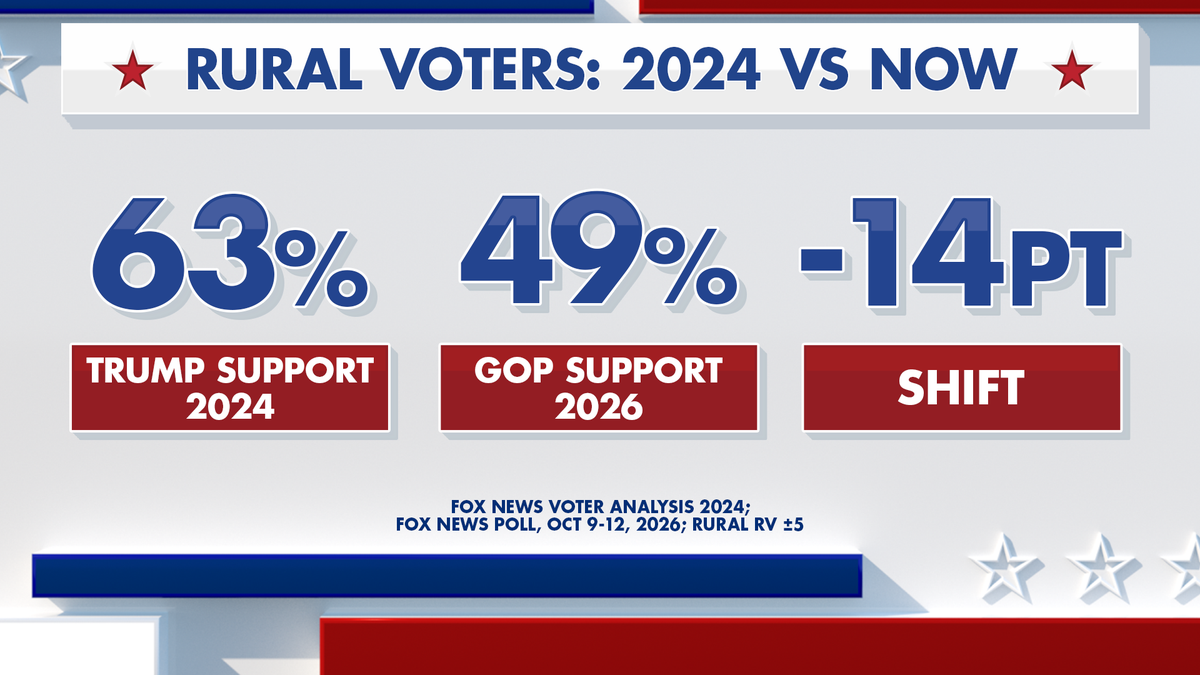
The Republican Party has experienced varied outcomes in elections over the past two decades. However, rural voters have consistently leaned Republican, a shift evident since the early 2000s. In fact, in the 2024 election, President Trump garnered support from almost two-thirds of these voters.
Nevertheless, challenges arise. Currently, less than half of rural voters indicate support for the GOP in the upcoming November elections. Economic concerns rank high among these voters. A recent survey highlighted that 19% identify the growing cost of living as their primary economic issue, closely followed by gas and energy costs. Efforts from the Trump administration, focusing on job growth and AI developments, haven’t fully alleviated these anxieties.
A mere 24% of rural voters believe the economy is robust. Unemployment remains crucial, with 8% pinpointing job scarcity as their main economic worry; only 28% perceive job prospects in their communities as good or excellent.
David Marcus from Fox News notes, “On the ground in middle America, four issues will decide the Senate, and none are affordability.”
Interestingly, data centers are emerging as a noticeable issue. While only 2% of rural voters see them as their biggest problem, their impact can’t be ignored.
These dynamics present hurdles for Republicans nationwide, affecting states like Ohio and Iowa, often considered Republican strongholds. Some rural districts, even those previously won by Trump by significant margins, are now experiencing tighter races.
This shift is evident in states like Wyoming. Campaign ads for Republican candidate Chuck Gray omit mentions of Trump or the GOP even though Trump achieved 71.6% of votes there previously. This hints at potential changes in voter behavior, like reduced turnout or party switching.
Four rural-heavy states—Idaho, Montana, Nebraska, and South Dakota—introduce complex scenarios with independent Senate candidates. These independents advocate anti-establishment policies such as congressional term limits and lobbying bans. Corruption emerges as a top concern from last week’s Fox News poll. These candidates pledge not to caucus with existing parties, forming their own caucus if elected.
The Democratic Party remains weak in these areas, stepping aside from races in three of the four states. Even in Montana, where a Democrat remains, support diminishes.
Normally, dissatisfaction leads to absentee voting, allowing incumbents modest victories. With independents gaining traction, margins may tighten.
Despite competitive history in these states, close races might occur again. Republican victories in South Dakota and Nebraska often come with narrow margins; Idaho’s gubernatorial race in 2014 saw a similar trend.
In Florida, the gubernatorial race tightens as campaigns enter their final stages. Trump aligns movements like “MAGA” in this state. Gov. Ron DeSantis’ successes, including a recent 20-point reelection win, contribute to Republican advantages.
While DeSantis’ initial victory was narrow, Hispanic voters play a pivotal role now. Recent polls suggest a shift away from GOP preference, with 31% favoring Republicans compared to previous Trump support.
Rep. Byron Donalds, endorsed by DeSantis, maintains the lead against Democrat David Jolly, despite Jolly’s appeal to former President Bill Clinton.
The Nebraska race sees challenging dynamics as well. Republican Gov. Jim Pillen seeks re-election amidst wavering support from suburban and rural voters. Factors include independent candidate Dan Osborn boosting Democratic turnout, Pillen’s budget decisions, and third-party candidate Brett Lindstrom appearing as “America First.”
Consequently, these scenarios indicate potential shifts in upcoming elections.