
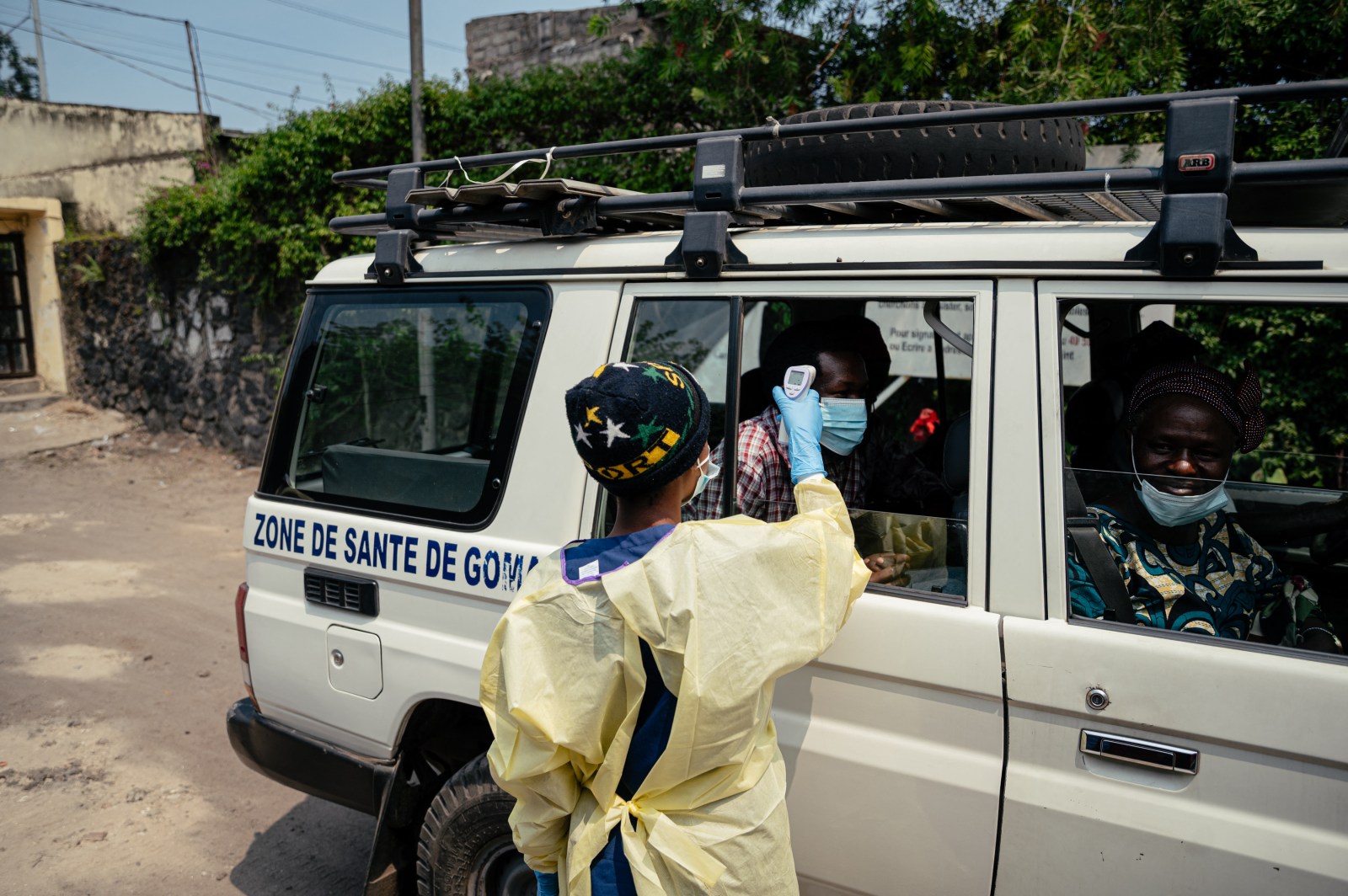
Ebola might seem like a distant threat to many Americans, yet history has shown its potential to reach our shores. The 2014 West African Ebola epidemic took over 11,000 lives and disrupted health systems in Guinea, Liberia, and Sierra Leone. This crisis triggered global concern as the virus spread to countries like Italy, Nigeria, and the United States. Imported cases in Texas and New York demonstrated how quickly outbreaks could appear locally. West Africa’s economies lost billions due to this outbreak.
This epidemic didn’t escalate merely by fortune. It was the result of an established global response network. This infrastructure was built through international collaboration, supported by surveillance systems, laboratory networks, and emergency response teams financed by the United States and European nations. During the outbreak, the U.S. allocated more than $5.4 billion to Ebola preparedness efforts at home and abroad.
Today, a new Ebola outbreak is spreading across the Democratic Republic of Congo (DRC) and Uganda. This time, response systems face challenges. The Bundibugyo strain of Ebola, involved in the outbreak, was initially misidentified by many laboratories. Transmission, occurring through funerals, reached Uganda and areas destabilized by conflict. The World Health Organization (WHO) labeled this a Public Health Emergency of International Concern, reporting over 860 suspected cases and 200 deaths. Unlike the Zaire strain, no approved treatments exist for Bundibugyo Ebola. Experts express concern, noting the difficulty existing systems had to anticipate this strain. Without vaccines, the danger increases significantly, according to Africa CDC officials.
The issue isn’t only viral mutation. Institutional erosion poses a significant threat. For decades, U.S. agencies like USAID, CDC, and PEPFAR supported global epidemic readiness. These efforts included building laboratory networks, training epidemiologists, and enhancing disease surveillance. The Global Health Security Agenda, initiated in 2014, led to increased U.S. investments following the Ebola crisis. Success in outbreak prevention often goes unnoticed since early detection avoids large-scale epidemics.
Today, that infrastructure is weakening. The world faces increasing zoonotic spillover risks due to climate change, instability, and rapid disease spread. Since 2025, the Trump administration’s ‘America First’ approach has significantly weakened the U.S.’s global health efforts. In mid-2025, Secretary of State Marco Rubio announced that USAID would halt foreign aid program implementations. Previous reductions in contracts have already impacted preparedness activities.
This shift affects more than aid delivery. Science reports indicate that reduced U.S. funds have left global disease monitoring initiatives uncertain, hindering pathogen tracking and outbreak prevention. The U.S. government’s withdrawal from global health cooperation has affected real-time data sharing and alert systems, crucial for preventing epidemics.
There remains a possibility to contain the outbreak. Surveillance and response setup post-2014 still exists. Prompt mobilization of these resources can prevent more deaths. However, a further reduction in international aid is underway. The United Kingdom will cut overseas aid to 0.3 percent of gross national income by 2027. This reduction, combined with broader European aid cuts, reshapes the international aid landscape.
Infectious disease outbreaks don’t stay contained. The Africa CDC warns of risks to ten African countries. The U.S. CDC reports that an American health worker in the DRC contracted Ebola and was treated in Germany. Another high-risk American was monitored in the Czech Republic. The current situation in the DRC and Uganda tests global systems, which wealthy nations seem to be retreating from.
The question is whether governments will recognize the warning before the next outbreak becomes far deadlier – and far more expensive – to control.
Pathogens exploit global fragmentation moments.
Thoai D. Ngo, PhD, MHS, chairs and serves as a professor at Columbia University Mailman School of Public Health’s Heilbrunn Department of Population and Family Health. The opinions expressed are the author’s.