
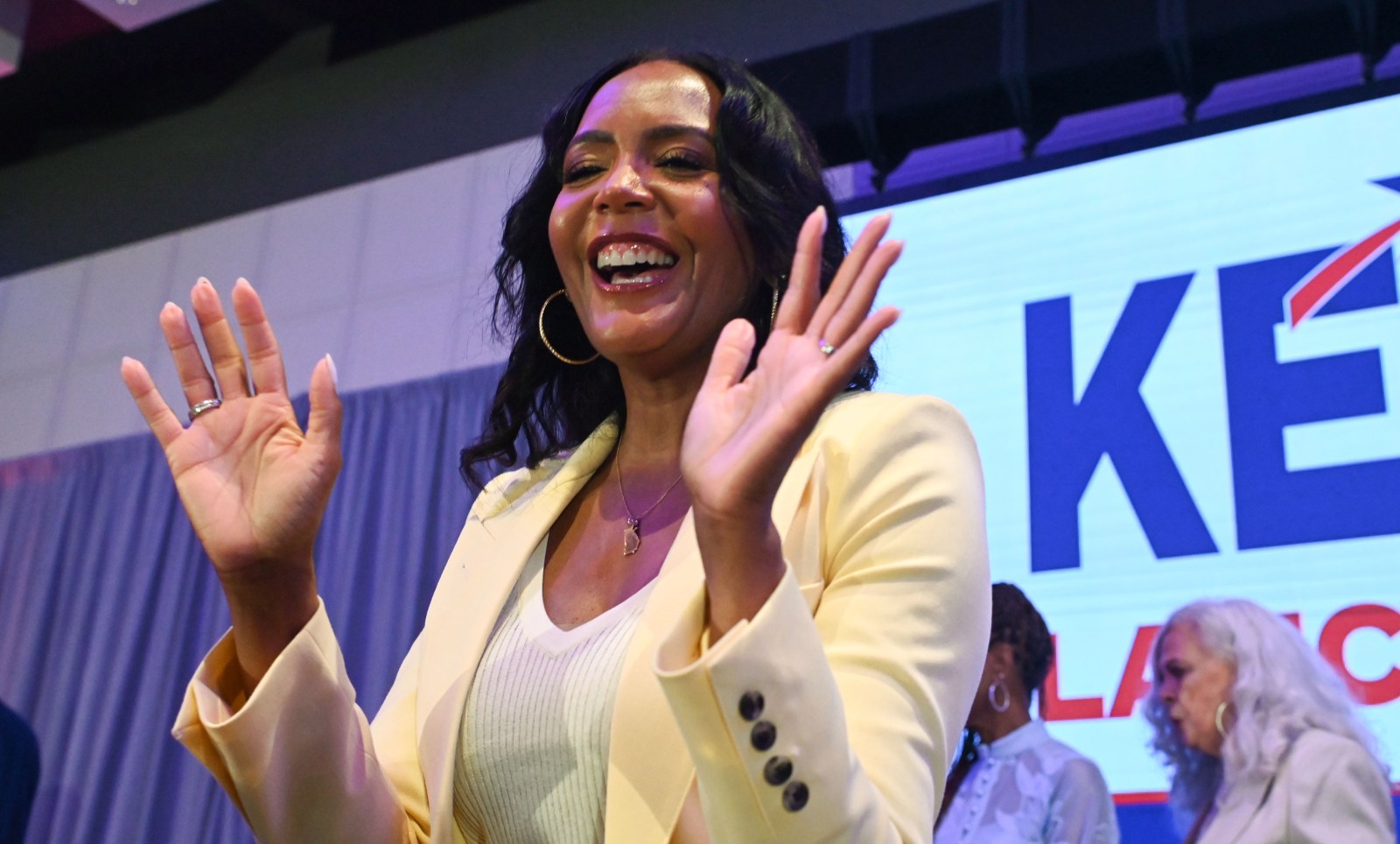
In Georgia, Democrat Keisha Lance Bottoms and Republican Rick Jackson are engaged in a closely contested race for governor. Recent polling indicates that Bottoms holds a slight lead, though this lead falls within the poll’s margin of error. Democrats aspire to reclaim the governor’s office after 20 years of Republican dominance. With Republican Governor Brian Kemp unable to run due to term limits, Democrats see an opportunity in this open contest. A win for Bottoms would mark the first Democratic victory in the governor’s office since 1998, potentially ending two decades of Republican control.
Democratic Strategy and Challenges
For Bottoms to succeed, a robust Democratic turnout is essential. She will also need significant crossover support from independents and moderate Republicans. Historically, Democrats have faced challenges in securing this support in gubernatorial races. Campaigns for Bottoms and Jackson have been approached by Newsweek for comments.
This Georgia race is one of 36 gubernatorial contests occurring nationwide in 2026, featuring other open-seat battles in states like Michigan, Alaska, Iowa, Wisconsin, and Nevada. Bottoms, who formerly served as Atlanta’s mayor, secured the Democratic primary with more than 56% of the vote. Jackson, a billionaire health care executive, won the Republican nomination, defeating Lieutenant Governor Burt Jones in a runoff with approximately 53% of the vote.
Jackson has the endorsement of former President Donald Trump since late July. Georgia has emerged as a political battleground, witnessing Republican control in the governor’s office while Democrats won notable federal races, including Senate seats for Jon Ossoff and Raphael Warnock.
Poll Insights
The Cook Political Report labels Georgia’s governor race as a “toss-up” with a Republican voting index of R+1. Georgia narrowly supported Trump in 2024 while maintaining a historically conservative inclination. Despite becoming more competitive in the last decade, Democrats have struggled in gubernatorial elections.
A Quantus Insights poll showed Bottoms slightly ahead at 46.4%, compared to Jackson’s 44.9%, with a 3.6 percentage point margin of error. Another survey by AARP reflected similar findings, placing Bottoms with a 48% lead to Jackson’s 46%, also within the margin of error.
Broader Political Implications
Recent polls, like one by State Navigate, showed Bottoms leading with 51% when considering voters leaning towards a candidate, and with 50% without leaners. A Wick Research poll, however, had the candidates tied, displaying Jackson slightly leading within the margin of error.
Prediction markets favor Bottoms, with platforms like Kalshi and Polymarket showing her odds at 57% and 59%, respectively. Georgia’s transformation from a reliably Republican state to a swing state has been driven by demographic changes, particularly in suburban Atlanta.
Democrats have made significant progress, including outperforming in a Georgia special election where Republican Clay Fuller won against expectations. While Greene warns of a “drastic drop” in Republican votes, which she believes might impact various statewide races.
Senate Race Dynamics
In conjunction with the gubernatorial race, Georgia voters will decide a Senate seat. Democrat Jon Ossoff, a top fundraiser, has significant cash reserves in his campaign against Republican Mike Collins. The University of Virginia’s Center for Politics has now shifted this Senate race to “likely Democratic.”
Current Republican majority in the Senate stands at 53-47, making Georgia a critical battleground for Democrats seeking to regain control in 2026. With the gubernatorial race serving as a test of Georgia’s evolving political landscape, significant voter turnout could influence both state and federal levels.
Important Election Dates
- October 5, 2026: Deadline for voter registration.
- October 13-30, 2026: Early voting period.
- November 3, 2026: Georgia General Election Day.
- December 1, 2026: Potential runoff election date, if necessary.