
France is grappling with a profound intelligence failure as authorities severely underestimated the scale of nationwide protests that escalated into riots and looting. This situation has led French President Emmanuel Macron to initiate a security review after acknowledging that police “lost control” in several major cities. Senior officials, including government ministers, have offered to resign due to their inability to foresee the level of chaos.
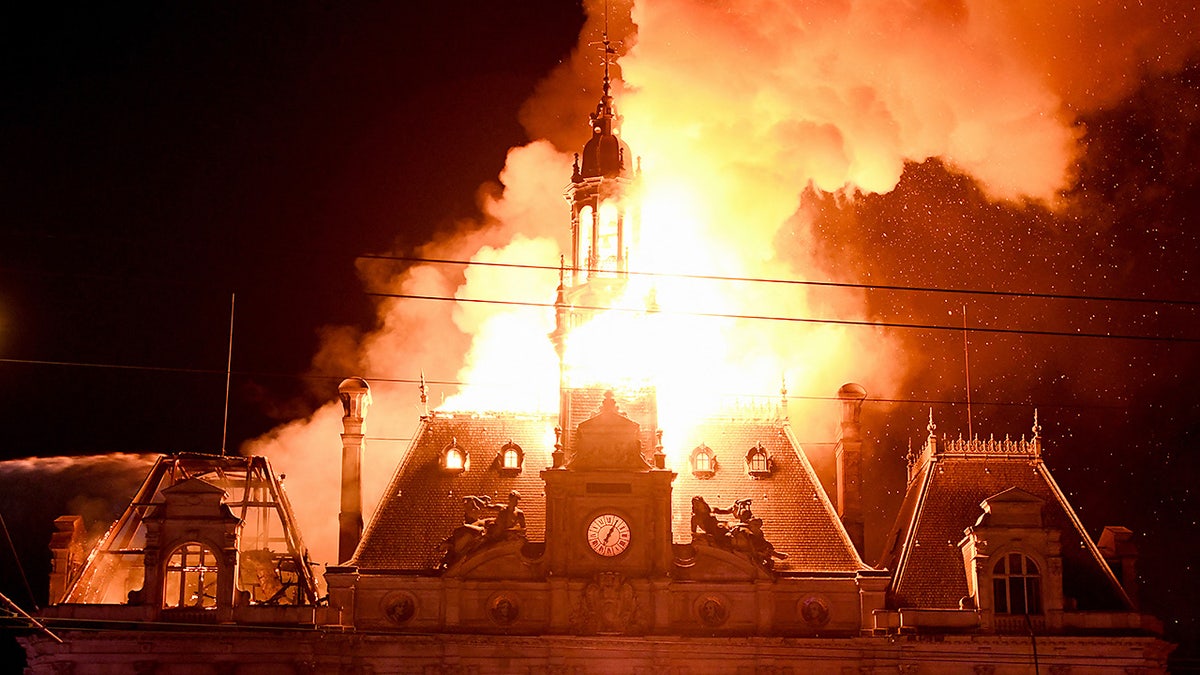
According to the Interior Ministry, approximately 550,000 people took part in 110 marches on Saturday, far exceeding the estimated 200,000 protesters. Organizers claim the turnout was around 800,000. The protests saw widespread destruction as cars were set ablaze, over 1,500 stores were looted or severely damaged, and public buildings were attacked throughout the nation. In Limoges, protestors broke into and set on fire a 19th-century city hall, which resulted in the collapse of its roof.
By Monday, the Louvre remained closed as student protestors continued blocking its entrances, prolonging the disruption.
A photograph depicts a fire ravaging the city hall in Limoges during ongoing protests against the “high cost of living.” This action took place amid a nationwide call for mobilization that united former “Yellow Vest” protestors, students, climate activists, and farmers.
Weeks of student-led protests have culminated in broader demonstrations over the cost of living as the country approaches a presidential election. The unrest intensified over the weekend, with authorities deploying 60,000 police, gendarmes, and other security personnel nationwide. Despite these efforts, nearly 1,000 law enforcement officers and firefighters were injured, approximately 2,400 people were arrested, and authorities estimate around 3,000 businesses were damaged.
Police were overwhelmed by the protests, with masked rioters smashing storefronts, setting fires, and clashing with officers. In some cities, authorities struggled to prevent looting despite efforts to control larger demonstrations.
By Monday, Interior Minister Laurent Nuñez expressed what many residents had already seen. “Yes, Saturday, in certain large cities, we lost control,” Nuñez stated, acknowledging the authorities’ underestimation of protester numbers and violent groups who exploited the unrest.
The president refused Nuñez’s resignation, instead ordering a review of the planning and intelligence oversights that caught authorities off guard. Justice Minister Gérald Darmanin said, “We unquestionably failed,” emphasizing weaknesses in tracking the ultra-left groups contributing to the upheaval.
The unrest traces back to high school student protests beginning in September, initially focused on teacher shortages and deteriorating school conditions around Paris. The movement expanded to include teachers, labor unions, and other groups frustrated with rising living costs and declining public services. Early violence saw students setting fires in schools and vehicles while clashing with riot police, leading to thousands of arrests.
Despite intelligence officials recognizing a “tipping point” towards urban violence, they failed to predict the scale of the escalation. Saturday’s protest saw a variety of groups march peacefully while others engaged in vandalism and combative actions.
This violence has ignited political discourse on immigration, with President Donald Trump attributing the chaos to migration policies, urging France to close its borders. Right-wing leaders across Europe echoed similar sentiments. French authorities, however, have attributed the violence to ultra-left activists and criminals exploiting grievances related to education and public services.
The riots have intensified political debates as France moves toward its 2027 presidential election. Marine Le Pen’s National Rally criticized Macron’s handling, arguing the government lost control, while other right-wing proponents call for stricter policing and immigration laws.
The incidents expose a fragile political climate with Macron barred from seeking a third consecutive term. Voters increasingly prioritize immigration, security, and purchasing power. Consequently, the discourse over policing failures, economic and social grievances, and government policy will shape France’s political landscape long after the unrest subsides.