
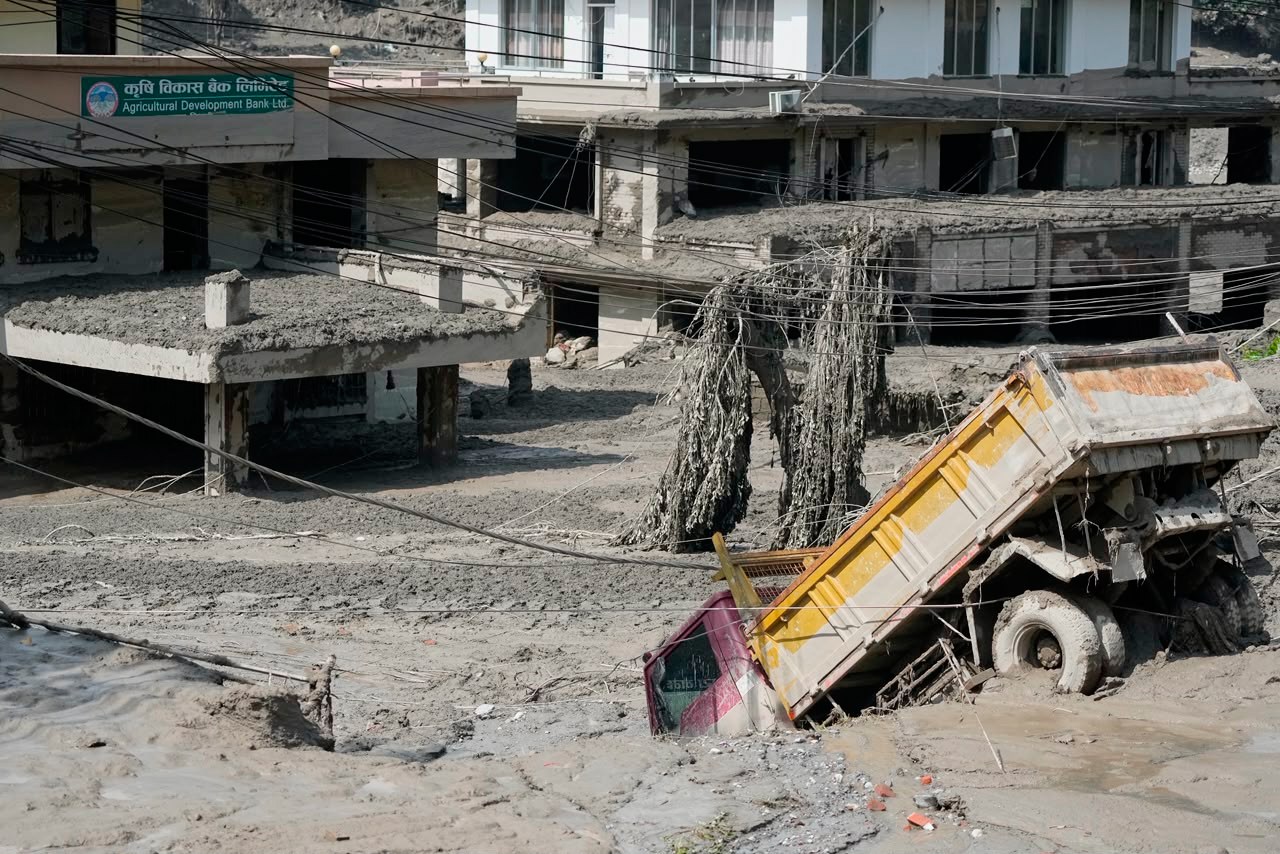
On Wednesday, a surge of muddy water engulfed buildings at the Gyirong Port in the Himalayas, causing devastation across northern Nepal and Tibet. These flash floods left a trail of destruction, impacting communities on both sides of the border.
Surveillance footage captured the chaos as people raced to safety when a torrent of mud, rock, and water surged from Nepal. The floods led to the deaths of at least eight people, with hundreds reported missing. An avalanche of ice and rock had blocked a river, releasing a sudden surge downstream, a phenomenon confirmed by officials and climate experts.
The flooding wreaked havoc in Nepal’s Rasuwa district before crossing into China. It destroyed villages, roads, and hydropower projects while disrupting power and communications. The aftermath saw rescue teams scrambling to locate the 384 missing tourists, including 291 foreign nationals.
Nepal’s International Assistance
Nepal reached out to neighboring India and China for help in rescue operations. Sasmit Pokharel, a spokesperson for the Nepalese government, emphasized their request for assistance as authorities sought access to the affected areas.
Similar flooding occurred in Rasuwa district in August 2025 when a glacial lake overflowed. This previous event led to the loss of nine lives and damage to vital infrastructure.
Events Leading to the Flash Flood
Experts from the International Centre for Integrated Mountain Development highlighted that a glacier ice rock avalanche on Nepal’s side likely blocked the Lhende Khola River, causing a sudden downstream surge.
Saswata Sanyal, a disaster risk reduction specialist, stressed the need for warning systems due to the increasing frequency of climate-related hazards. The Himalayan region is particularly vulnerable to these events, exacerbated by human-induced climate change.
Research indicated that glacier ice loss across the Hindu Kush Himalaya has doubled since 2000. This change is driven mainly by rising global temperatures, underscoring the urgency of addressing climate change.
China’s Disaster Response
Chinese President Xi Jinping called for all-out efforts in locating the missing individuals. He urged evacuation for those at risk and timely medical treatment for the injured, while instructing officials to enhance monitoring and warning systems.
Premier Li Qiang directed authorities to verify the affected numbers, ensuring the Foreign Ministry collaborated with other countries for information sharing. Vice Premier Zhang Guoqing visited the area to oversee rescue operations.
Chinese resources were swiftly mobilized with 145 personnel deployed for disaster response. Drone footage revealed the extent of the damage at Gyirong Port. Financial support was allocated, with 120 million yuan dedicated to rescue and relief efforts.
Additional reporting was provided by The Associated Press.