
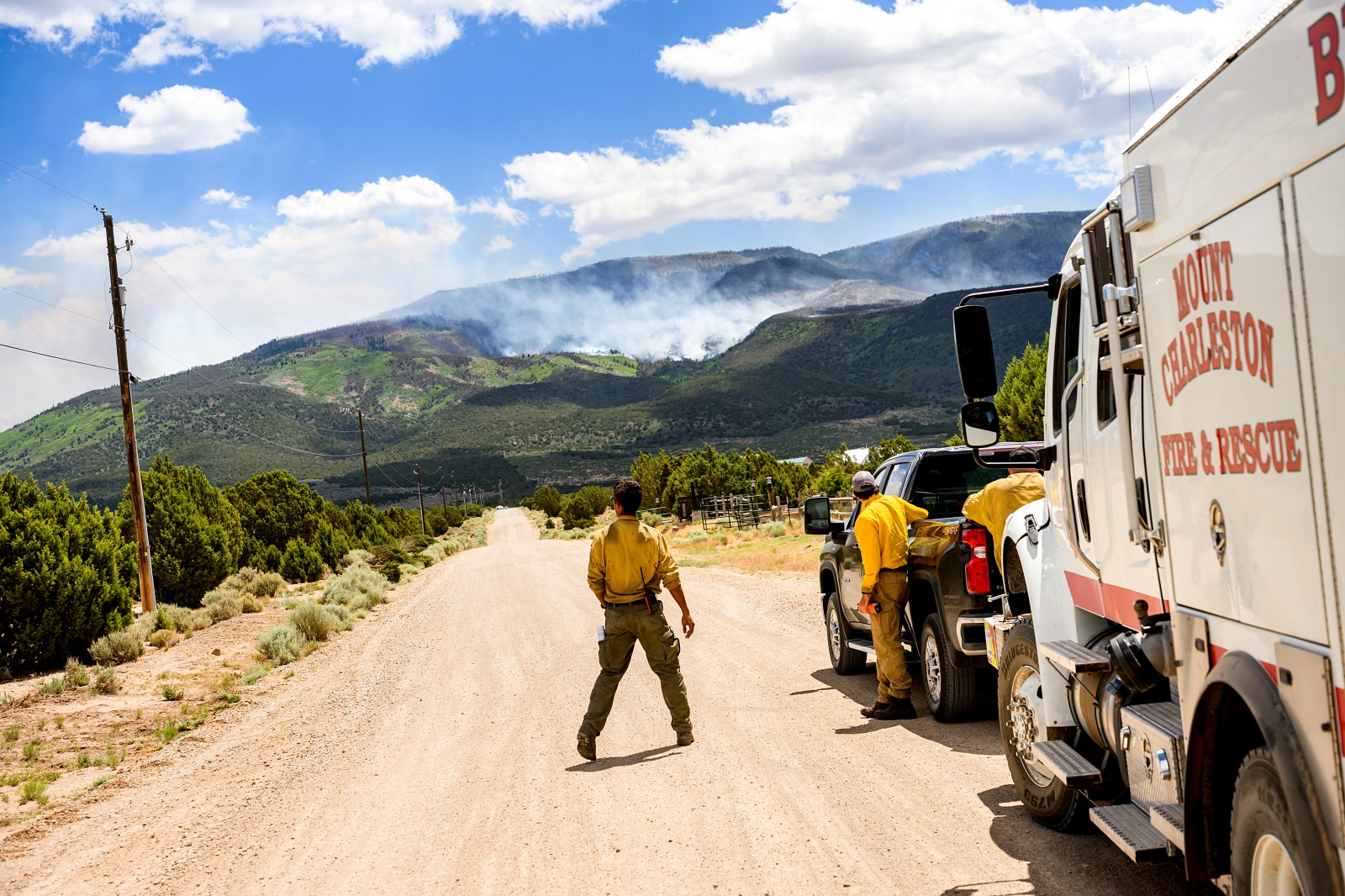
Three firefighters lost their lives, and two others sustained injuries on Saturday while combatting swift wildfires near the Colorado-Utah border. These blazes, fueled by scorching temperatures, strong winds, and prolonged drought, continue to affect the West. Federal officials report that the firefighters were responding to the combined Knowles and Gore fires, now recognized as the Snyder fire.
The injured firefighters are currently receiving medical care for burns, as announced by the U.S. Wildland Fire Service (USWFS) via social media on Sunday. The identities of the deceased remain undisclosed. “Our immediate focus is on supporting their families, friends, and fellow crewmates during this incredibly difficult time,” stated the USWFS.
These devastating losses highlight the increasing risks in the region, where extremely dry and windy conditions have intensified fire behavior. Resources are stretched thin, prompting emergency declarations in numerous states.
Fires Spread Rapidly Across the West
The Cottonwood Fire in southwestern Utah is currently the largest active blaze, consuming over 92,000 acres, or approximately 144 square miles. It remains fully uncontained, with firefighting teams striving to manage the flames in challenging terrain.
Near Fishlake National Forest, near Beaver, Utah, roughly 1,200 responders are constructing containment lines. InciWeb, the federal wildfire tracking system, reports that the origin of the Cottonwood Fire is under investigation. Officials highlighted that a Fire and Fuels Advisory is in effect across Utah due to low moisture in fuels, increasing the risk of extreme fire behavior.
The Snyder Fire has also scorched tens of thousands of acres along the state border, leading to evacuation advisories for several communities. From Alaska to Florida, teams worked Saturday on dozens of fires classified as large and uncontained.
Extreme Weather Fuels ‘Particularly Dangerous Situation’
The National Weather Service (NWS) has issued red flag warnings across several Western states due to high temperatures, fierce winds, and humidity levels plummeting to just 10 percent. This affects a vast area from California to Arizona and New Mexico. Meteorologists in Utah describe the situation as a “particularly dangerous situation” because of unpredictable fire behavior.
The current outbreak aligns with broader climatic patterns defining the 2026 wildfire season. The West is struggling with ongoing drought, deficient precipitation, low winter snowpack, and rising temperatures. Across the country, nearly 3 million acres have burned this year, significantly above the 10-year average.
Southwest Fire Activity and Power Shut-offs
In Arizona, the fire threat extends southward. A wildfire near Grand Canyon National Park is moving away from key areas, but another blaze has prompted evacuation orders near Kendrick Mountain in Coconino County.
Northern Arizona also faced power outages on Saturday as preventative measures against the increased wildfire risk. Utility companies have made power shut-offs more frequent due to expanding fire threats, considering factors such as wind speeds and available fuel.
In Utah, similar actions were taken, with Rocky Mountain Power shutting off power lines in Beaver County and surrounding areas because of severe fire conditions.
States Trigger Emergency Declarations
The escalating situation has fast-tracked emergency responses ahead of the July Fourth holiday. Utah Governor Spencer Cox declared a state of emergency, installing a statewide fireworks ban. Utah State Forester Jamie Barnes noted a rise in new fires showing “unprecedented behavior,” stretching resources thin.
Colorado’s Governor Jared Polis also declared an emergency, permitting the National Guard to assist in local firefighting and containment. Officials caution that the coming days promise little reprieve, with forecasts predicting continued heat and wind, sustaining the wildfire threat.