
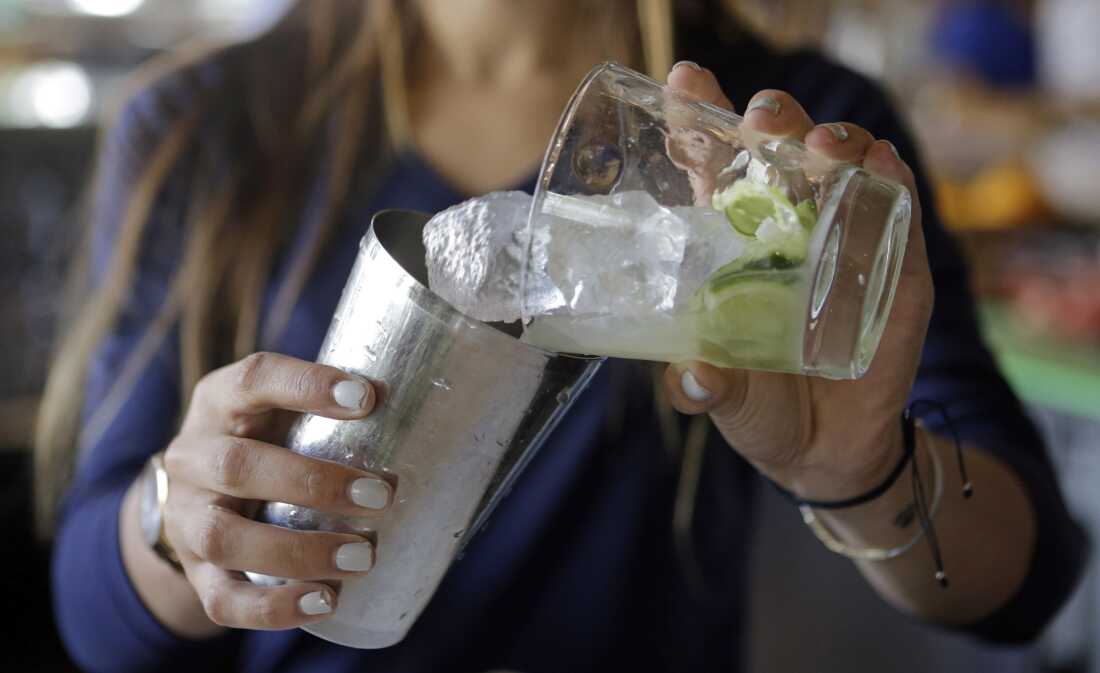
Bartender Rafaella Demelo prepares a caipirinha by adding sugar, 1.5 ounces of Leblon, and half a lime over ice in a shaker. This cocktail is renowned as Brazil’s trademark drink.
RIO DE JANEIRO, Brazil—A shift in trade relations spurred by the Trump administration’s tariffs is providing new business opportunities for Brazil’s cachaça producers. The diplomatic movement has prompted Europe and South America to strengthen their economic ties. Assja Schymura, distiller at Pindorama, expressed optimism saying, I think growth will be immense, if we can only get over these initial barriers.
Cachaça, a sugarcane-based liquor used in caipirinhas, has gained recognition in European competitions but faced challenges in penetrating the broader market. The hurdles included import taxes and a lack of familiarity. Manufacturers now see potential for growth due to recent developments in trade agreements.
In May, a trade pact between the European Union and Mercosur advanced significantly. Mercosur, a South American trade bloc consisting of Brazil, Argentina, Uruguay, and Paraguay—and soon Bolivia—secured cuts in tariffs for many goods including cachaça. The ease of market entry follows decades of stalled negotiations and recent U.S. trade pressures.
Unpredictable relations with the United States tends to lead to seeking additional partners,
stated Roberto Jaguaribe, a former Brazilian trade official. He noted that strategic partnerships are increasingly important for both regions.
The EU-Mercosur agreement does more than change trade tariffs. It requires member nations to uphold democratic practices and comply with the Paris climate agreement. These commitments are gaining value as the U.S. reduces its focus on climate and democracy under the Trump administration.
Additional talks are gaining traction, such as a conference in Brazil about fortifying connections between Europe and Latin America. Finnish diplomat Anna-Kaisa Heikkinen urged nations adhering to a rules-based international order to collaborate effectively.
Despite cooperative dialogue, there are lingering disputes concerning trade. European lawmakers from agricultural sectors remain concerned about exposure to cheaper imports. The agreement was sent to the EU Court of Justice for assessment in January, with potential amendments anticipated within two years.
Though the EU-Mercosur agreement is crucial, Mercosur has also embraced broader trade discussions. The bloc recently finalized agreements with non-EU European nations and is negotiating deals with Canada, Japan, and the United Arab Emirates. This openness reflects a shift away from longstanding high tariffs amid external pressures and challenges from the pandemic.
Larissa Wachholz, a former Brazilian official, noted the transformative period in Brazil’s trade policy, stating, It’s a very important moment of change.
Wachholz emphasized that the move is unlikely to revert to full protectionism.
Pindorama’s directors feel that openness in trade not only promises financial benefits but enriches global understanding of Brazilian culture. Creative director Rafael Daló said that exposure to Brazil’s cachaça helps people learn about the unique forest ecosystem involved in its production, offering another Brazilian story
beyond the traditional image of carnival.