
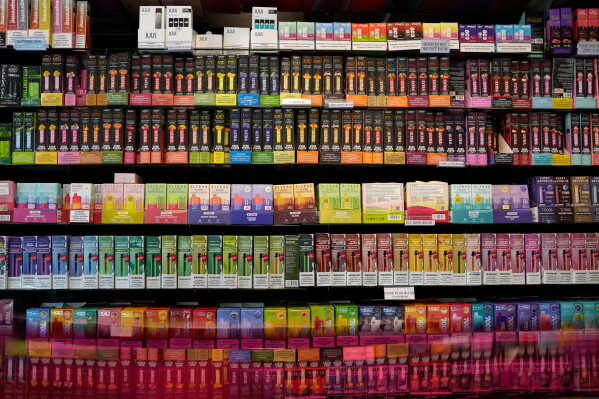
WASHINGTON (AP) — The Food and Drug Administration (FDA) recently granted approval for fruit-flavored e-cigarettes, raising questions due to their limited impact on smoking cessation compared to tobacco-flavored options. This decision has attracted scrutiny from health groups and politicians, given the longstanding concern that such flavors appeal to young people.
According to a memo from the FDA released this week, the authorization of fruit-flavored vapes — notably mango and blueberry varieties from Glas Inc. — did not significantly outperform tobacco-flavored ones in helping smokers quit. This conflicts with the FDA’s earlier approvals of menthol-flavored vapes, like Juul and NJOY, which showed more promising results in aiding adult smokers to reduce or quit cigarettes.
The Glas vaping products require an age-verifying cellphone app to unlock, which the FDA believes reduces the risk of underage use. However, this approach contrasts with recent FDA guidelines that demand robust evidence for adult benefits of fruity and dessert flavors due to their appeal to minors.
The compact six-page memo on Glas diverges from the FDA’s typically expansive documents, such as the extensive 90-page report for Juul’s menthol products. The brevity of the document, released a month following product authorization, misses crucial details like the number of smokers studied, sparking further questions from Congress.
Notably, 10 Democratic senators have expressed their disapproval, labeling the decision to authorize the new flavors as potentially reckless. They have requested more information from the FDA concerning this controversial approval.
The pathway to Glas’s authorization has been complex. In 2021, the small Los Angeles-based company submitted its application, which included menthol and tobacco flavors. Though initially supported by FDA scientists, a senior FDA official delayed the process until the eventual approval during then-FDA Commissioner Marty Makary’s final week.
The decision comes amid ongoing debates over vaping regulations and pressures from various stakeholders, including tobacco companies advocating for less stringent rules. The FDA has been responding to various concerns as it navigates the regulatory landscape.
Efforts to scrutinize and understand the FDA’s decision are ongoing, as different bodies explore the broader implications for public health.