
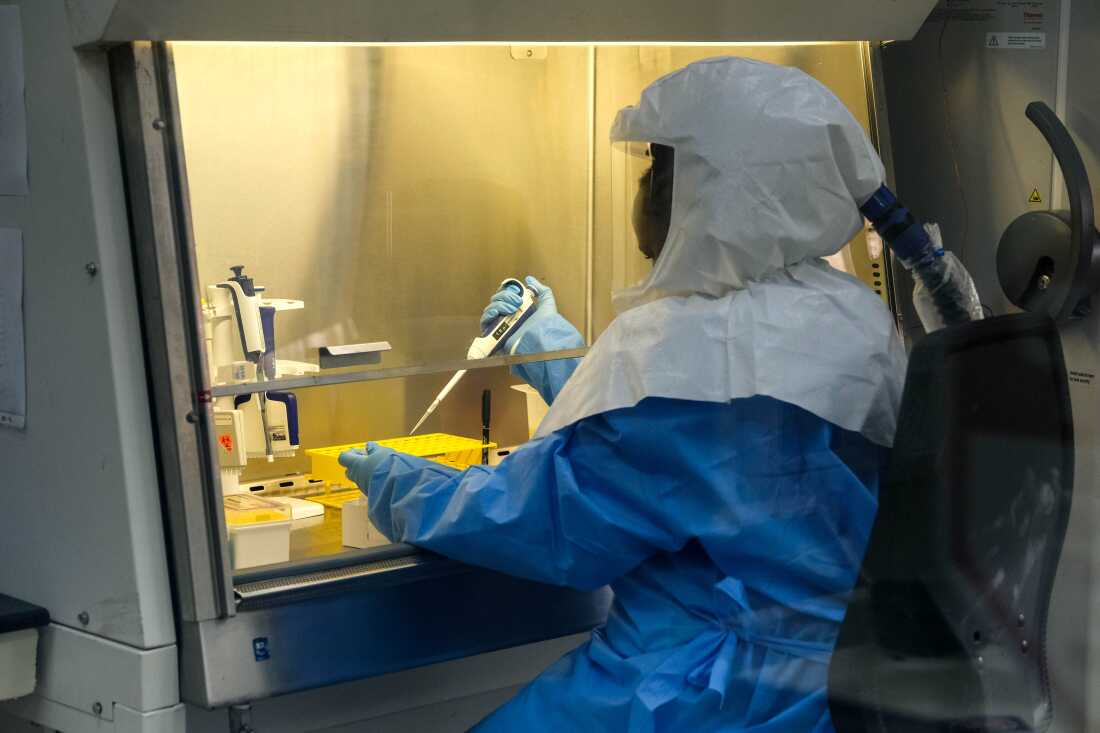
Sophia Mulei, a laboratory technologist, manages a control sample at the Viral Hemorrhagic Fever Laboratory in Uganda Virus Research Institute, Entebbe. This lab is vital for testing Ebola samples in the region. Concerns arose in mid-April among health officials in the Democratic Republic of Congo (DRC) regarding potential Ebola cases. Deaths in the northeastern region, suspected to be caused by the virus, led officials to gather samples for testing in Bunia.
Jean-Jaques Muyembe, the general director of INRB, DRC’s national biomedical research center, stated that initial samples underwent testing on April 30th using GeneXpert, a machine for detecting specific viral DNA segments. The tests returned negative for Ebola, as did subsequent samples. It wasn’t until samples were sent to a specialized facility in Kinshasa that they tested positive for Ebola. The issue lay with GeneXpert’s inability to identify the rare Ebola species in circulation, delaying the outbreak announcement until mid-May, when Ebola Bundibugyo was confirmed.
This delay significantly contributed to the expansion of the outbreak into one of the largest recorded, with suspected cases surging past 1,100. The difficulty lay in the initial lack of appropriate diagnostic tools, says Caia Dominicus, senior advisor at the International Pandemic Preparedness Secretariat. Timely testing is crucial for isolating infected patients and controlling virus spread.
Recently, diagnostic capabilities have improved, reports Abdirahman Mahamud from the World Health Organization. However, he warns that current testing capacity may not suffice for a projected 20,000 cases by August. The situation requires enhanced resources to manage potential transmission increases.
A New Approach to Diagnostics
The RADI-One machine has played a major role in recent improvements, enabling detection of Ebola Bundibugyo with simpler training and equipment requirements. This machine’s easy deployment in smaller, nearby clinics has been vital. Currently, eight labs, including a mobile unit, process tests across northeastern DRC, with major labs handling over 100 samples daily.
NPR spoke to a technician who revealed that sample processing time ranges from one to twelve hours, greatly reducing backlogs. Africa CDC’s Yap Boum announced plans to increase RADI-One machines to 50 by the end of June but highlighted the challenge of limited availability.
WHO continues discussions with KH Medical from South Korea to secure more machines, though training staff on new testing systems remains a necessity. Geography and logistics complicate sample transport, exacerbated by conflict and population displacement, contributing to a challenging diagnostics environment.
Rapid Tests: A Potential Solution
Introducing rapid tests could transform the response strategy, offering quick results like the COVID-era tests. These tests could deliver results within minutes, facilitating faster isolation of positive cases, says Abraar Karan, an infectious disease expert at Stanford University. Though less sensitive than lab-based tests, rapid tests could significantly aid outbreak management.
Rapid tests might also be beneficial for examining deceased individuals to ensure safe burial practices, where traditional rituals involve touching the body. Muyembe mentions the absence of approved rapid tests for Bundibugyo, although tests for other Ebola species might prove useful. Robert Garry from Tulane University highlights the feasibility of developing specific rapid tests in a matter of months.
Implementing rapid and lab-based tests would require substantial investment. Diagnostics often receive less funding compared to therapeutics or vaccines, despite their critical role in informing decisions, asserts Dominicus. Improved diagnostic readiness could have mitigated the outbreak’s severity.