
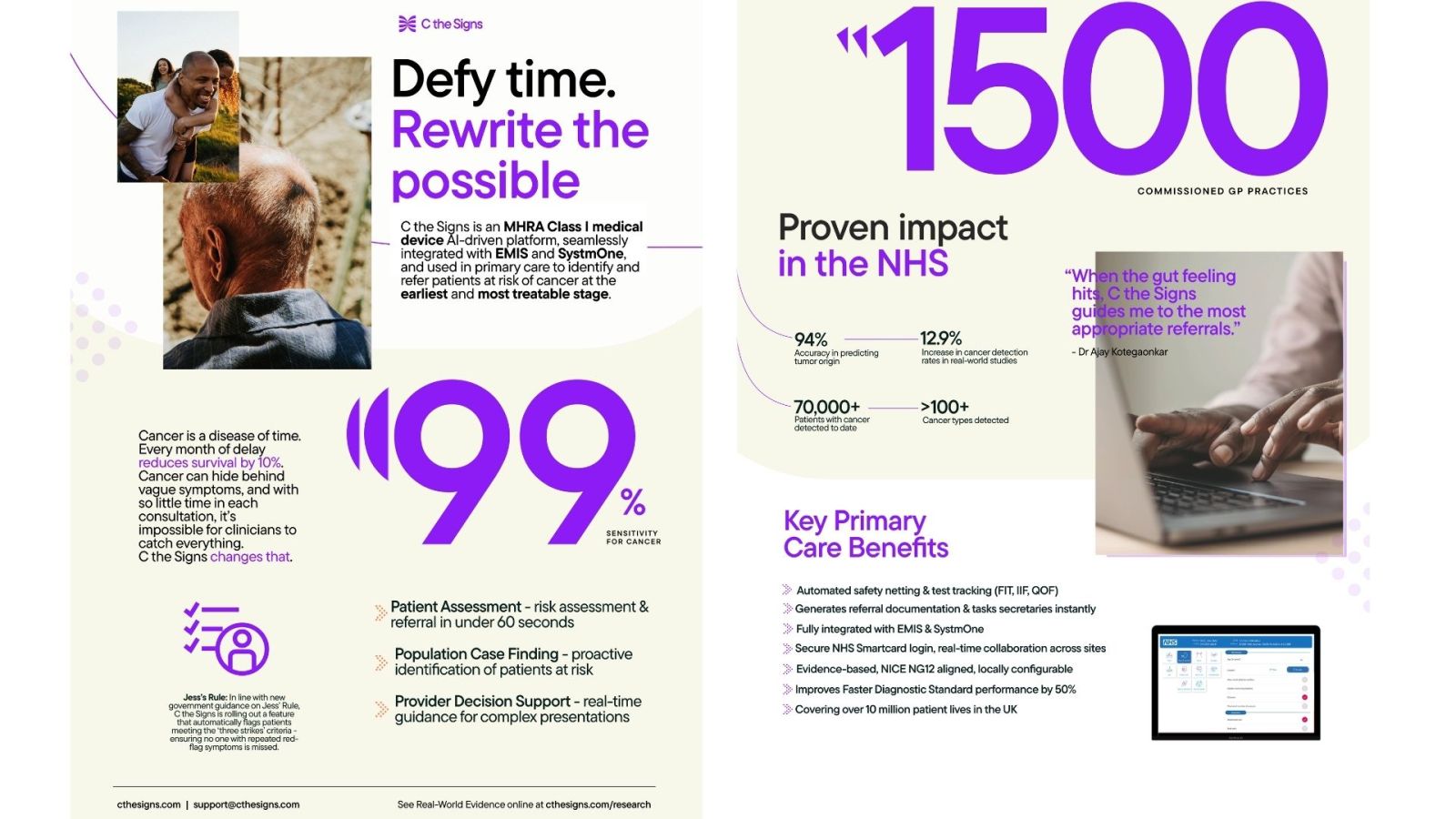
A company has developed a tool aimed at identifying early cancer risks and is seeking approval from the Food and Drug Administration (FDA). This device, known as C the Signs, could be available to Americans next year. The device allows clinicians to analyze medical records to detect cancer risk without the need for extra tests.
UK’s NHS Already Using Tool
Currently in use by over 11,000 healthcare professionals within the UK’s National Health Service (NHS), the tool has identified 75,000 cancer patients. It also reduces diagnostic timelines by 21 percent. The FDA has not seen a similar product before, allowing the company to apply for a De Novo classification.
While under FDA review, the company plans a study involving 250,000 Americans. The Department of Health and Human Services (HHS) noted that the FDA typically does not comment on pending applications unless disclosed by the sponsor.
How Does the Tool Work?
Cancer screenings in both the U.S. and UK cover only a few types of cancer. Many patients endure extensive processes before receiving a diagnosis. This tool scans medical history, like consultation notes and prescriptions, for patterns clinicians might miss. For example, gradual increases in white blood cells could indicate cancer risk.
Dr. Bea Bakshi, CEO of C the Signs, highlighted that most people get missed during initial doctor visits. The device removes guesswork, flagging risks before typical symptoms appear. Each cancer type uses a specific model for accurate screening. The tool boasts a 99% negative predictive value and a 94% accuracy rate in predicting tumor origin.
Cancer Detection in the U.S.
Gregory Simon, U.S. adviser for C the Signs, stated the tool has the potential to lower healthcare costs in the U.S. due to its efficiency and affordability in cancer detection. He noted early detection is crucial as late-stage therapies may be inaccessible or too costly in some regions.
Simon suggested targeting early adopters within the cancer ecosystem for a U.S. rollout. The tool could eventually reach consumers, potentially leading to significant reductions in cancer deaths and suffering.
Expert Opinions
Experts view C the Signs as promising. Anant Madabhushi from Emory University highlighted its potential value, especially for underserved communities. However, validation for U.S. populations is necessary due to differences with the NHS.
One study by the Mayo Clinic validated the tool’s effectiveness. It reviewed records from 1 million patients and found that the tool could identify at-risk patients earlier than physicians.
Despite optimism, some experts remain cautious. David Walt from Harvard Medical School expressed concerns about potential false positives leading to unnecessary stress and testing. He noted that various AI systems use similar approaches to C the Signs.