
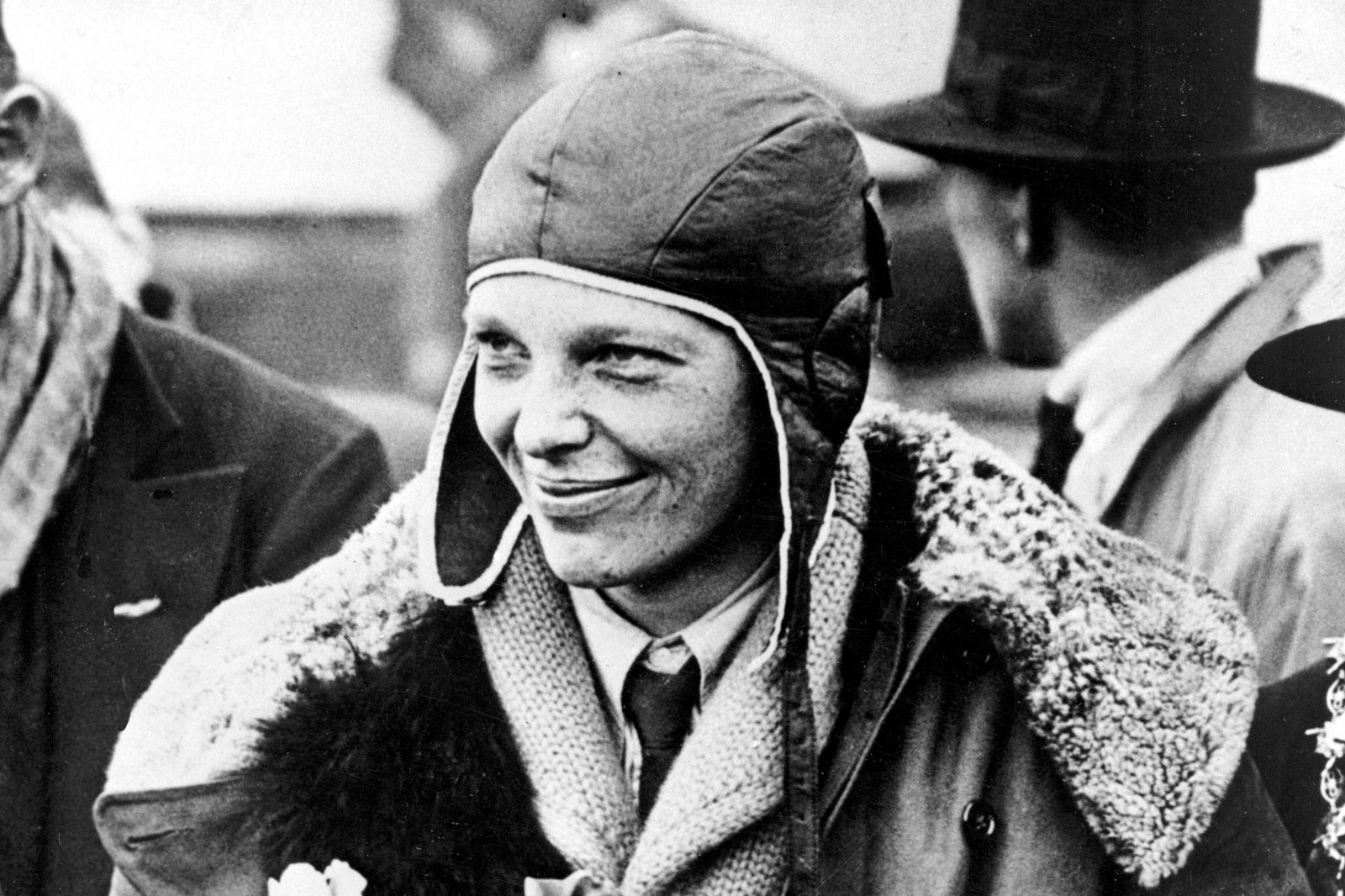
A New Investigation at Nikumaroro Island
A team of researchers has arrived at Nikumaroro, a remote coral atoll in the Republic of Kiribati. They are investigating a submerged object thought to be part of Amelia Earhart’s aircraft. Backed by Purdue University, the 17-person expedition aims to solve a mystery nearly 90 years old.
Known as the “Taraia Object,” the suspected wreckage appears in satellite images of the island’s lagoon. Researchers speculate it might be the fuselage and tail of Earhart’s Lockheed Electra 10E plane.
Upon arrival, the team cleared paths and began site assessments. They utilized sonar, magnetometers, and other techniques to examine the object beneath the lagoon sediment. If confirmed as part of Earhart’s plane, it could reveal crucial details about her final flight in July 1937.
Amelia Earhart’s Final Journey
On July 2, 1937, Earhart disappeared while trying to become the first woman to fly around the equator. Her journey started in Oakland, California, in May 1937. With navigator Fred Noonan, they traveled east, crossing multiple continents.
By late June, they reached Lae, New Guinea, planning to refuel at Howland Island on their way. The flight from Lae to Howland was a challenging 2,550-mile stretch over open ocean.
Despite a U.S. Coast Guard cutter assisting with navigation, the plane never reached Howland. Earhart’s last transmission suggested low fuel but did not disclose her exact position. The prevailing theory suggests the plane ran out of fuel and crashed near Howland. However, the Nikumaroro hypothesis proposes she landed on the atoll after missing Howland.
Nikumaroro’s Allure and Challenges
Nikumaroro, part of the Phoenix Islands, is surrounded by coral reef with a central lagoon. Formerly known as Gardner Island, the atoll is currently uninhabited. This isolation has long complicated investigative efforts.
Earhart researchers are intrigued by reports of human remains found on the island in 1940. Although potentially related to a castaway, these remains have never been definitively linked to Earhart or Noonan.
The current team focuses on a specific underwater target rather than a broader search. The Taraia Object was initially identified in 2020 via satellite images, prompting the current expedition.
Systematic surveying involves using magnetometers and sonar. A hydroprobe assesses the object’s characteristics while a water-induction dredge helps remove sediment for inspection.
The Role of Coconut Crabs
Nikumaroro hosts large coconut crabs capable of scavenging a wide range of foods. These crabs, known as robber crabs, are hypothesized to have consumed any human remains present.
Human bones found in 1940, subsequently lost, remain debated in terms of identity. Measurements have stirred discussions about their possible consistency with Earhart.
Deciphering Earhart’s Final Transmissions
Earhart’s final radio messages are crucial in her plane’s search efforts. On July 2, 1937, as Earhart neared Howland Island, communication difficulties arose despite efforts from the ship Itasca.
Earhart reported low fuel at about 7:42 a.m., thinking the aircraft was near Itasca. Last communication, considered around 8:43 a.m., mentioned a navigational line of 157–337 but provided no confirmed location.
Subsequent Navy and Coast Guard searches failed to find the plane. Though traditionally believed to have crashed near Howland Island, the Nikumaroro theory suggests Earhart landed on the atoll. Current investigations could potentially verify this if the Taraia Object links to Earhart’s Electra. Purdue University, where Earhart once worked, is involved, hoping to bring the aircraft back for research.