
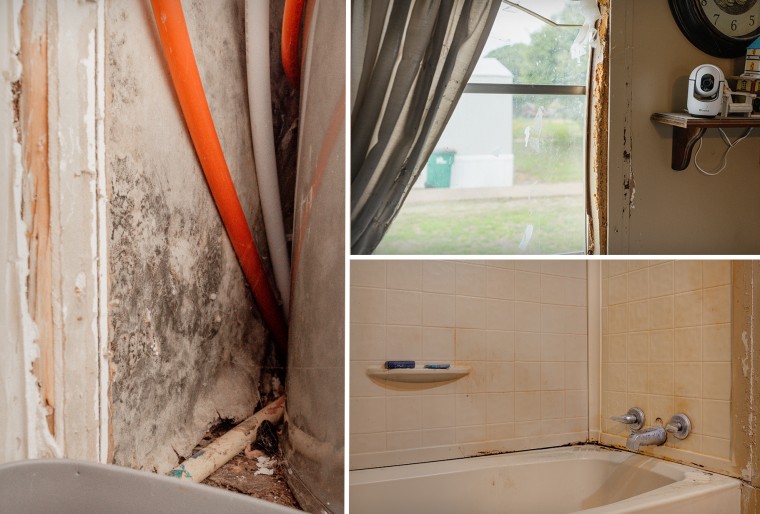
In 2023, Aliea Brown began renting Unit 62 at the Buck Island Manufactured Home Community in Mississippi. Her experience there quickly became problematic. She discovered the door was upside down, black mold was prevalent, and windows were improperly sealed. Invasions by termites and ladybugs compounded the issues. A sewer pipe burst during the cold months, spiking her water bill and pooling foul wastewater under the unit.
Brown described the smell in her home as comparable to a dead body. She and her partner, Mason Obradovich, pay $675 monthly for their two-bedroom home. They repeatedly sought repairs, but lack of funds hindered their relocation. In February, Homes of America, the park’s corporate owner, informed Brown that repair costs exceeded the unit’s value, deeming it non-rentable. The park offered to sell the unit to her for $1,000, utilizing part of her security deposit. Transitioning to ownership, the couple declined the offer, but faced being forced out by April 30.
Brown, who suffers from chronic obstructive pulmonary disorder (COPD), emphasized their predicament by mentioning their poor credit and inability to move. Their home continued to deteriorate, exacerbated by black mold and water damage.
Across the U.S., 22 million people reside in mobile home communities, one of the few affordable living options outside traditional housing. However, recent investments from corporations have increased costs in these communities, burdening economically vulnerable individuals as income inequality grows. Interviews by NBC News with residents in various states highlighted rising rents, declining services, and worsening relations with management.
John Calabrese, an association leader in Florida, noted that some owners prioritize revenue over resident welfare. Buck Island is part of a network managed by Homes of America, tied to Alden Global Capital, an investment firm also known for newspaper acquisitions and layoffs.
Jessica Calvert, managing Buck Island, did not comment on Brown’s account. Homes of America and Alden Global Capital did not respond to NBC News inquiries.
A spokeswoman for Equity LifeStyle Properties defended their operations, pointing out a rent increase averaging 4.2% annually, suggesting their costs are competitive compared to nearby housing.
Impact of Corporate Takeovers
Mobile homes constitute 5.4% of U.S. housing, with many residents being seniors on fixed incomes, people with disabilities, and families with limited financial resources. Despite rising costs for new manufactured homes, they remain affordable compared to single-family homes, as noted by U.S. census data and comparisons from the Federal Reserve Bank of St. Louis.
In January, President Trump proposed a halt on institutional purchase of single-family homes, addressing barriers to homeownership. However, there is no such restriction for mobile homes. Statutory efforts in some states like Maine and Michigan aim to protect mobile home residents.
Aliea Brown shared her experience at Buck Island, revealing practices like mold concealment and targeting vulnerable renters, as outlined in a lawsuit by Elvin Zapata, a former Homes of America manager. Zapata’s lawsuit alleged evictions upon missed payments and tactics to sell rundown units to low-income buyers.
Jim Hodgkins, living at Greenmount Station in Illinois, recounted declines in property management and service following its acquisition by Homes of America in 2022. He secured a loan to purchase his unit but expressed concern over future repairs and rent increases.
Brown and Obradovich contacted HEED, a state nonprofit, which identified their living conditions as uninhabitable. Alternatives offered were equally affected by mold. Legal proceedings are ongoing as Buck Island refused their rent payments. Many residents are being forced to buy their units or leave, but economic constraints leave Brown and Obradovich with limited options.