
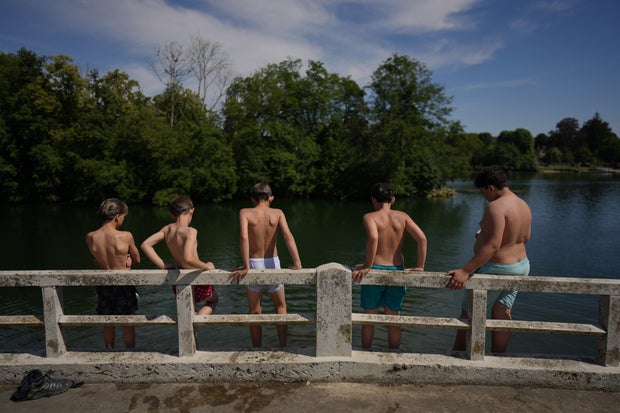
As extreme heat hits Europe, France has placed emergency services and military forces on alert for wildfires. Public alcohol consumption is restricted, and some outdoor sports events are canceled to combat the effects of scorching temperatures. About a third of France faced heat red alert on Sunday, with temperatures soaring to 104°F in certain regions, and Monday expected to be even hotter.
Across Europe, various measures are announced to reduce the risks posed by the heat. Key tourist sites in Paris, like the Eiffel Tower, offer misting stations for relief, while tourists in Rome find solace in fountains. Events in Spain’s Basque Country are canceled to prevent heat-related dangers.
The Music Day celebration in France draws concern. This nationwide event consists of thousands of concerts and has become popular among international visitors. To ensure safety, the French government prohibited public drinking in “red alert” areas and restricted alcohol use during concerts to help emergency services care for vulnerable individuals.
High temperatures pose serious threats, especially due to limited air-conditioning across the region. The World Health Organization disclosed that over 200,000 people in Europe died from heat-related causes in the past four years, with most deaths preventable. More heatwaves are anticipated, with risks of heat exhaustion and heat stroke increasing.
Climate change driven by human actions is linked to more frequent severe weather events. A study identified that human-caused climate change resulted in 1,500 deaths from an early European heatwave last month.
Authorities particularly worry about those enduring high temperatures outdoors, and the elderly in nursing homes or isolated residences. In 2003, France faced a reckoning due to the deaths of about 15,000 older people in a heatwave. In response, the French government has enforced wildfire readiness and intensified monitoring of water supplies for nuclear reactors. Additionally, 845 schools will remain closed Monday.
Transportation is affected, with some trains canceled, and extra staff deployed by the rail authority to handle issues like heat-damaged rails and cables. French Prime Minister Sebastien Lecornu holds a heat crisis meeting Sunday, tasking ministers with future heatwave adaptation plans, potentially involving air conditioning.
In Spain, the summer began with alerts as temperatures approach 104°F, particularly in Basque Country’s typically cooler interior. Outdoor sports and cultural events are suspended. The heat is predicted to persist at least until Wednesday.
Italy expanded warnings, called “red flags,” in eight cities across northern and central areas, with temperatures hitting the high 90s to low 100s. Efforts include setting up fans and sprinklers for farm animals. Tourists in Rome relish fountain pools for relief. Thunderstorms are forecast in several locations.
Britain anticipates extreme heat in southern England and parts of Wales on Monday and Tuesday, with temperatures potentially reaching 95°F, nearing the hottest June day record set in 1976.
Temperatures in Germany climb to the mid-90s. Recently, a man drowned in a lake near Rheinstetten in the southwest; other incidents include three missing individuals in the Rhine River. French reports highlight tragic drownings involving four children on Saturday.