
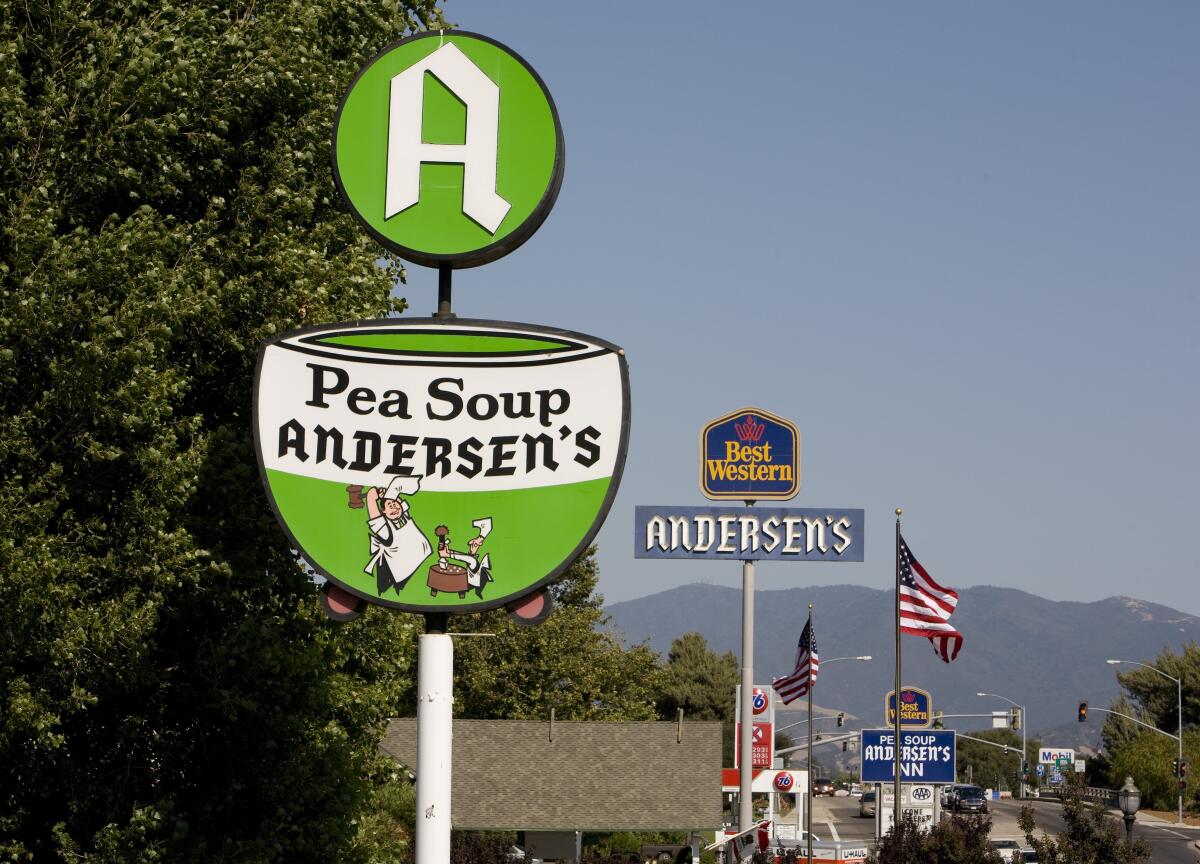
Pea Soup Andersen’s, a renowned dining spot, has been serving countless travelers for nearly a century. Situated in California’s Central Coast, it helped Buellton gain recognition. Its appeal lay not only in its food but also in its uniqueness amid a sea of fast-food chains and convenience stores.
The 2024 closure of the restaurant marks a significant loss for locals and visitors. The establishment was famed for its distinctive features like the kitschy gift shop and mascots Hap-Pea and Pea-Wee. Unfortunately, vandals have targeted the abandoned premises.
“The public safety concerns reached a point where we just couldn’t wait anymore,” said City Manager Scott Wolfe.
The vandalism at the location has included various forms of destruction. Inside the restaurant, thieves targeted copper wires and pipes, damaging items the community hoped to preserve. City officials decided to demolish a section of the building despite lacking immediate plans for redevelopment.
The situation highlighted a conflict between ensuring safety and preserving historical heritage. Founded in 1924 by Anton Andersen and his wife, Juliette, the restaurant began as Andersen’s Electric Cafe. Over time, it evolved into Pea Soup Andersen’s, known for its famous pea soup.
In recent years, the restaurant experienced a decline in business. Developer Ed St. George acquired the property in 2024 for $4.95 million. City official Wolfe recalls the restaurant’s parking lot rarely being full. Changing tastes and era contribute to diminished interest in their signature dish.
The City Council considered preserving the site as a historic landmark but eventually voted to remove its designation. Some artifacts, like stained-glass windows, will be stored. The original Bueltmore Hotel portion, eligible for the state’s historic registry, will remain intact.
Despite these efforts, much has already been lost or stolen from the site, particularly items containing copper. Theft has devastated the building’s interiors, complicating preservation attempts.
Security measures like fencing and boarding doors proved inadequate against repeated intrusions of urban explorers and vandals. Local authorities face challenges similar to other abandoned sites, as interest persists in exploring and documenting the building’s current state.
Councilmember John Sanchez expressed urgency for the site’s review after witnessing firsthand the vandalism extent before the Council meeting.
The secluded nature of the area makes it easy for vandals to continue their actions undisturbed. The community grapples with the site’s closure impacts and effects on local history and identity.