
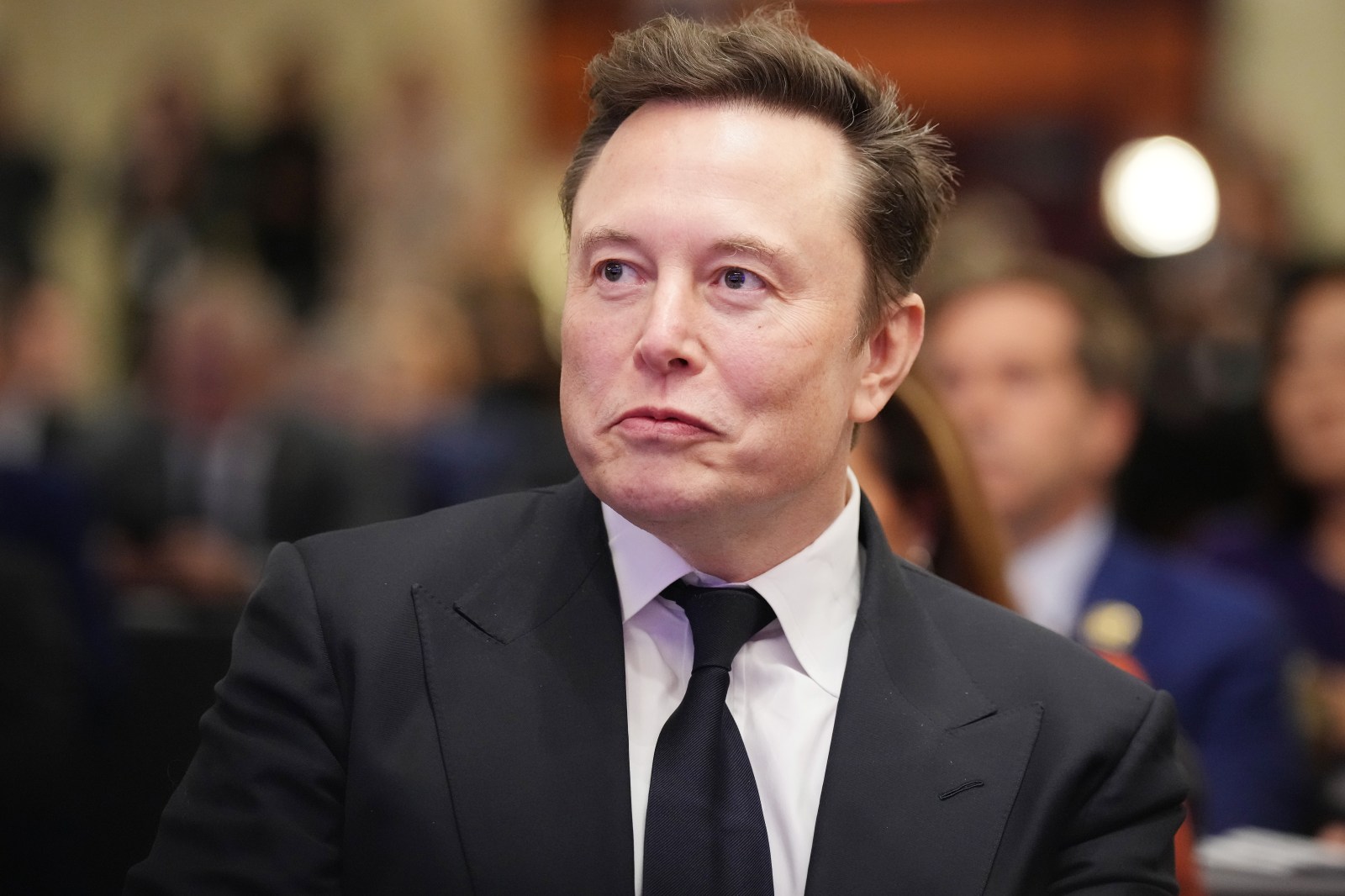
Elon Musk has pledged significant financial support to Republicans during the midterm elections. Facing economic challenges, Republicans are in the campaign’s final stretch. According to The New York Times, Musk has contributed over $276 million to Republican groups since July. Musk had previously announced plans to reduce political funding after disagreements with President Trump. However, Republicans believe this financial backing could aid them as polls indicate Democrats are gaining strength in the run-up to the November 3 elections.
The GOP’s Election Environment
The GOP is contending with a challenging national landscape. Historically, the party holding the presidency tends to lose seats during midterms when presidential approval is low. Trump’s declining approval ratings are coupled with voters’ growing dissatisfaction with the economy and the rising cost of living. Recent investments by Musk have flowed to organizations like the Senate Leadership Fund rather than individual candidates. Federal Election Commission (FEC) records reviewed by Newsweek show Musk has previously supported several conservative House Republicans seeking re-election.
The late spending surge may prove limited in its effect, as suggested by Todd Belt, a professor at George Washington University.
Belt argued that last-minute funding might not shift public opinions on election issues like the economy, which is paramount in voters’ minds, often linked to economic troubles under Trump.
Musk’s Financial Contributions
The Times outlined Musk’s $276 million political spending. Musk directed the majority, $158 million, to the Senate Leadership Fund, which supports Republican Senate candidates. Over the summer, he contributed $76 million to the America PAC, an organization Musk founded that assists various Republicans. Since January 2025, the PAC has reported over $52 million in federal disbursements according to the FEC.
Additionally, Musk allocated $20 million to the Congressional Leadership Fund, $10 million to Lone Star Liberty PAC for supporting Senate candidate Ken Paxton, $10 million to the Republican Governors Association, and $2 million to the Republican Attorneys General Association, as reported by the Times. In May, Musk donated $5 million to V-PAC, backing Republican Vivek Ramaswamy in Ohio’s gubernatorial race, and $10 million to Fight for Kentucky PAC supporting Nate Morris.
Throughout mid-2025, Musk continued donating to America PAC and the Senate Leadership Fund. In June, he provided $5 million to MAGA Inc., supportive of Trump’s agenda. His 2025 contributions also reached numerous Republican candidates as identified by the FEC.
- Lauren Boebert (CO-04)
- Eric Burlison (MO-07)
- Ken Calvert (CA-40)
- Buddy Carter (GA-SEN)
- Andrew Clyde (GA-09)
- Mike Collins (GA-SEN)
- Eli Crane (AZ-02)
- Warren Davidson (OH-08)
- Brandon Gill (TX-26)
- Abe Hamadeh (AZ-08)
- Mark Harris (NC-08)
- Anna Paulina Luna (FL-13)
- John McGuire (VA-05)
- Mary Miller (IL-15)
- Barry Moore (AL-SEN)
- Andy Ogles (TN-05)
- Michael Rulli (OH-06)
- Keith Self (TX-03)
- Marlin Stutzman (IN-03)
- Derrick Van Orden (WI-03)
- Tony Wied (WI-08)
Musk also backed Darrell Issa, who retired following California’s redistricting. Carter and Ogles were defeated in their primaries. Many recipients hail from safe Republican districts, and few are expected to encounter tough contests this cycle. Several affiliates with the conservative House Freedom Caucus, while Musk’s donations to PACs are strategically distributed for optimal GOP impact.
Criticism from Opponents
Senator Bernie Sanders criticized Musk’s funding efforts in a social media post, alleging Musk’s financial gains paralleled his political expenditures to favor Trump and the Republicans. Sanders called for resistance against Musk’s influence, branding him as emblematic of oligarchic power.
Timeline of Musk and Trump’s Relationship
Musk and Trump’s interactions have been tumultuous over recent years. Initially, Musk supported Trump in 2024, but tensions arose when Musk assumed leadership of the Department of Government Efficiency (DOGE). Their relationship improved, and in October, Trump awarded Musk the National Medal of Science.
Key historical interactions include:
- 2016: Musk favored Hillary Clinton over Trump.
- 2017: Musk resigned from Trump’s advisory councils post the Paris Agreement exit.
- 2020: Musk rejected Trump, endorsing Biden instead.
- May 2022: Musk announced Republican support over disagreements with Democrats.
- June 2022: Uncertain on supporting Trump for 2024, Musk leaned towards DeSantis.
- May 2023: Initially supported DeSantis in the primaries.
- July 2024: Endorsement of Trump, leading to significant donations and support in key states.
- November 2024: Post-Trump’s victory, Musk’s influence grew in the transition period.
- January 2025: Offered Trump significant fiscal counsel as DOGE head.
- April 2025: Musk prioritized Tesla over administration duties amidst challenges.
- June 2025: Shift in support due to legislative disagreements, resulting in a public feud.
- July 2025: Musk suggested founding an “America Party.”
- Late 2025: Relationship stabilized; Musk attended Trump’s state events.
- July 2026: Musk resumed substantial GOP contributions.
- October 2026: Recognition of Musk’s efforts by Trump at the White House.
Current Political Landscape
Republicans face challenging polls exacerbated by economic concerns. Democrats need only a few more seats to claim House control. As of the reporting date, Republicans possess 218 seats while Democrats hold 214 seats.
Recent polls, such as the Reuters/Ipsos survey from late September to early October, place Democrats seven points ahead on the generic congressional ballot. Among 3,526 voters, 44% intended to support Democrats compared to 37% for Republicans. The poll’s margin of error was ±1.7 percentage points.
Democratic chances of flipping the Senate seem more remote due to limited GOP-held seats up in competitive states this cycle. However, Democrats maintain competitiveness in states like Alaska, Iowa, Kansas, Ohio, and Texas, all of which Trump previously won by double digits in 2024. Favorably, Democrats retain a strong chance in prediction markets to win both chambers.
Prediction markets, providing sentiment views on political races, adapt to campaign shifts and broader trends.
Future Implications
The true impact of Musk’s contributions may not become clear until final election results are in. Political trends will undoubtedly influence the future trajectory of Musk’s involvement. Voter appeals continue as numerous states commence early voting.