
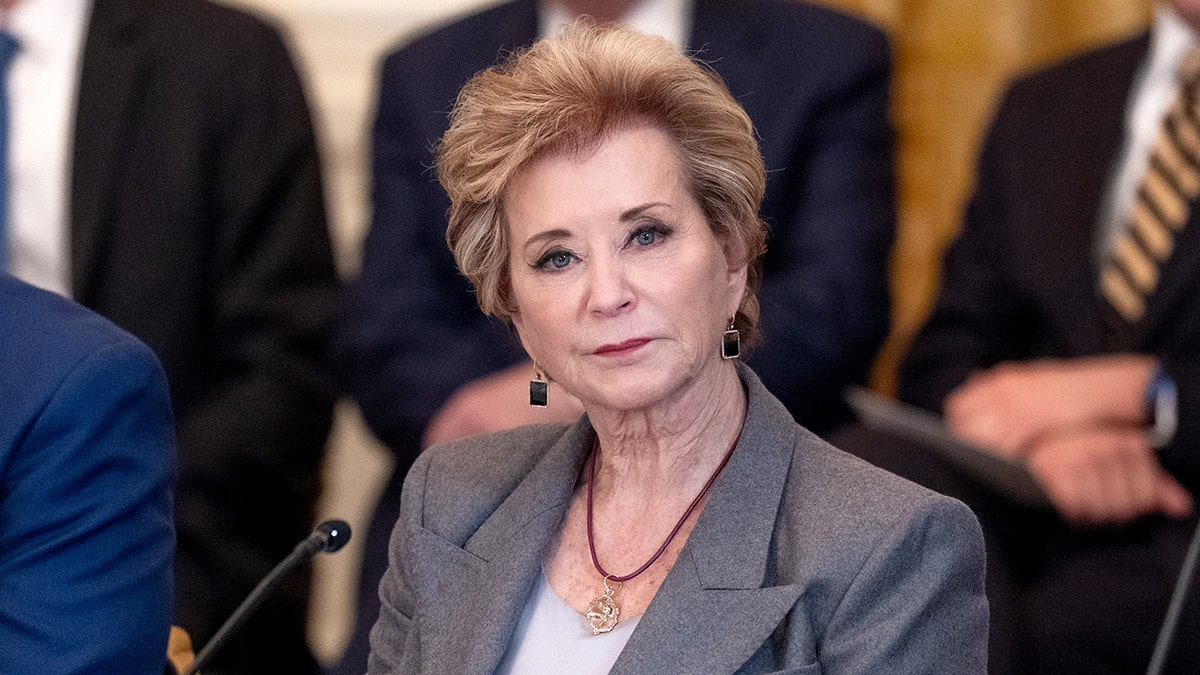
Education Secretary Linda McMahon embarks on a four-state tour to advocate for the Trump administration’s initiative to decentralize education control, giving power back to local communities. The tour, titled ‘The Next 250: American Education,’ aims to outline a 250-year vision for American education and highlight recent reforms.
‘The Trump Administration has moved swiftly over the past 21 months to implement vital changes in the education system. Our speaking series provides a platform to showcase our achievements and chart a course for the future of American students, families, and educators,’ McMahon expressed in an interview with Fox News Digital before her first stop in Utah.
In Utah, McMahon will lead a keynote address focusing on reassessing federal oversight, strengthening state-level control, and promoting educational freedom. This aligns with the administration’s efforts to foster effective learning practices and interventions for millions of students nationwide.
She emphasized the department’s dedication to repurposing education to nurture children’s inherent potential rather than expanding governmental influence or bureaucratic interests. Following Utah, her itinerary includes stops in Nevada, Arizona, and Tennessee, where she will discuss workforce training, Pell Grants, and rising costs in higher education.
This initiative complements the department’s 50-state initiative, ‘Returning Education to the States.’ This plan highlights the need for administrative power to transfer to local authorities, citing national assessment outcomes where only three out of ten students are proficient in math and reading. ED representatives reinforced the need for this transition, noting $3 trillion has been invested without satisfactory results in student performance, reaffirming the importance of local leadership.
The tour coincides with President Trump’s school choice event at the White House, attended by McMahon and various education stakeholders. The president reiterated the need for educational flexibility for families, criticizing federal spending outcomes on education and asserting the need to remove ‘extremism’ from classrooms.
As part of this policy direction, the administration plans to introduce the Education Freedom Tax Credit. Starting Jan. 1, 2027, taxpayers will receive federal tax credits for contributions to scholarship-granting organizations, promising enhanced educational access.
The policy aligns with an interagency agreement between the Department of Education and the Treasury Department, shifting certain responsibilities like federal loan collection to the Treasury. This is part of an overall strategy to streamline functions across federal departments.
McMahon underscores her personal commitment to education as both a mother and grandmother, reiterating the importance of parental involvement in education. She has consistently stated that the Department of Education’s primary role is not to govern local curricula but to facilitate federal grants.
McMahon concludes her tour in Tennessee with a keynote on public trust, addressing administrative oversight, and improving academic standards in higher education. Her speeches and initiatives continue to stress the importance of local involvement in education.