
Economic Changes Affecting Americans
Recent developments in the economy, notably inflation, have significant implications for American households. Both grocery and gas prices are higher, affecting decision-making for consumers and businesses.
Job Market Dynamics
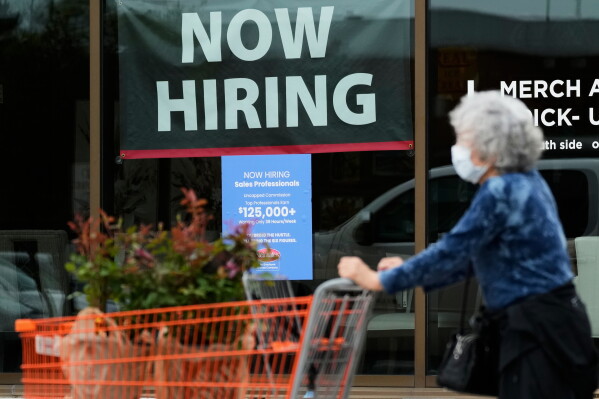
U.S. employers recently reduced their workforce by 23,000 jobs, contrary to economic forecasts predicting substantial job creation. The Labor Department reported revisions that subtract 103,000 jobs from previous payrolls in May and June. Despite a dip in the unemployment rate to 4.1%, this decline resulted from a decrease in labor market participation.
Employment in local public schools dropped by 50,000, while restaurants, bars, and retailers saw reductions of 26,000 and 19,000 jobs respectively. The labor participation rate fell to 61.4%, the lowest since February 2021.
Job Openings and Market Outlook
June witnessed a decline in job openings; however, the labor market sustained its resilience amidst geopolitical tensions due to conflicts in Iran. The Labor Department noted 7.36 million job vacancies, a slight decrease from May’s 7.54 million. Notably, vacancies increased in warehouse, transportation, and utility sectors alongside federal government positions.
Layoffs remained steady, and a slight rise in job quitting indicated positive job market confidence.
Impacts of Rising Mortgage Rates
Long-term U.S. mortgage rates increased for the fifth consecutive week, reaching a peak not seen in over a year. The 30-year fixed-rate mortgage climbed to 6.69%, up from 6.66% the prior week. Comparatively, last year’s rates stood at 6.63%.
Higher rates inflate monthly costs for borrowers, potentially reducing buying capacity and contributing to stagnated home sales. Conversely, rates for 15-year fixed-rate mortgages dipped slightly to 6.01% from 6.04% in the previous week.
Trends in Unemployment Benefits
The Labor Department announced a slight increase in jobless benefit claims, rising by 1,000 to a total of 199,000 in the first week of August. This increase, while modest, aligns with revised figures from the preceding week.
Jobless claims serve as an immediate measure of layoffs, reflecting the health of the job market.
Stock Market and Federal Reserve Policy
Wall Street experienced gains following the unexpected job cuts, leading to speculation of relaxed monetary policy. Major indices such as the S&P 500, Dow Jones, and Nasdaq exhibited positive movement, with all on track for weekly improvements.
The bond market demonstrated a stronger reaction, suggesting the Federal Reserve might delay interest rate hikes intended to control inflation.